


Products
Contact Us
Get A Quote
Recommend
‹
›
‹
›
Product Description
PRINCIPLE
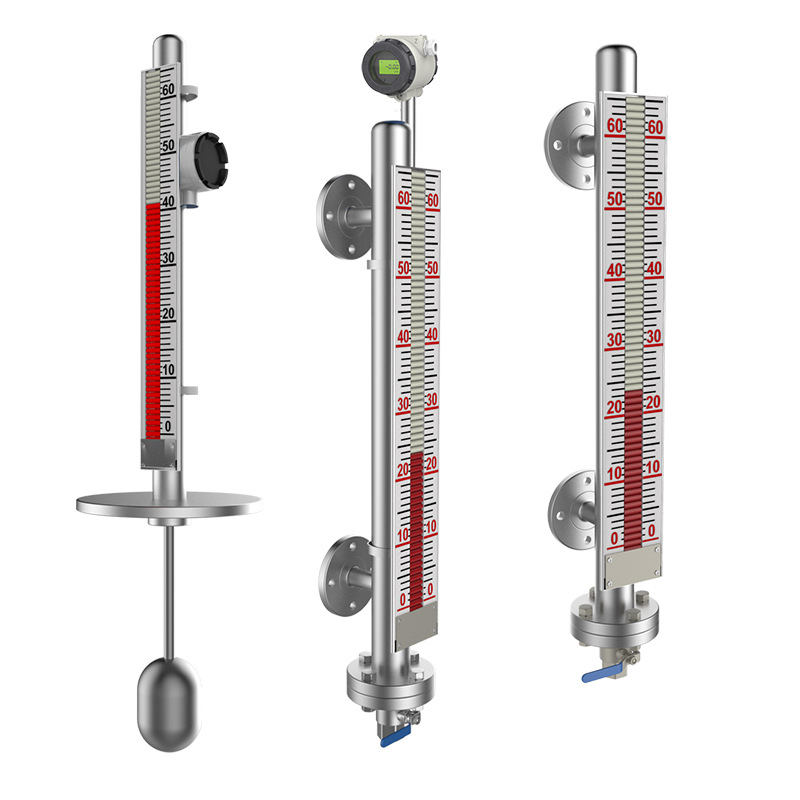
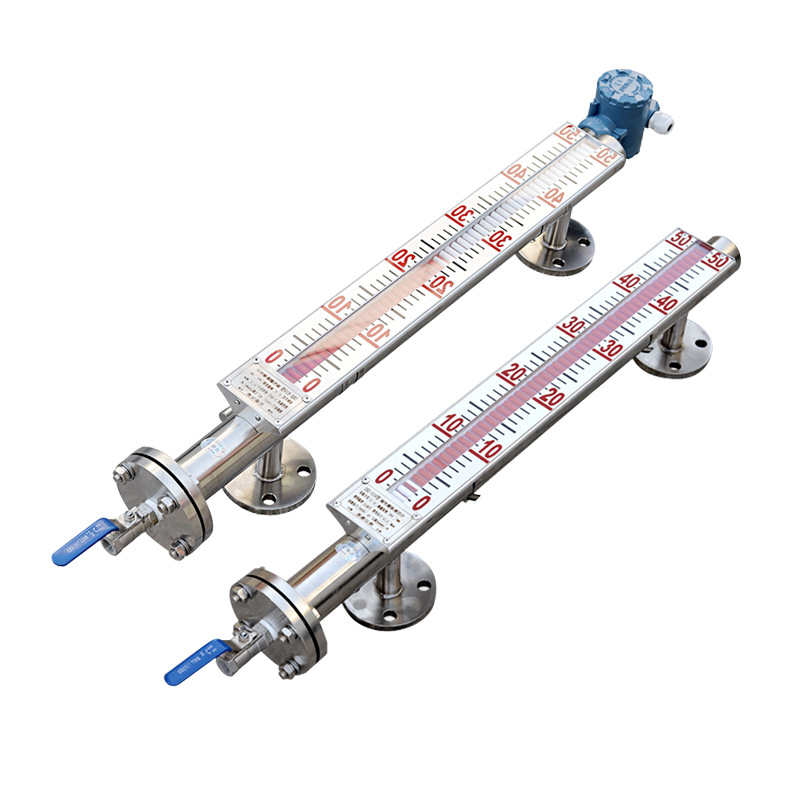
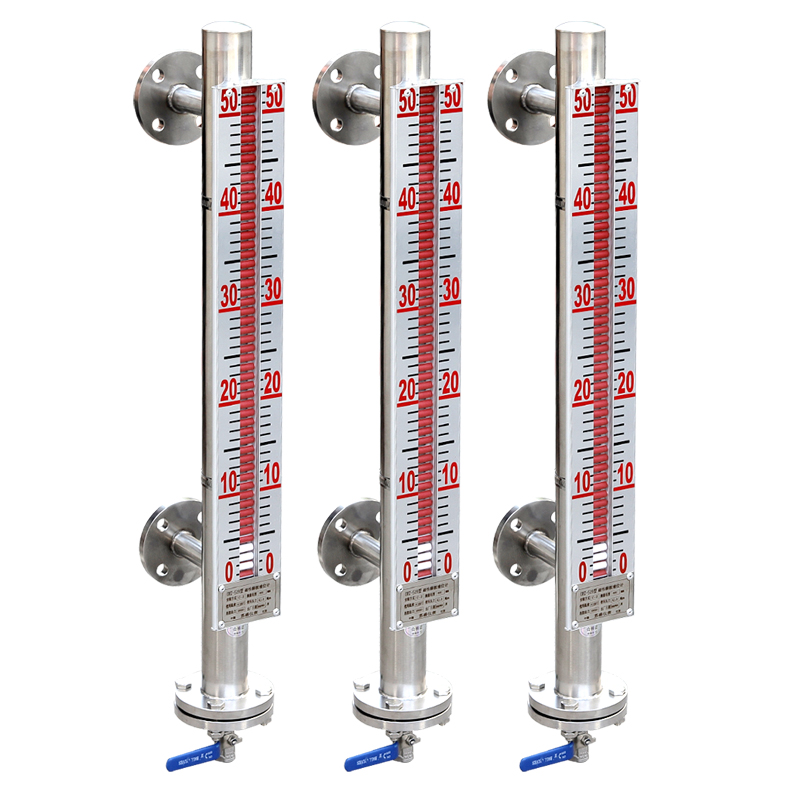
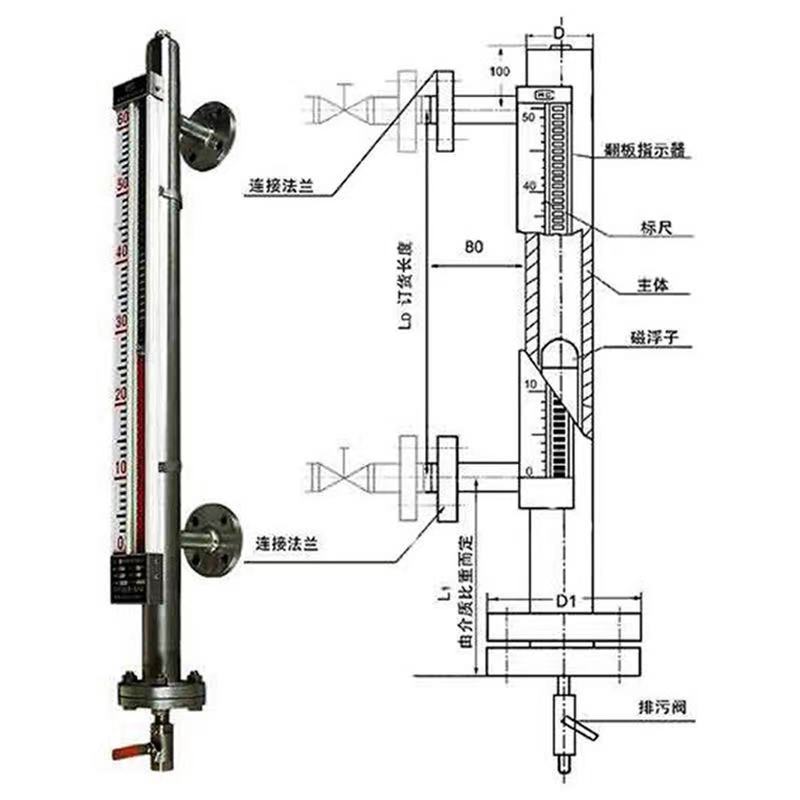
The magnetic flap level gauge (also known as the magnetic float level gauge) is developed based on the principle of buoyancy and magnetic coupling. When the liquid level in the container under test rises and falls, the magnetic float in the body tube of the level gauge also rises and falls, and the magnetic steel in the float is transferred to the magnetic turning column indicator through magnetic coupling, driving the red and white turning columns to turn 180° , When the liquid level rises, the turning column turns from white to red, when the liquid level drops, the turning column turns from red to white. The red and white junction of the indicator is the actual height of the liquid level inside the container, so as to achieve a clear indication of the liquid level.
FEATURES
1. Basic type
According to the principle of buoyancy, the float moves up and down with the rise and fall of the liquid level in the measuring tube. The magnetic steel in the float drives the red and white turning columns to turn 180° through magnetic coupling. When the liquid level meter rises, the columns turn. It turns from white to red, and turns from red to white when descending, so as to realize the indication of the liquid level.
2. Upper and lower limit switch output
The controller is installed at the upper and lower limit positions set by the user on the main tube of the level gauge. The controller has a reed switch with self-holding function or an alarm switch without memory function according to user requirements. The magnetic float is used to follow The movement of the liquid level causes the reed switch to act to realize alarm or limit control.
3. Teletransmission
Install a transmitter on the float level gauge. The transmitter is composed of a measuring unit and a transmitting unit. It moves up and down through the magnetic float, and through the magnetic coupling, the measuring elements in the guide rod act in sequence to obtain the resistance signal change. Convert into 0~10mA or 4~20mA standard current signal output, and connect with digital display instrument or computer to achieve the purpose of remote transmission.
4. Electronic two-color type
The UHZ-D electronic two-color magnetic float level gauge is a new generation product of the magnetic flap level gauge. It can clearly display the level of the red and green light beams. The observation distance is 60M during the day and 200-300M at night. The magnetic flap level gauge is easy to stick to dust when used for a long time, especially in steel mills, it is easy to stick fine iron filings over a long period of time, covering the red and green colors of the magnetic flap, making it invisible to the liquid level. The biggest disadvantage of the magnetic flap level gauge is that it can't show light and can't be observed at night. The UHZ-D electronic two-color magnetic float level gauge solves the above problems and breaks through the shortcomings of similar products in the small measurement range in circuit design. While ensuring low power consumption, it can customize any measurement height.
This product is suitable for petroleum, chemical, metallurgy, food, wine, medicine, chemical fiber, fertilizer and environmental protection power water supply departments, especially for users such as steel mills, coking plants, power plants, etc., to measure pressure vessels or open vessels The liquid level of the inner liquid can be directly indicated on the spot by the liquid level gauge, and a liquid level alarm switch can also be attached to realize remote liquid level alarm and limit control.
Compared with the magnetic flap level gauge, its main features:
Luminous display: red and green light beams can clearly display the liquid level, suitable for application in dark places, and more eye-catching observation at night;
The liquid level display is clear, the color is bright, the observation angle is large, the visual distance is long, and it is not easy to stick dust when used for a long time;
Reasonable design, simple structure, convenient maintenance, and the measured medium is completely separated from the display system;
It is applicable to a wide range of media and has good sealing performance when measured in corrosive solutions such as hydrochloric acid and sulfuric acid.
5. Steam jacket type
A steam heating layer is added to the measuring cylinder to maintain the temperature of the measured medium in the measuring cylinder and prevent the measured medium from freezing and freezing due to changes in the ambient temperature.
6. Electric heating type
An electric heating layer is added to the measuring cylinder, and an electric heating device is built in. The heating device transfers heat evenly to the measuring cylinder through the heat-conducting oil, which plays a role of heating and heat preservation.
Note: Please fill the heat transfer oil to the safety line before the first use, otherwise the heating device will be damaged.
Message
Products Recommended
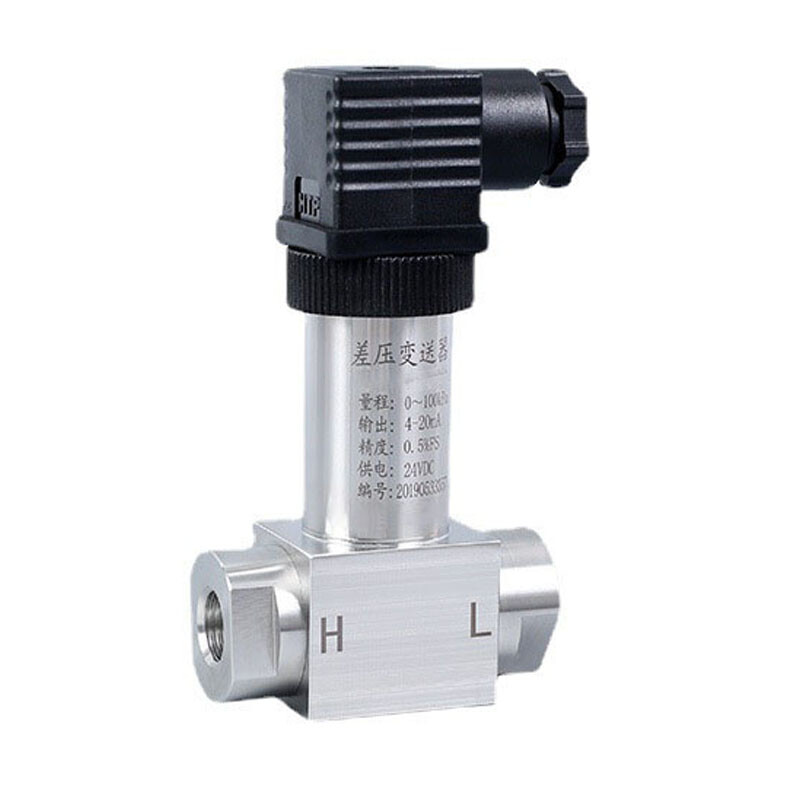
 YW-150 Differential Pressure Transmitter
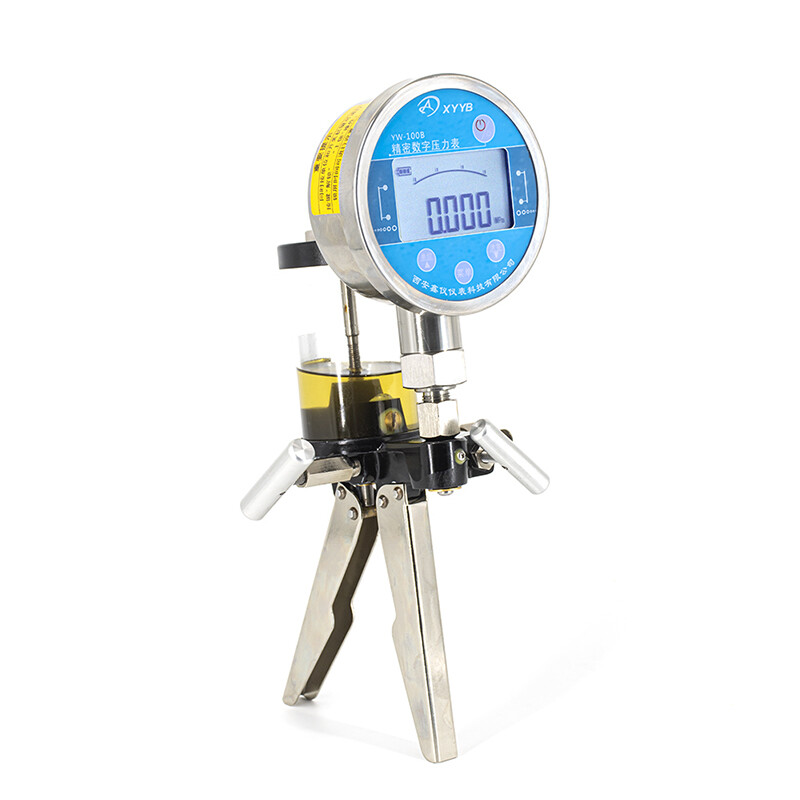
- Y060 250Bar Hhand-held Oil Pressure Calibration Pump
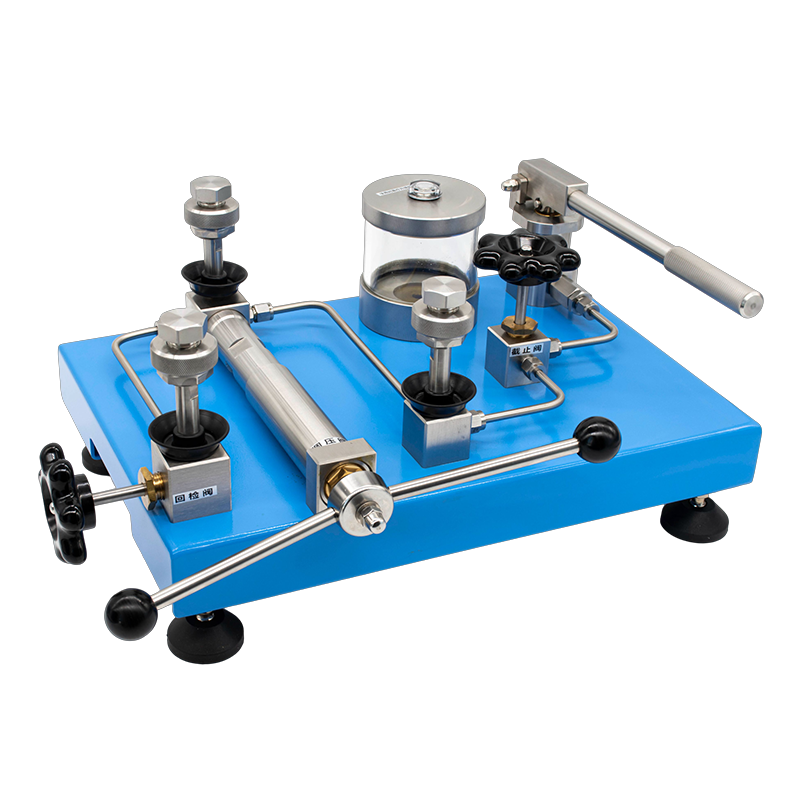
 YWQ-1441 Desktop Hydraulic Calibration Pump
- Wireless Liquid Level Transmitter
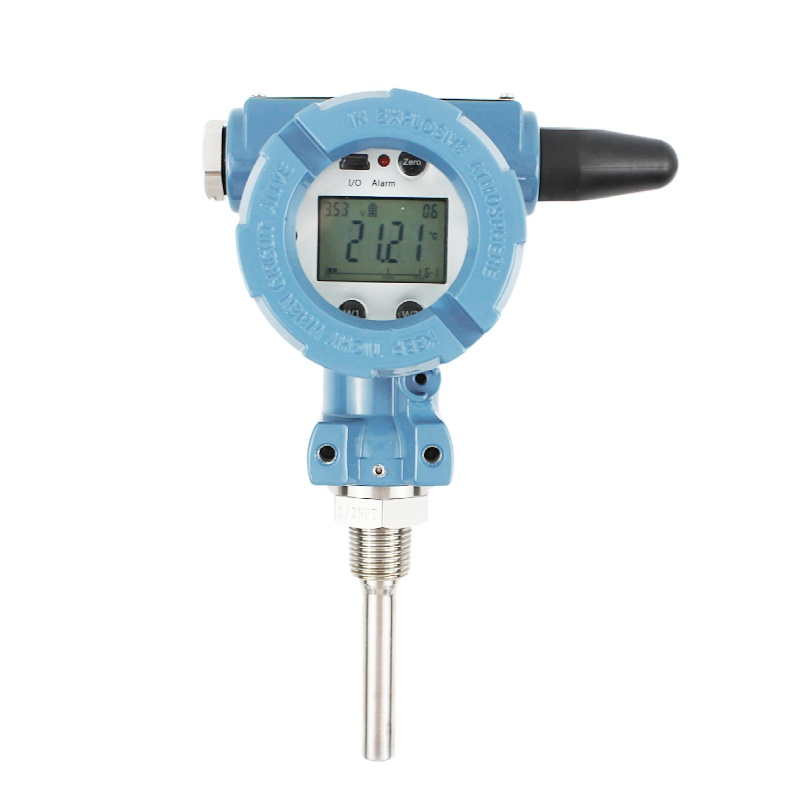
- Smart Wireless Digital Temperature Transmitter
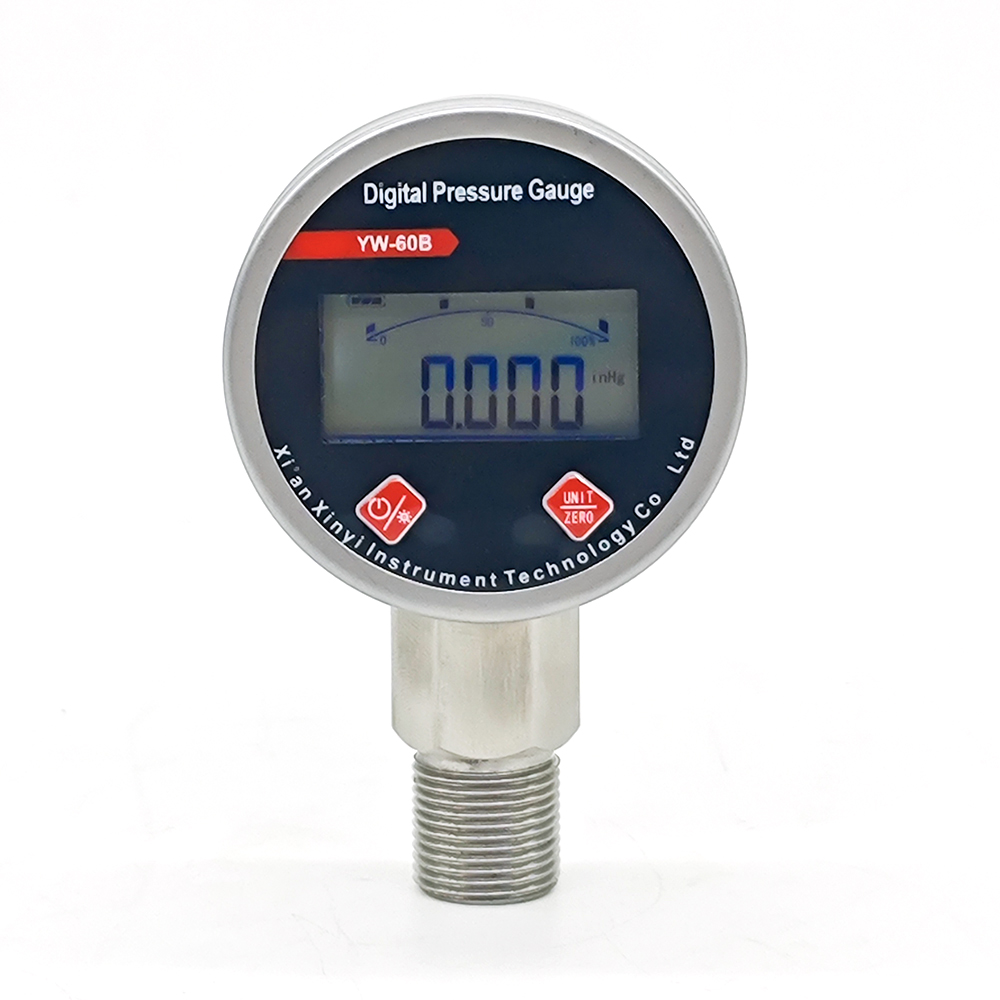
 YW-60B Precision Digital Pressure Gauge
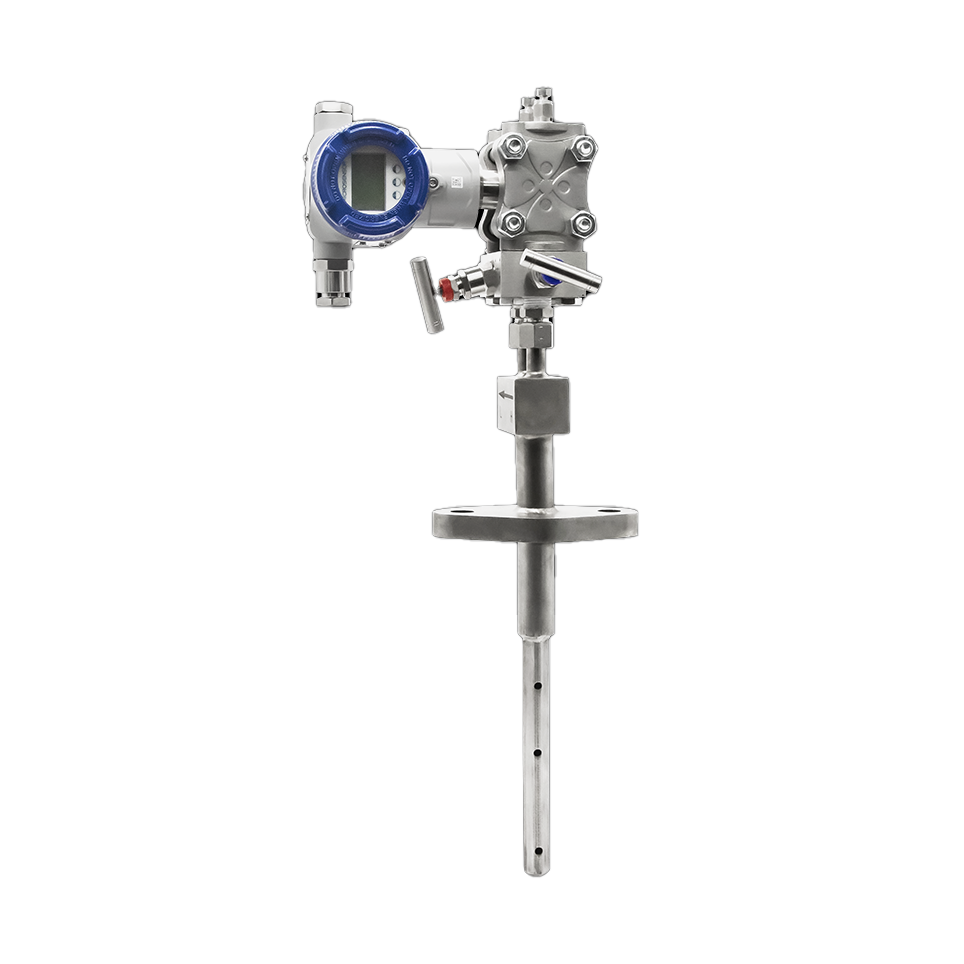
- Differential Pressure Flowmeter
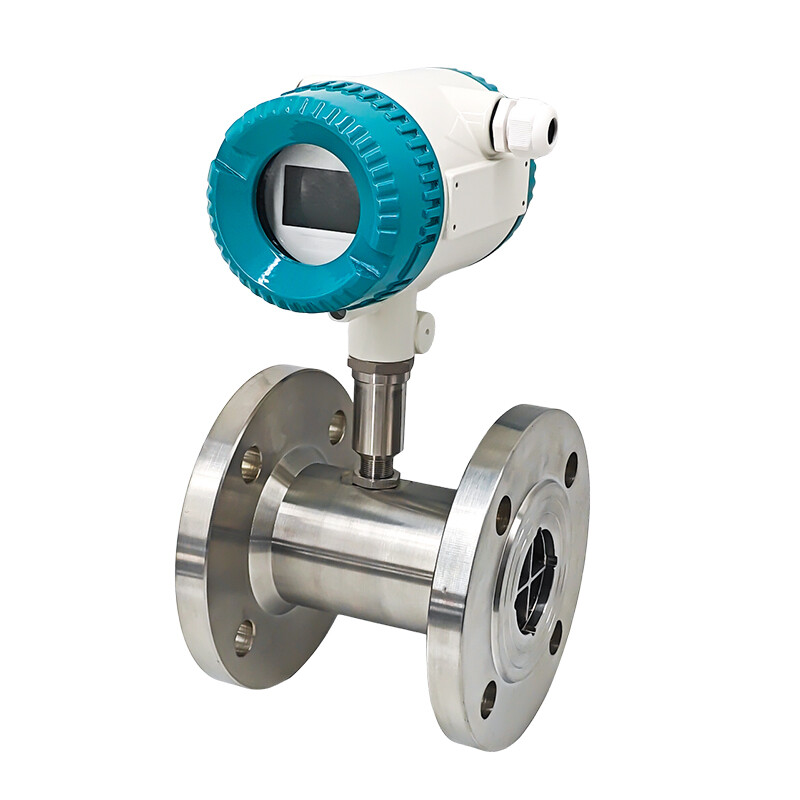
- Liquid Turbine Flowmeter
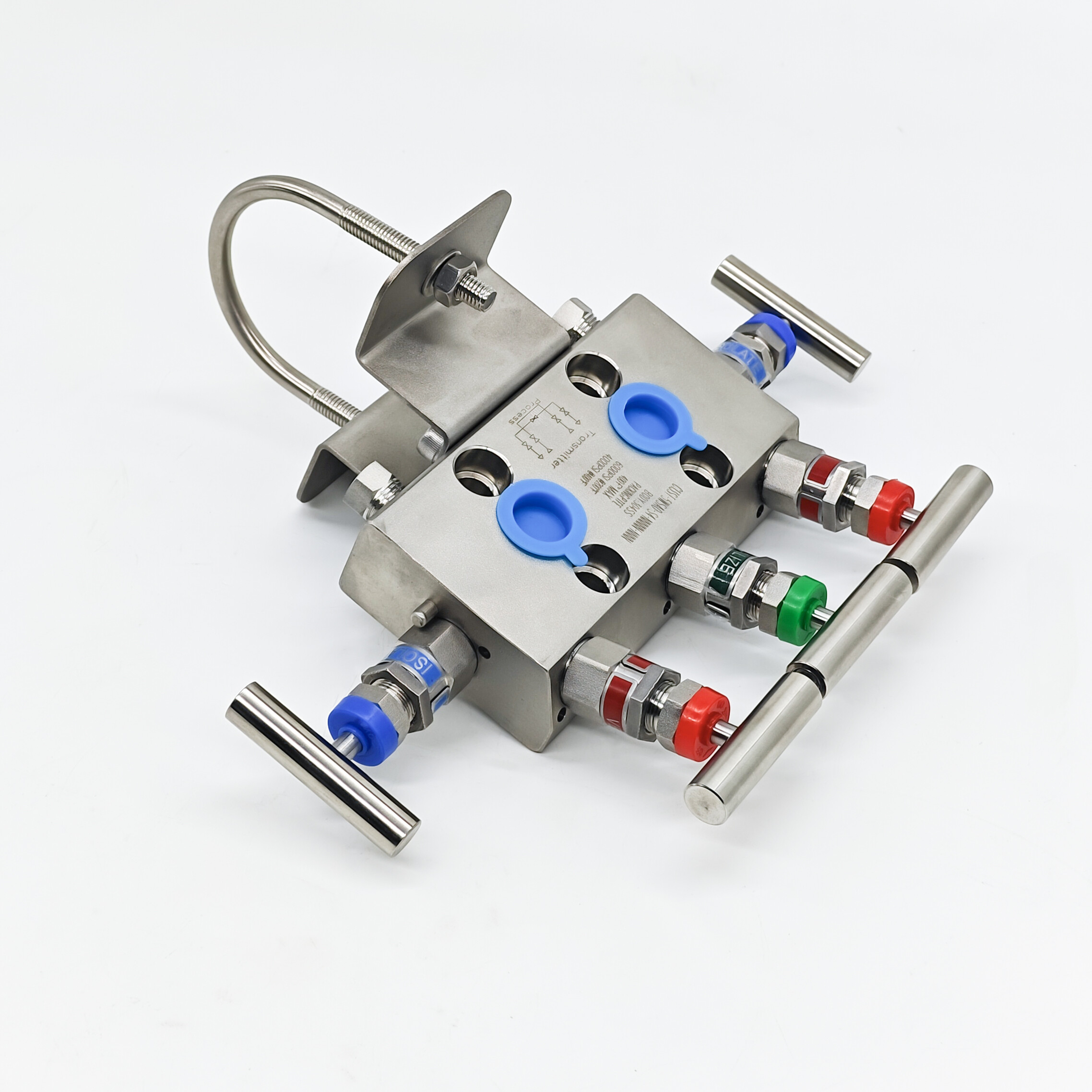
- Five Valve Group
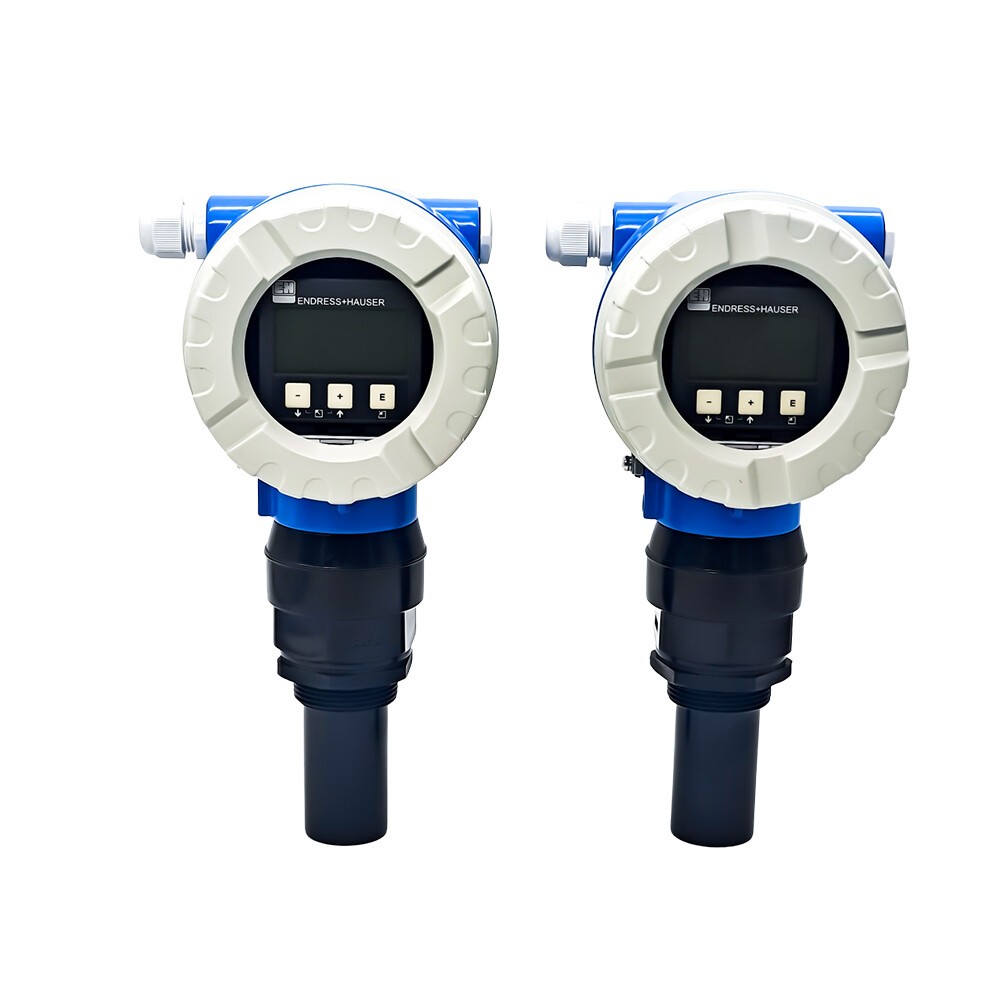
- E+H FMU40 Ultrasonic Level Meter Transmitter
 XYT110 Series Universal Temperature Transmitter
Chat Online