


On May 13, Tsinghua University publicly disclosed its 2026 instrument procurement intent — exceeding RMB 102 million (approx. USD 14.1 million) — with explicit emphasis on high-resolution mass spectrometry systems, field-emission scanning electron microscopes (FE-SEM), and in-situ X-ray diffraction (XRD) equipment. This move highlights a strategic push toward domestic alternatives for critical ‘bottleneck’ scientific instruments and signals emerging opportunities for Chinese manufacturers capable of international-standard OEM/ODM collaboration — particularly those serving overseas distributors seeking high-margin, customized supply solutions. Direct trade firms, precision manufacturing suppliers, and global channel partners should monitor implications for procurement planning, technical service localization, and cross-border partnership models.
Event Overview
On May 13, Tsinghua University released its 2026 instrument procurement intent notice, totaling over RMB 102 million. The listed categories include high-resolution mass spectrometry coupled systems, field-emission scanning electron microscopes, and in-situ XRD instruments. The notice explicitly states requirements for domestic substitution capability and localized technical support services. No award decisions or vendor selections have been announced; this is a pre-procurement intent disclosure only.
Industries Affected
Direct Trade Enterprises
These companies — especially those exporting lab instrumentation or distributing foreign-branded equipment in China — may face intensified competition as domestic vendors gain institutional validation through projects like Tsinghua’s. Impact manifests in pricing pressure, shifting tender evaluation criteria (e.g., weight given to local service response time or software localization), and reduced reliance on imported platforms for academic core facilities.
Precision Manufacturing & Component Suppliers
Suppliers providing sub-assemblies for mass spectrometers (e.g., ion optics, vacuum chambers) or FE-SEM components (e.g., electron sources, detectors) may see increased demand from Chinese OEMs scaling up to meet academic procurement specs. However, qualification timelines and compliance with ISO/IEC 17025-aligned calibration traceability become more critical — not just for final delivery, but for upstream component certification.
Global Channel Distributors & Brand Owners
Distributors outside China offering analytical instrumentation may encounter new sourcing options: Chinese manufacturers with proven interface compatibility (e.g., API integration with Thermo Fisher or Bruker software ecosystems) and ISO 13485 or ISO 9001-certified production lines. The Tsinghua notice does not mandate exclusive domestic sourcing, but its emphasis on ‘local technical service’ and ‘domestic alternative readiness’ raises the bar for foreign vendors’ after-sales infrastructure in China — indirectly elevating the value proposition of hybrid OEM/ODM arrangements.
Supply Chain Service Providers
Firms offering regulatory support (e.g., NMPA registration assistance for dual-use instruments), calibration accreditation, or logistics for sensitive instrumentation may observe higher inquiry volume from domestic manufacturers preparing for international tenders or export compliance. Demand may shift toward bundled services — e.g., simultaneous CE marking support and CNAS-accredited performance verification — rather than standalone documentation support.
What Relevant Companies or Practitioners Should Monitor and Act On
Track official procurement documents beyond the intent notice
The May 13 notice is an intent disclosure only. Actual tender documents — expected later in 2024 or early 2025 — will specify technical evaluation weights, minimum performance thresholds (e.g., mass resolution ≥ 100,000 FWHM for HRMS), and service-level agreement (SLA) requirements for on-site support. These details determine whether domestic alternatives are evaluated on parity or concessionary terms.
Assess exposure to specific instrument categories and subsystems
Focus on high-resolution mass spectrometry (especially LC-MS/MS and MALDI-TOF configurations), FE-SEM (particularly with EDS/WDS and low-kV imaging capabilities), and in-situ XRD stages with environmental control (heating/cooling/gas flow). For component suppliers, map current product lines against Tsinghua’s stated functional requirements — not just brand names — to identify alignment gaps or upgrade pathways.
Distinguish between policy signal and operational readiness
The notice reflects institutional preference, not binding procurement law. Domestic vendors still face challenges in long-term reliability validation, software ecosystem interoperability, and global service network coverage. Companies should avoid assuming immediate market displacement; instead, treat this as a catalyst to audit their own technical documentation, service response protocols, and international certification status — especially if targeting similar public-sector tenders in ASEAN, GCC, or Latin America where China-origin equipment is gaining traction.
Prepare for localized service infrastructure requirements
Tsinghua’s stipulation of ‘localized technical service’ implies expectations beyond basic warranty repair — including on-campus training, remote diagnostics integration, and spare-part stocking within 48 hours. Firms considering OEM/ODM partnerships should evaluate whether their existing service architecture supports such SLAs in China, or whether co-location with domestic integrators or third-party MRO providers is needed ahead of tender submissions.
Editorial Perspective / Industry Observation
Observably, this procurement intent functions less as an immediate procurement outcome and more as a calibrated signal — one that validates domestic technical progress while deliberately widening the aperture for international collaboration models. Analysis shows that the emphasis on ‘OEM/ODM readiness’ suggests Chinese instrument makers are no longer aiming solely at cost-driven replacement, but at becoming embedded partners in global distribution value chains. From an industry perspective, the notice is better understood as a stress test for ecosystem maturity: it reveals where domestic capabilities align with international usability standards (e.g., data format compatibility, cybersecurity compliance), and where gaps persist — particularly in long-term stability benchmarking and multi-vendor interoperability. Continued attention is warranted not because Tsinghua alone drives market direction, but because its procurement framework often sets de facto benchmarks for other top-tier universities and national labs across China.
In summary, Tsinghua University’s disclosed 2026 instrument procurement intent marks a structural inflection point — not in terms of immediate market share shift, but in how domestic capability is formally recognized and integrated into global supply logic. It underscores that ‘substitution’ is increasingly conditional on verifiable technical equivalence and service integration, not just origin or price. For stakeholders, the most rational interpretation is not urgency, but recalibration: aligning product development, certification roadmaps, and partner engagement strategies with the growing expectation of bidirectional technology exchange — where Chinese manufacturers transition from suppliers to co-developers in internationally distributed instrumentation ecosystems.
Source: Tsinghua University official procurement intent notice, published May 13 (no document ID provided in source material). Note: Tender documents, vendor selection outcomes, and final contract values remain pending and require ongoing observation.


") China's Instruments Rise: 7 Firms in Global Top 25 (2026)China's Instruments Rise: 7 firms enter 2026 Global Top 25 — Hikvision #4, United Imaging & SUPCON debut. Key insights for procurement, compliance & AI-integrated instrumentation.
China's Instruments Rise: 7 Firms in Global Top 25 (2026)China's Instruments Rise: 7 firms enter 2026 Global Top 25 — Hikvision #4, United Imaging & SUPCON debut. Key insights for procurement, compliance & AI-integrated instrumentation. German Brand & Design Council Opens Shanghai OfficeGerman Brand & Design Council opens Shanghai office to boost HMI design, CE-EMC/RED compliance & iF Award support for industrial instrument manufacturers and EU distributors.
 US Launches Third Sunset Review on Chinese Steel Grating AD/CVDUS third sunset review on Chinese steel grating AD/CVD impacts instrumentation exporters, metal fabricators & automation suppliers—act now to mitigate tariff risks.
 New Maritime Code Shifts No-Pickup Liability to ShippersNew Maritime Code shifts no-pickup liability to shippers—critical for instrumentation exporters. Learn how Article 93 reshapes risk, contracts & global logistics.
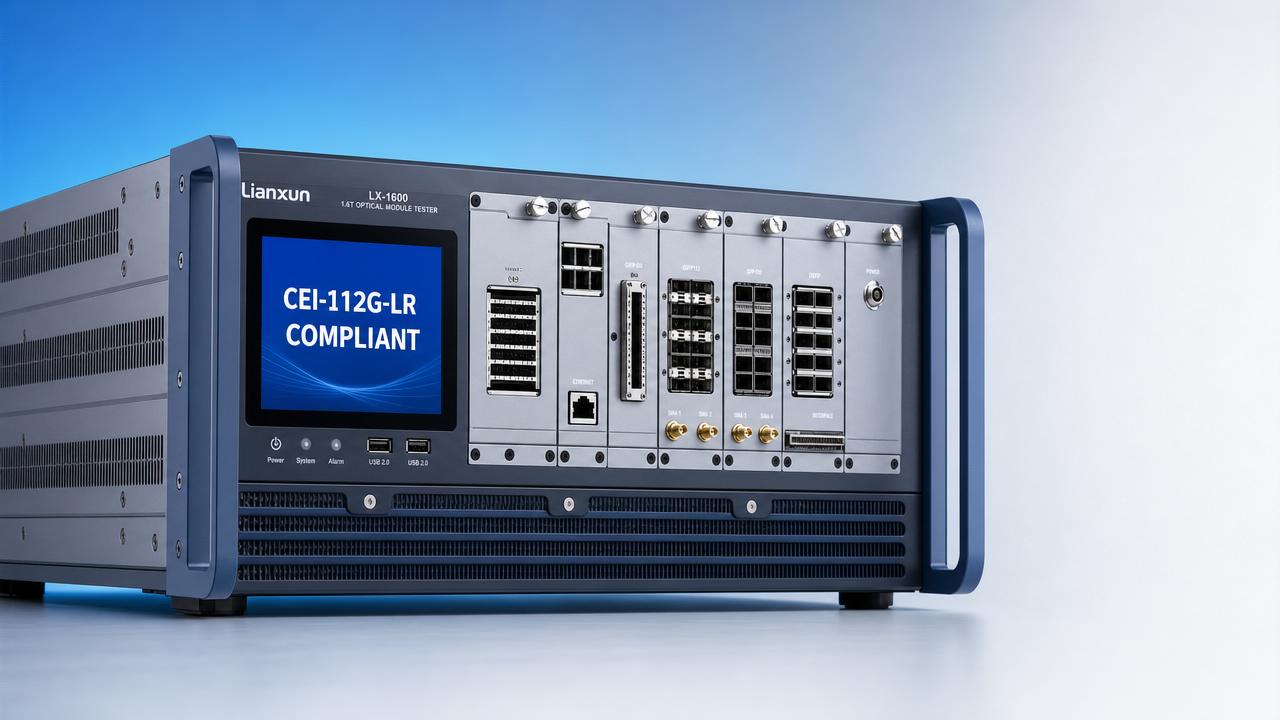
 Lianxun Instruments Q1 Net Profit Soars 515% on 1.6T Optical Module TestersLianxun Instruments' 1.6T optical module testers drive 515% Q1 net profit surge—discover how LX-1600 BERTs & eye analyzers are reshaping global AI infrastructure testing.
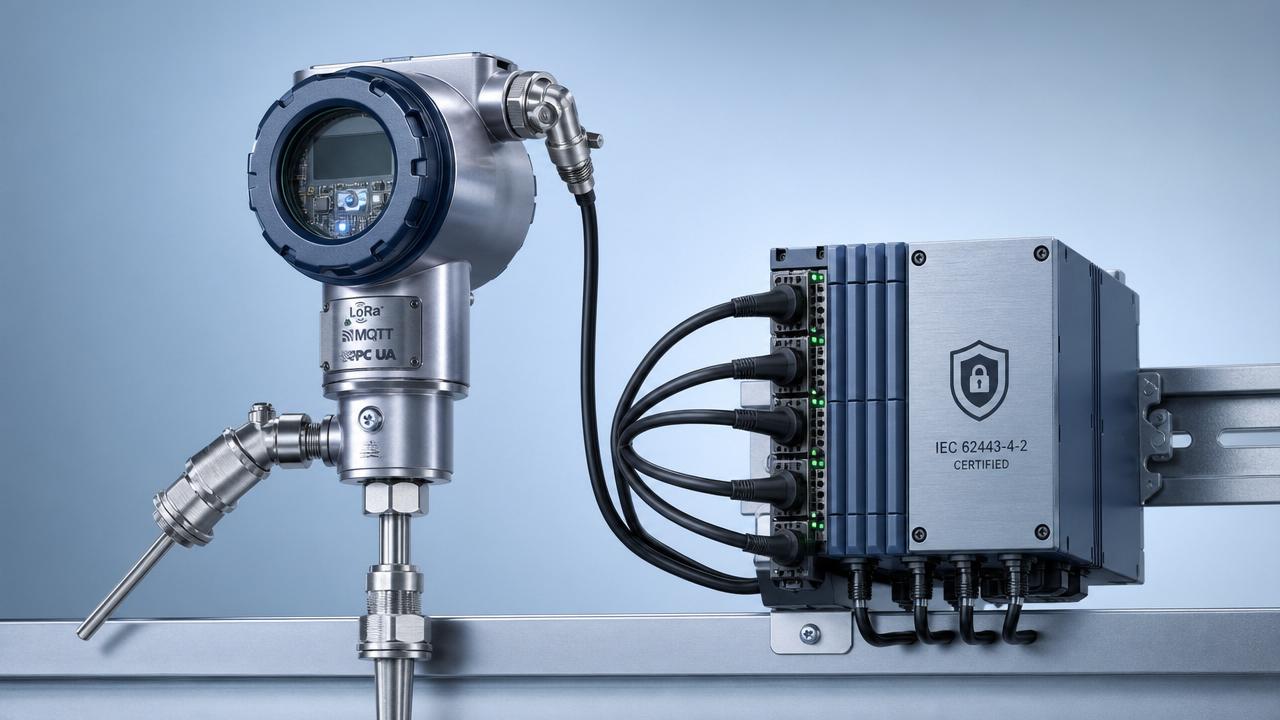
 Inovance Files for H-Share Listing to Raise $1.37B for Industrial AI Instruments and Edge ControllersInovance’s $1.37B H-share listing targets Industrial AI Instruments & Edge Controllers—watch for EU/US regulatory milestones, LoRa/MQTT/OPC UA field devices, and certification-driven market access.
Chat Online