


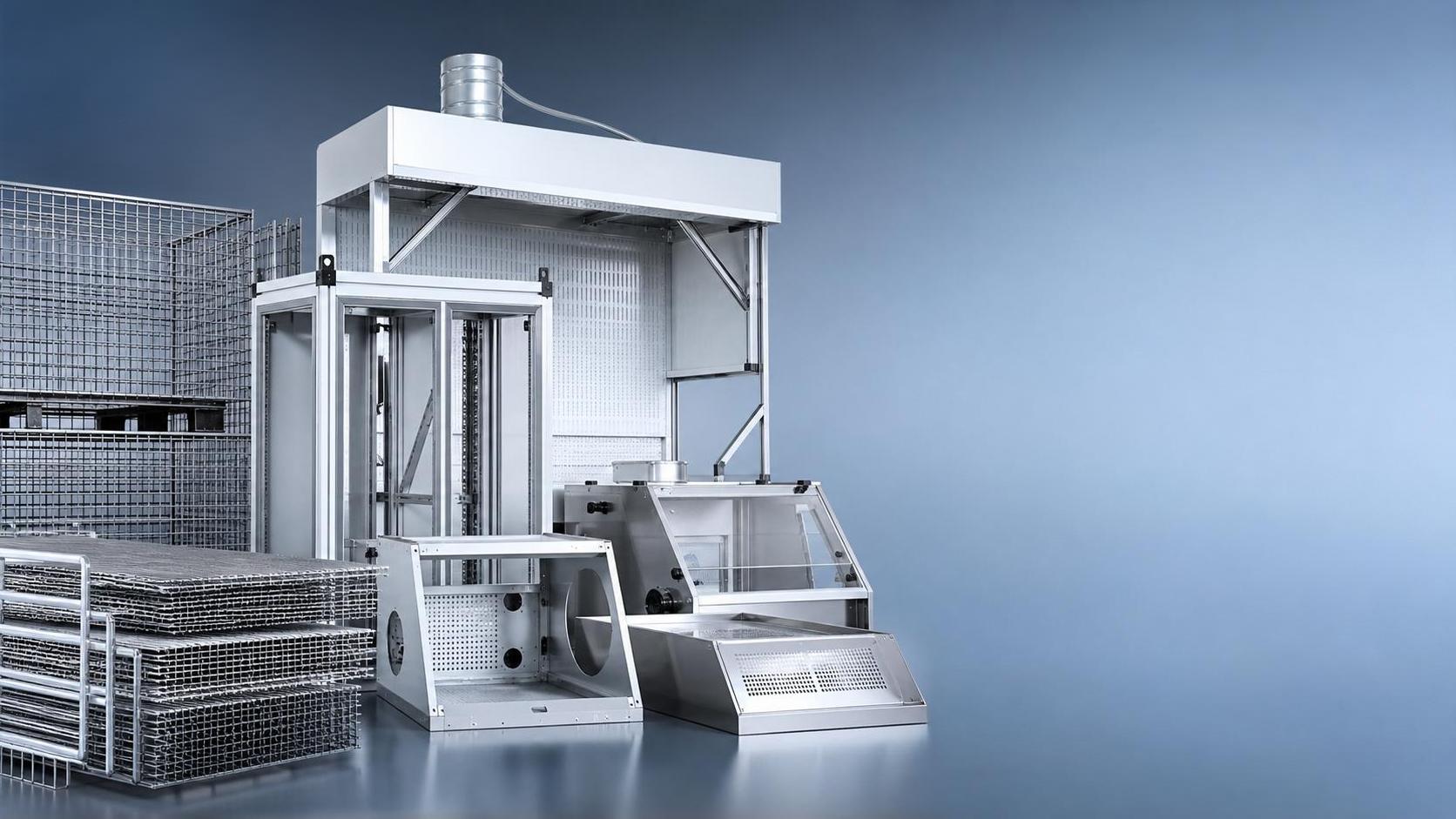
On May 1, 2026, the U.S. Department of Commerce initiated the third sunset review of anti-dumping (AD) and countervailing duty (CVD) orders on steel grating from China. This product is widely used in industrial instrumentation metal structural components—including control cabinets, explosion-proof junction boxes, and field analyzer supports—making it highly relevant to manufacturers and exporters of integrated instrumentation systems, metal fabrication firms, and supply chain partners serving North American industrial end markets.
Event Overview
On May 1, 2026, the U.S. Department of Commerce formally launched the third sunset review of the existing AD and CVD orders on steel grating originating in China. The current AD rates range from 24.6% to 128.2%, and CVD rates range from 15.7% to 49.3%. The review will determine whether revoking these duties would likely lead to continuation or recurrence of dumping and/or subsidization. No preliminary findings or determinations have been issued at this stage; the process is in its initial administrative phase.
Industries Affected by Segment
Direct Exporters of Steel Grating and Integrated Instrumentation Systems
These firms supply finished steel grating or incorporate it into assembled products such as instrument control enclosures or mounting structures. They face direct exposure to the full AD/CVD margin if the orders are continued. Impact manifests primarily through reduced price competitiveness in U.S. procurement tenders and longer sales cycles due to customs valuation scrutiny and bonding requirements.
Contract Manufacturers and Metal Fabricators Serving Instrumentation OEMs
Firms that source Chinese-origin steel grating for downstream assembly into U.S.-bound instrumentation hardware may encounter compliance risks under U.S. customs’ “substantial transformation” assessments. If the grating is deemed a critical component—not merely incidental—the entire finished good could be subject to the same AD/CVD liability, affecting landed cost and contractual delivery terms.
Industrial Automation and Process Instrumentation Suppliers
Companies integrating steel grating into field-deployed equipment (e.g., analyzers, remote I/O cabinets, hazardous-area housings) may see U.S. customers accelerate requests for alternative sourcing declarations or regionalized BOMs. This creates pressure to validate non-Chinese material pedigrees—even where grating constitutes a small portion of total system value—due to buyer risk-aversion and internal trade compliance policies.
What Relevant Enterprises or Practitioners Should Monitor and Do Now
Track official docket updates and deadline calendars from the U.S. Department of Commerce and International Trade Commission
The sunset review follows a defined statutory timeline: Commerce’s preliminary determination is expected within 120 days of initiation, with final determinations typically issued within 180–240 days. Filing deadlines for interested party comments (e.g., supporting or opposing continuation) are binding and time-sensitive—missing them forfeits formal standing in the record.
Map current bill-of-materials for U.S.-bound instrumentation hardware to identify steel grating content by origin, form, and function
Enterprises should audit whether grating is imported as a standalone item or embedded in finished assemblies—and whether its role meets U.S. customs criteria for essentiality vs. ancillary use. Documentation supporting alternative classification (e.g., HTS 7308.90 vs. 7308.40) or substantial transformation may be needed ahead of potential verification requests.
Distinguish between policy signaling and enforceable obligation
A positive sunset review outcome (i.e., continuation of duties) does not automatically trigger new enforcement actions—but it does extend the legal basis for CBP to assess duties retroactively on unliquidated entries. Firms should avoid interpreting the initiation itself as an indication of likely continuation; past sunset reviews of this order have yielded mixed outcomes across iterations.
Prepare contingency options for procurement, labeling, and customer communication—not just sourcing shifts
Rather than waiting for final determinations, companies should pre-test documentation workflows for alternate supplier declarations, update technical datasheets to reflect material origin transparency, and align commercial teams on how to address customer inquiries about tariff exposure without overcommitting to timelines or alternatives.
Editorial Perspective / Industry Observation
Observably, this third sunset review functions less as an isolated trade action and more as a structural indicator of long-term sourcing recalibration in industrial automation supply chains. Analysis shows that U.S. industrial buyers are increasingly treating AD/CVD exposure not only as a cost factor but as a signal of supply continuity risk—prompting parallel evaluations of local fabrication capacity and ASEAN-based secondary metalworking hubs. From an industry perspective, the persistence of these orders across three review cycles suggests institutionalized trade barriers rather than temporary corrective measures. Current developments are better understood as reinforcing existing procurement trends than initiating new ones.
Conclusion:
This sunset review reaffirms the embedded role of steel grating in industrial instrumentation infrastructure—and underscores how trade remedies targeting seemingly niche structural components can ripple across system-level export strategies. It is not yet a binding change, but it is a durable marker of regulatory and commercial headwinds. Enterprises are better advised to treat it as a fixed parameter in medium-term supply planning rather than a transient event requiring reactive adjustment.
Source Attribution:
- U.S. Department of Commerce, Federal Register Notice (May 1, 2026), Case No. A-570-050 (AD) and C-570-051 (CVD)
- Noted areas for ongoing observation: Final determinations by Commerce and ITC, potential petitions for exclusion requests, and CBP guidance on assembly-based duty assessment for integrated instrumentation hardware


 Asia-Europe Freight Surcharges Lift Costs for Instrument ExportsAsia-Europe Freight Surcharges are raising instrument export costs fast. See how HS 9026/9027 cargo, booking quotas, rail alternatives, and trade risk shifts could impact your supply chain.
 EU Opens Anti-Dumping Probe Into Chinese Welded Steel MeshEU anti-dumping probe into Chinese welded steel mesh could reshape instrumentation export costs, sourcing risk, and EU supply chain planning. Read the key impacts now.
 China Customs Rolls Out AI HS Tool for Instrument ExportsChina Customs rolls out an AI HS tool for instrument exports under HS Chapter 90. Learn how it improves classification accuracy, speeds clearance, and impacts export compliance.
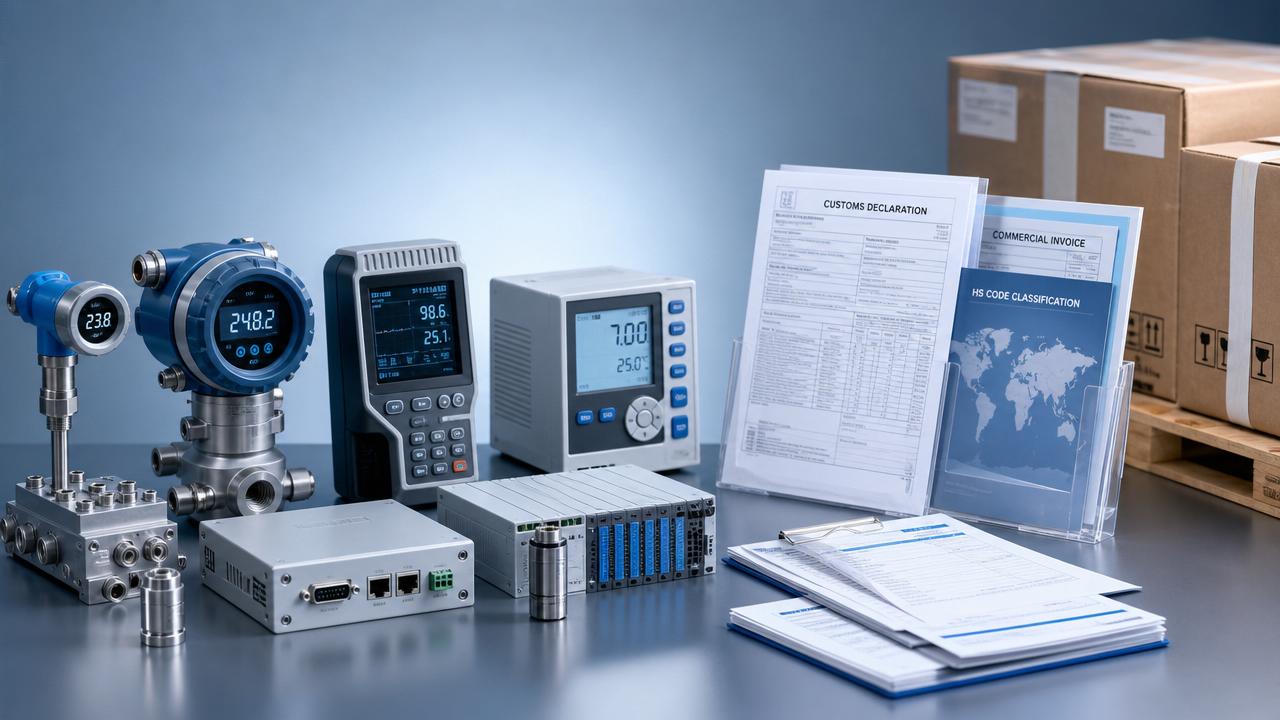
 China Customs Launches Smart HS Tool for Instrument ExportsChina Customs Launches Smart HS Tool for Instrument Exports, boosting HS code accuracy to 98.2%. Learn how it improves compliance, reduces clearance risk, and supports smoother global instrument shipments.
 China Customs Launches Smart HS Tool for Instrument ExportsChina Customs launches a smart HS tool for instrument exports, helping manufacturers and exporters improve HS code accuracy, reduce compliance risks, and speed up customs clearance.
") China's Instruments Rise: 7 Firms in Global Top 25 (2026)China's Instruments Rise: 7 firms enter 2026 Global Top 25 — Hikvision #4, United Imaging & SUPCON debut. Key insights for procurement, compliance & AI-integrated instrumentation.
China's Instruments Rise: 7 Firms in Global Top 25 (2026)China's Instruments Rise: 7 firms enter 2026 Global Top 25 — Hikvision #4, United Imaging & SUPCON debut. Key insights for procurement, compliance & AI-integrated instrumentation.



Chat Online