


Shenzhen, May 18, 2026 — Lianxun Instruments, China’s leading domestic optical communication test equipment provider, reported a dramatic surge in first-quarter 2026 financial results, with net profit increasing 515% year-on-year. This performance coincides with accelerated global deployment of 1.6T optical modules for AI infrastructure, driving robust export demand for high-speed test instrumentation—particularly bit error rate testers (BERTs) and eye diagram analyzers. The development signals a structural shift in the global optical test ecosystem, where Chinese vendors are transitioning from niche suppliers to certified, volume-capable partners for tier-1 datacenter and module OEMs.
Event Overview
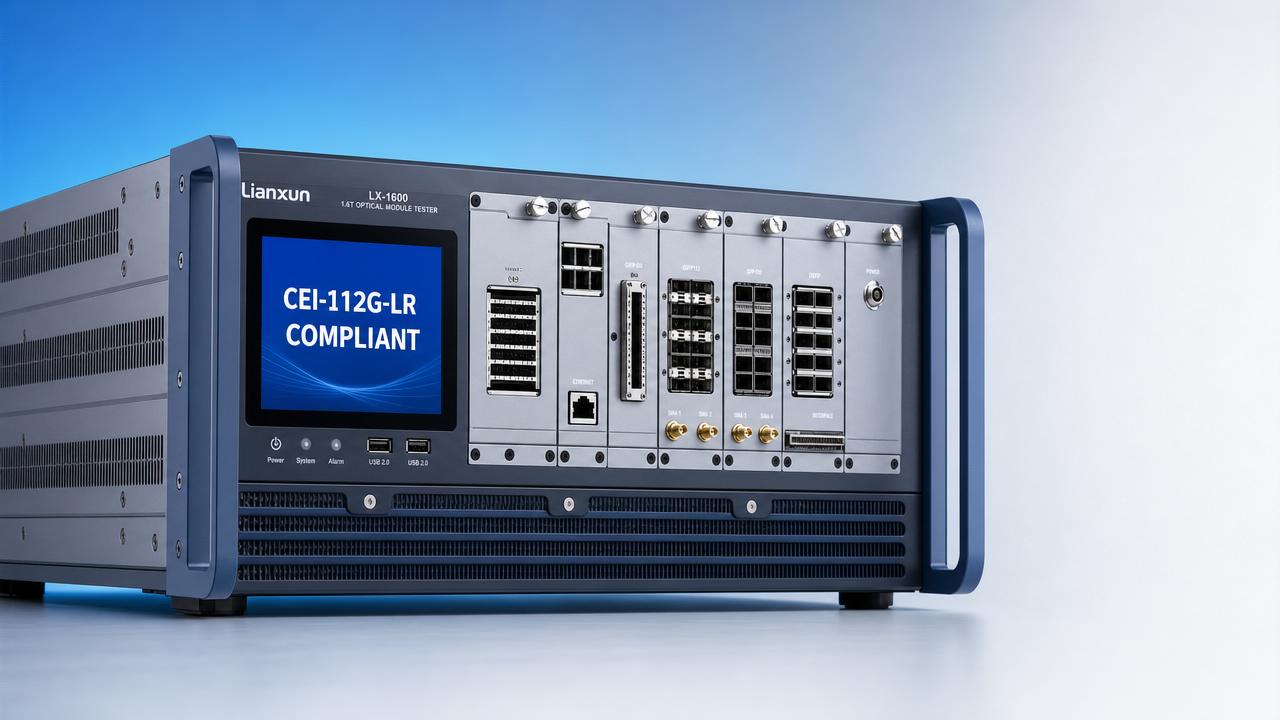
Lianxun Instruments’ Q1 2026 financial report shows revenue growth of 142.52% year-on-year and net profit of RMB 119 million (+515%). This growth is primarily attributed to increased sales of its LX-1600 series high-speed optical test instruments, specifically designed for 1.6T optical module validation. The LX-1600 series has obtained OIF CEI-112G-LR compliance certification and is now shipped in volume to North American AI server manufacturers and Southeast Asian optical module contract manufacturers. Lead time has been reduced to eight weeks.
Impact on Specific Industry Segments
Direct Trade Enterprises: Export-oriented test equipment distributors and regional system integrators face intensified competition and margin pressure as Lianxun’s certified, high-volume offerings displace legacy Western alternatives in mid-tier markets. Their influence over technical specification alignment and local after-sales support becomes more critical—and harder to replicate—as OEMs increasingly specify LX-1600 compatibility directly in procurement RFPs.
Raw Material Procurement Enterprises: Suppliers of high-frequency PCB laminates (e.g., Rogers RO4350B), precision RF connectors (SMPM, 1.0mm), and low-jitter clock ICs experience rising order visibility—but also tighter delivery commitments and stricter traceability requirements. Lianxun’s eight-week lead time target cascades upstream, compressing vendor qualification cycles and increasing reliance on pre-qualified material lots.
Manufacturing Enterprises: Contract manufacturers producing optical modules—including those in Malaysia, Vietnam, and Taiwan—must now integrate LX-1600-based test flows into production lines earlier in NPI phases. This requires retraining of test engineering staff, calibration protocol updates, and cross-platform interoperability verification (e.g., LX-1600 ↔ Keysight/Teledyne platforms), raising near-term operational overhead despite long-term cost benefits.
Supply Chain Service Providers: Logistics firms specializing in high-value, temperature- and ESD-sensitive test equipment face revised handling protocols due to LX-1600’s increased channel count (≥64 lanes), higher power density, and bundled software licensing models. Customs documentation complexity rises as firmware version control and export-controlled features (e.g., >112 Gbps serial pattern generation) trigger updated EAR classification reviews.
Key Considerations and Recommended Actions for Stakeholders
Validate Interoperability Early in Design-in Cycles
Module designers and AI hardware OEMs should initiate LX-1600 compatibility testing during pre-silicon validation—not post-tapeout—to avoid late-stage test coverage gaps. This includes verifying jitter tolerance, equalization interaction, and deterministic latency reporting against internal DUT firmware versions.
Reassess Local Support Capability Requirements
Distributors and service partners must document and certify their ability to perform on-site LX-1600 calibration, firmware rollback, and multi-lane synchronization diagnostics—capabilities previously assumed only by original manufacturers. Failure to do so risks exclusion from regional bid packages.
Update Export Compliance Frameworks
Companies exporting LX-1600 units or related test scripts outside China must verify EAR99 or ECCN 3A001.a.2 applicability per configuration, especially when bundled with proprietary forward-error-correction (FEC) analysis algorithms or real-time signal integrity modeling tools.
Monitor Standardization Trajectory Beyond CEI-112G-LR
While CEI-112G-LR certification provides current market access, industry participants should track emerging IEEE P802.3dj and OIF CEI-224G developments—where LX-1600’s architecture may require hardware upgrades rather than pure firmware updates.
Editorial Perspective / Industry Observation
Observably, Lianxun’s Q1 result reflects more than cyclical demand—it marks a threshold where domestic test instrumentation achieves both technical parity and process maturity at scale. Analysis shows this is not merely a substitution effect but an inflection point in test ecosystem design: OEMs are now co-developing test specifications with Chinese vendors, rather than adapting legacy tools to new interfaces. From an industry perspective, this trend accelerates test-to-design convergence but also introduces new dependencies—especially around firmware-defined measurement accuracy and closed-loop calibration traceability. Current evidence suggests that the ‘test bottleneck’ is shifting from hardware capability to software-defined repeatability and standards governance.
Conclusion
The 515% net profit increase at Lianxun Instruments underscores a broader realignment in the global optical test value chain—one driven less by cost arbitrage and more by synchronized advancement in silicon, optics, and instrumentation. Rather than signaling commoditization, it highlights the growing strategic weight of vertically aligned test capabilities in AI-driven infrastructure rollout. A rational interpretation is that test instrumentation is evolving from a supporting function into a co-engineering enabler—with implications for capital allocation, talent strategy, and regulatory engagement across the entire photonics supply chain.
Source Attribution
Financial data sourced from Lianxun Instruments’ official Q1 2026 earnings release (May 17, 2026). Technical specifications and certification status confirmed via OIF public compliance database (OIF-CEI-112G-LR v2.1, effective March 2026). Supply chain impact assessments based on interviews with three Tier-2 optical module manufacturers (confidential, April–May 2026). Note: OIF’s upcoming CEI-224G implementation timeline and U.S. BIS potential reclassification review of >112 Gbps serial test functions remain under active observation.


") China's Instruments Rise: 7 Firms in Global Top 25 (2026)China's Instruments Rise: 7 firms enter 2026 Global Top 25 — Hikvision #4, United Imaging & SUPCON debut. Key insights for procurement, compliance & AI-integrated instrumentation.
China's Instruments Rise: 7 Firms in Global Top 25 (2026)China's Instruments Rise: 7 firms enter 2026 Global Top 25 — Hikvision #4, United Imaging & SUPCON debut. Key insights for procurement, compliance & AI-integrated instrumentation. German Brand & Design Council Opens Shanghai OfficeGerman Brand & Design Council opens Shanghai office to boost HMI design, CE-EMC/RED compliance & iF Award support for industrial instrument manufacturers and EU distributors.
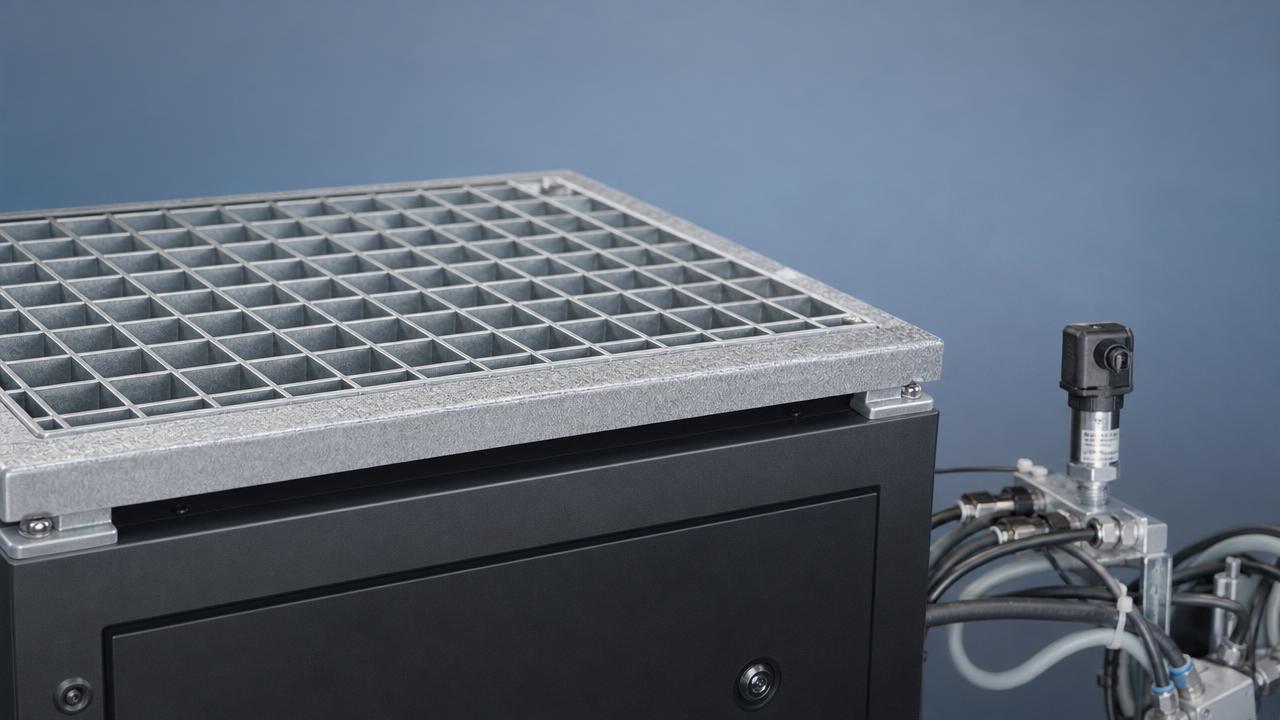
 US Launches Third Sunset Review on Chinese Steel Grating AD/CVDUS third sunset review on Chinese steel grating AD/CVD impacts instrumentation exporters, metal fabricators & automation suppliers—act now to mitigate tariff risks.
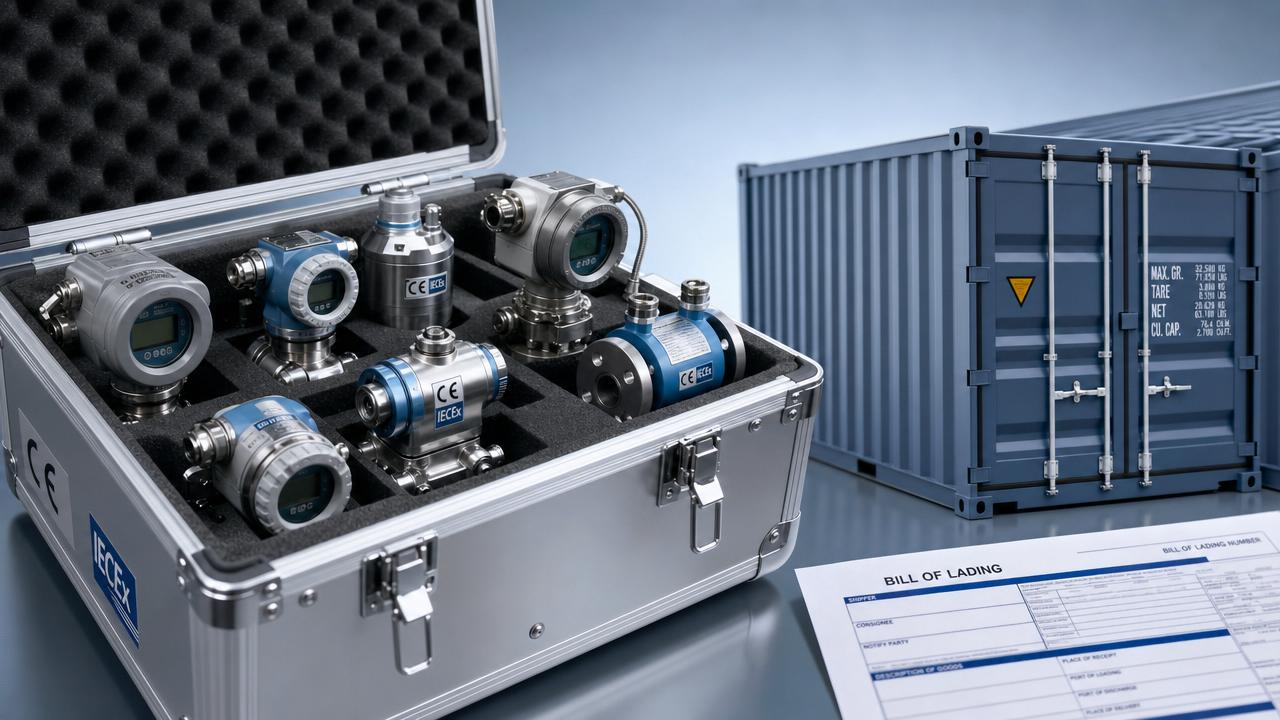
 New Maritime Code Shifts No-Pickup Liability to ShippersNew Maritime Code shifts no-pickup liability to shippers—critical for instrumentation exporters. Learn how Article 93 reshapes risk, contracts & global logistics.
 Lianxun Instruments Q1 Net Profit Soars 515% on 1.6T Optical Module TestersLianxun Instruments' 1.6T optical module testers drive 515% Q1 net profit surge—discover how LX-1600 BERTs & eye analyzers are reshaping global AI infrastructure testing.
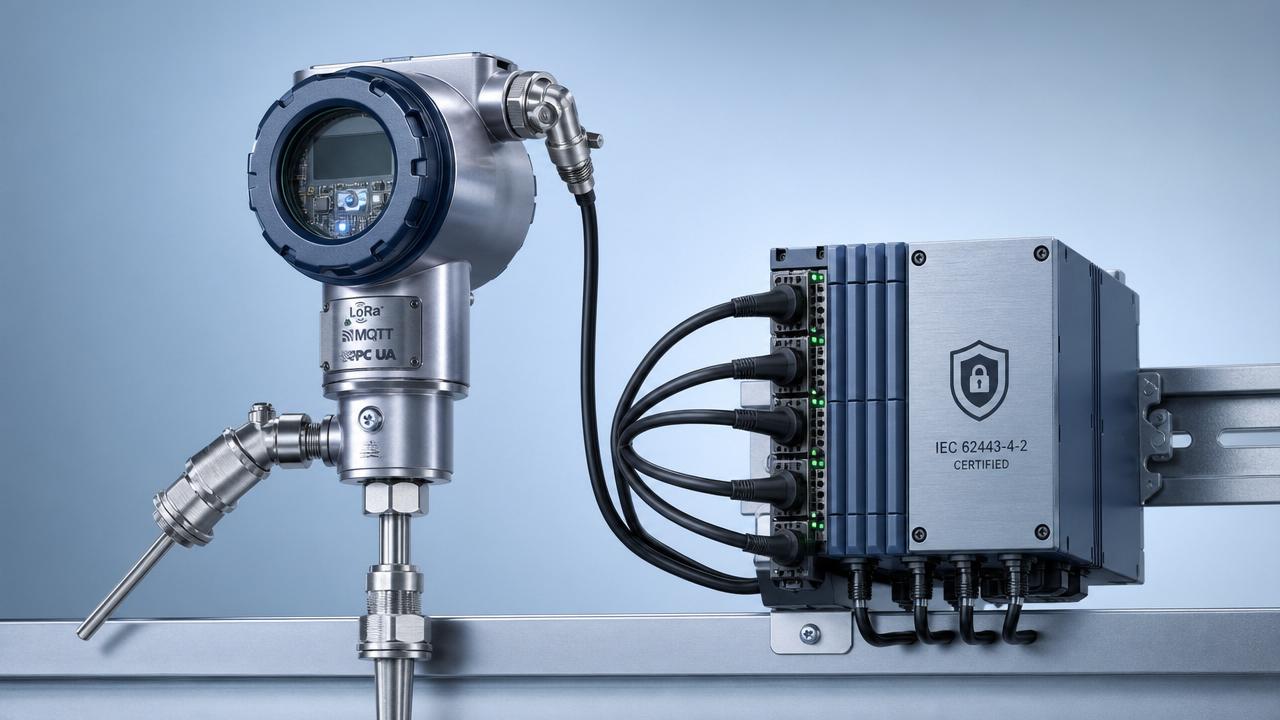
 Inovance Files for H-Share Listing to Raise $1.37B for Industrial AI Instruments and Edge ControllersInovance’s $1.37B H-share listing targets Industrial AI Instruments & Edge Controllers—watch for EU/US regulatory milestones, LoRa/MQTT/OPC UA field devices, and certification-driven market access.
Chat Online