


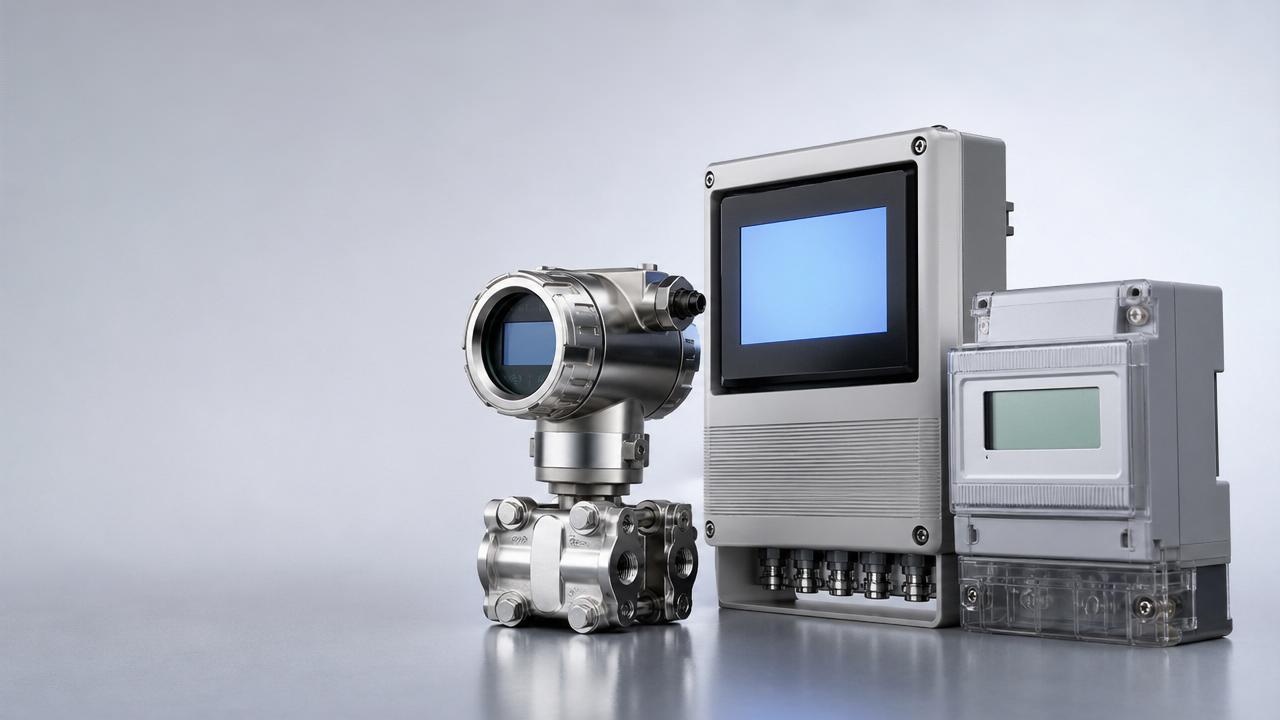
Effective April 2, 2026, the United States and China have mutually adjusted their additional tariffs on a broad range of instrumentation products—including industrial process instruments, environmental monitoring equipment, and electrical energy meters—to a uniform rate of 10%. This development directly affects exporters and importers of analytical instruments, smart transmitters, and online monitoring systems in North America and China, offering a measurable, albeit temporary, reduction in landed cost pressures.
Event Overview
On April 2, 2026, both the U.S. and Chinese governments implemented a reciprocal adjustment to their Section 301 and retaliatory tariff measures, lowering the additional duty rate applied to covered instrumentation products from 25% to 10%. The scope explicitly includes industrial process instruments, environmental monitoring devices, and electrical energy metering equipment. No further details regarding duration, exclusions, or phased implementation have been publicly confirmed.
Industries Affected
Instrument Exporters (China-based)
These companies face reduced export cost burdens for covered products shipped to the U.S. market. The tariff cut lowers the incremental duty component of export pricing, potentially improving competitiveness in tender processes where total landed cost is evaluated. However, the benefit applies only to items explicitly listed under the updated tariff annexes—not all instrumentation categories.
U.S.-based Importers and Distributors
For importers handling industrial and environmental instrumentation, the 10% rate replaces prior volatility linked to higher and less predictable duty levels. This supports more stable landed cost modeling, enabling tighter quoting cycles and improved inventory planning—especially for mid-to-high-end analyzers and smart field devices requiring longer lead times.
OEMs and System Integrators Sourcing Components
Companies integrating imported sensors, transmitters, or data loggers into larger systems may see modest relief in component procurement costs—but only if those inputs fall under the revised tariff lines. Since many subassemblies or non-listed components remain subject to prior rates, full supply chain impact remains partial and item-specific.
Key Considerations and Recommended Actions
Monitor official tariff line updates and product classifications
The 10% rate applies only to Harmonized System (HS) codes explicitly included in the latest joint announcements. Companies should verify current HTS/HS code alignments for each exported or imported SKU—not assume blanket coverage across instrument families.
Reassess pricing and inventory strategies for Q2–Q3 2026
With greater tariff predictability through mid-2026, importers and distributors may optimize safety stock levels and adjust reorder triggers—particularly for high-value, long-lead-time items like online gas analyzers or calibrated environmental monitors.
Distinguish between tariff policy signals and operational execution
This adjustment reflects a coordinated administrative decision—not a broader trade agreement. There is no indication it alters rules of origin, customs valuation methodologies, or anti-dumping enforcement. Compliance workflows and documentation requirements remain unchanged.
Prepare for potential reversion or recalibration post-2026
No sunset clause or multi-year commitment has been published. Businesses should treat the 10% rate as a near-term condition—not a structural shift—and maintain scenario-planning capacity for possible adjustments ahead of the 2026 U.S. election cycle or bilateral review deadlines.
Editorial Perspective / Industry Observation
Observably, this tariff alignment functions primarily as a tactical recalibration rather than a strategic pivot. It eases near-term cash flow and forecasting friction for cross-border instrumentation trade but does not resolve underlying classification disputes, compliance scrutiny, or technology-related export controls. Analysis shows the move better reflects administrative coordination than substantive de-escalation—its durability hinges on ongoing bilateral technical dialogue, not policy convergence. From an industry perspective, sustained attention remains warranted on how customs authorities interpret coverage scope and whether parallel regulatory actions (e.g., EPA certification timelines or FCC equipment authorization) evolve independently.
Conclusion: This tariff adjustment delivers tangible, limited-scope cost relief for specific instrumentation categories traded between the U.S. and China. It is best understood as a time-bound operational easing—not a signal of broader trade normalization. Stakeholders should prioritize precise HS-code verification, short-horizon inventory and pricing recalibration, and continued monitoring of implementation-level guidance—not long-term strategic assumptions.
Source: Official tariff notices issued by the U.S. Trade Representative (USTR) and China’s Ministry of Finance, effective April 2, 2026. Note: Duration, extension mechanisms, and potential exclusions remain unconfirmed and require ongoing observation.


 1259 New National Standards Take Effect in May 20261259 new national standards effective May 2026 mandate GFAAS, LC-MS/MS & GC-MS for compliance—key for exporters, labs & instrument suppliers.
 GWM Patents AI-Driven Multi-Screen Quality Switching for Vehicle HMIsGWM's AI-driven multi-screen quality switching patent unlocks adaptive display tech for industrial HMIs, DCS stations & explosion-proof touchscreens — watch for certified deployments.
 US-China Tariffs Unified at 10% for InstrumentsUS-China tariffs on instruments unified at 10%—boosting cost efficiency for industrial process instruments, environmental monitoring equipment & energy meters. Act now.
 EN 61000-6-4:2026 Enters Force for Industrial EMC ComplianceEN 61000-6-4:2026 is now mandatory for industrial EMC compliance — stricter 1–6 GHz emissions & dynamic AI-device testing. Act now to avoid EU market delays.
 New China Export Rules for Instruments Effective May 2026New China export rules for instruments require CNAS-issued CE/UKCA reports by May 2026 — ensure compliance now to avoid EU/UK shipment delays.
 EU CE-EPD Digital Compliance Label Mandatory from May 2026EU CE-EPD digital compliance label becomes mandatory for instrumentation exports from May 2026 — discover how Chinese OEMs, suppliers & EMS providers can prepare now.

Chat Online