


Products
Contact Us
Get A Quote
Recommend
‹
›
‹
›
Product Description
Basic Principles
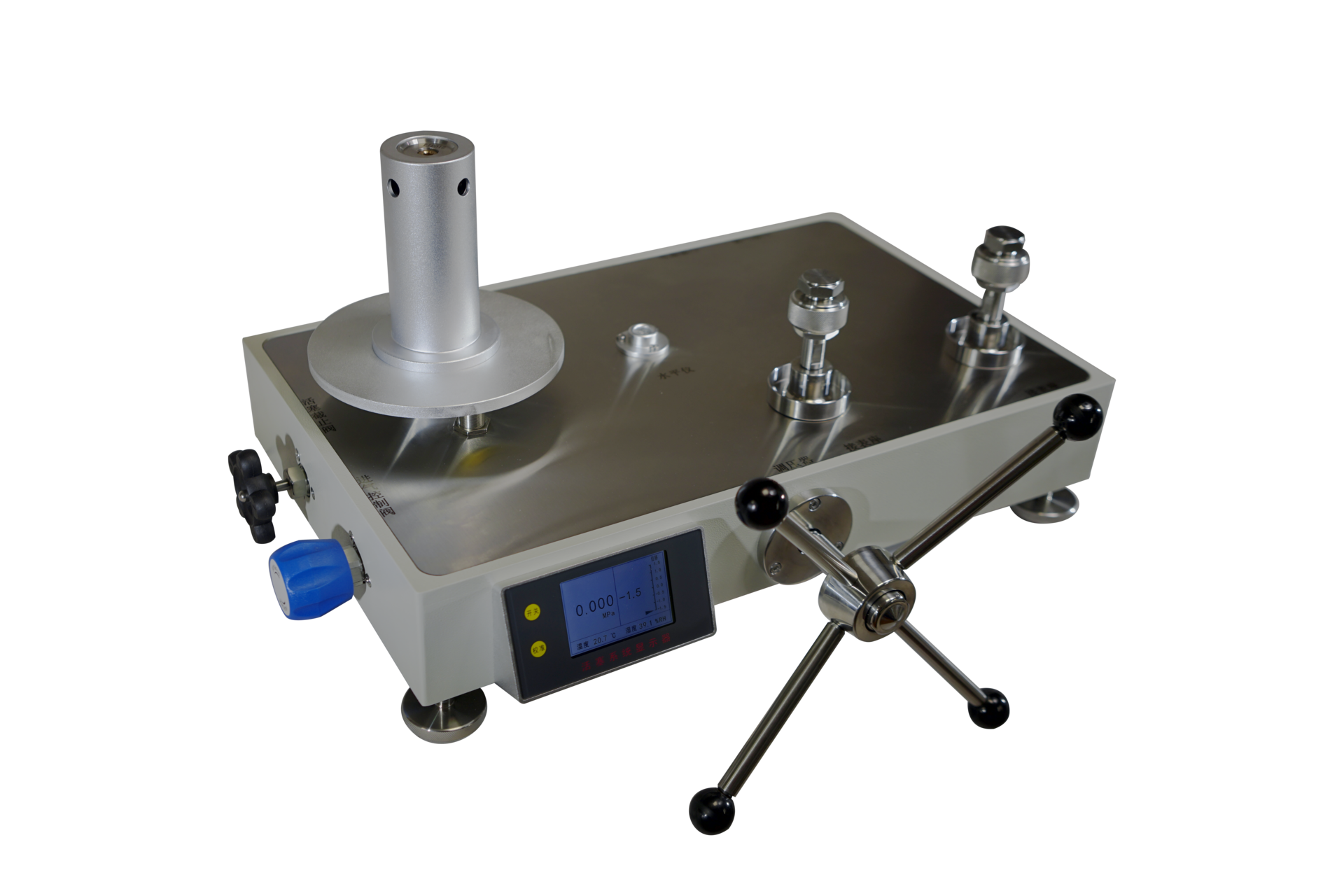
The definition of pressure is the ratio of force on a certain area to that area. The core component is an extremely accurate piston system component, which is loaded with weights to generate the pressure required for the measurement. Both the piston cylinder and the piston rod are made of carbide. This material has extremely low compression deformation and thermal expansion coefficient, which ensures that the cross section of the piston has a good linearity, which makes the accuracy of the instrument very good.
The instrument directly measures the pressure by definition (P=F/S), and the piston system uses high-quality carbide materials, so that the instrument has a very small measurement uncertainty and a long-term stability with a validity period of more than 5 years.
Use environment and selection parameters
1. Use environment: Ambient temperature: (20±1)℃
Relative humidity: constant temperature room below 85%
Power supply voltage: AC 220V
Frequency: 50HZ
There should be no mechanical vibration affecting the metering performance during use
2. Selection parameters of piston pressure gauge
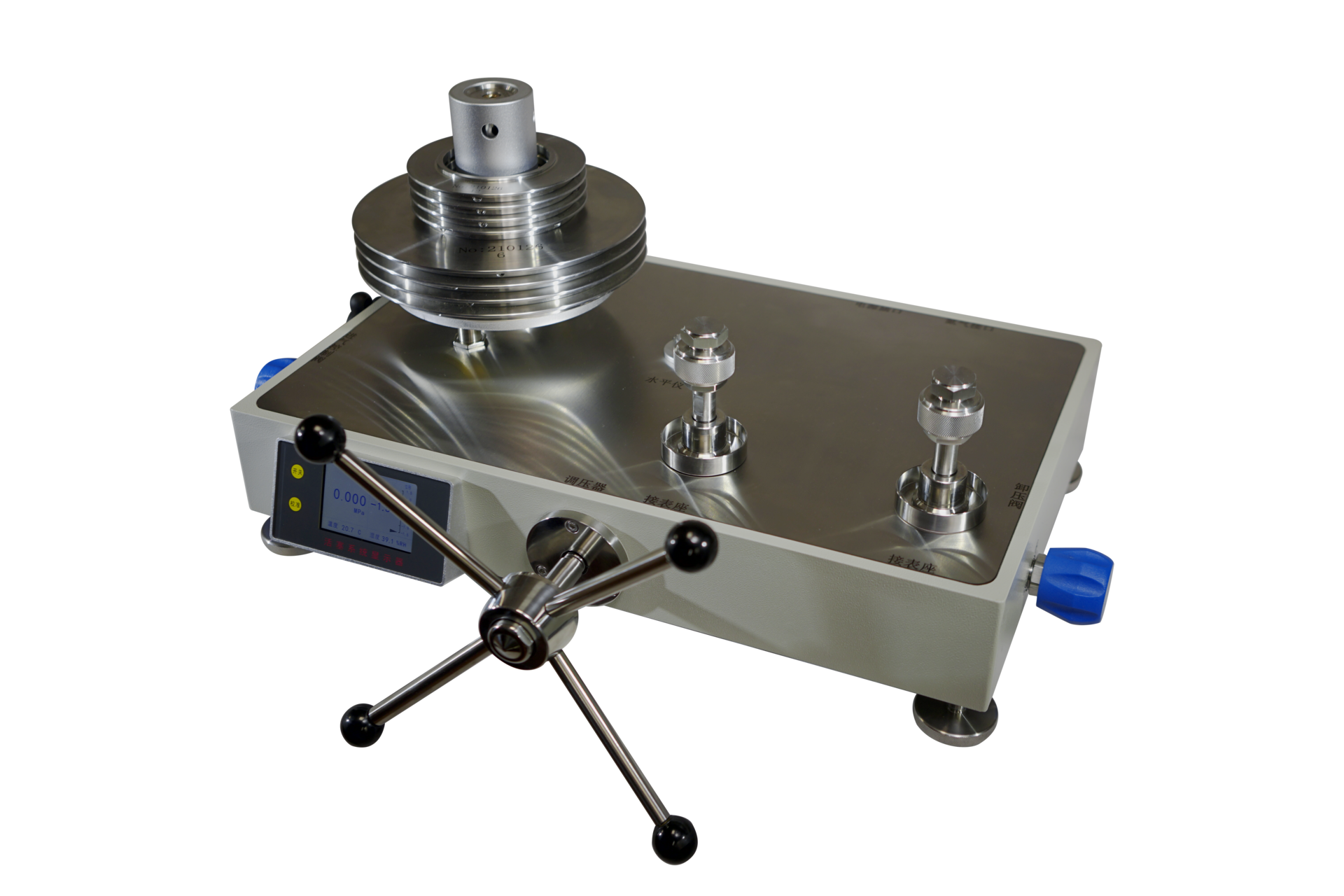
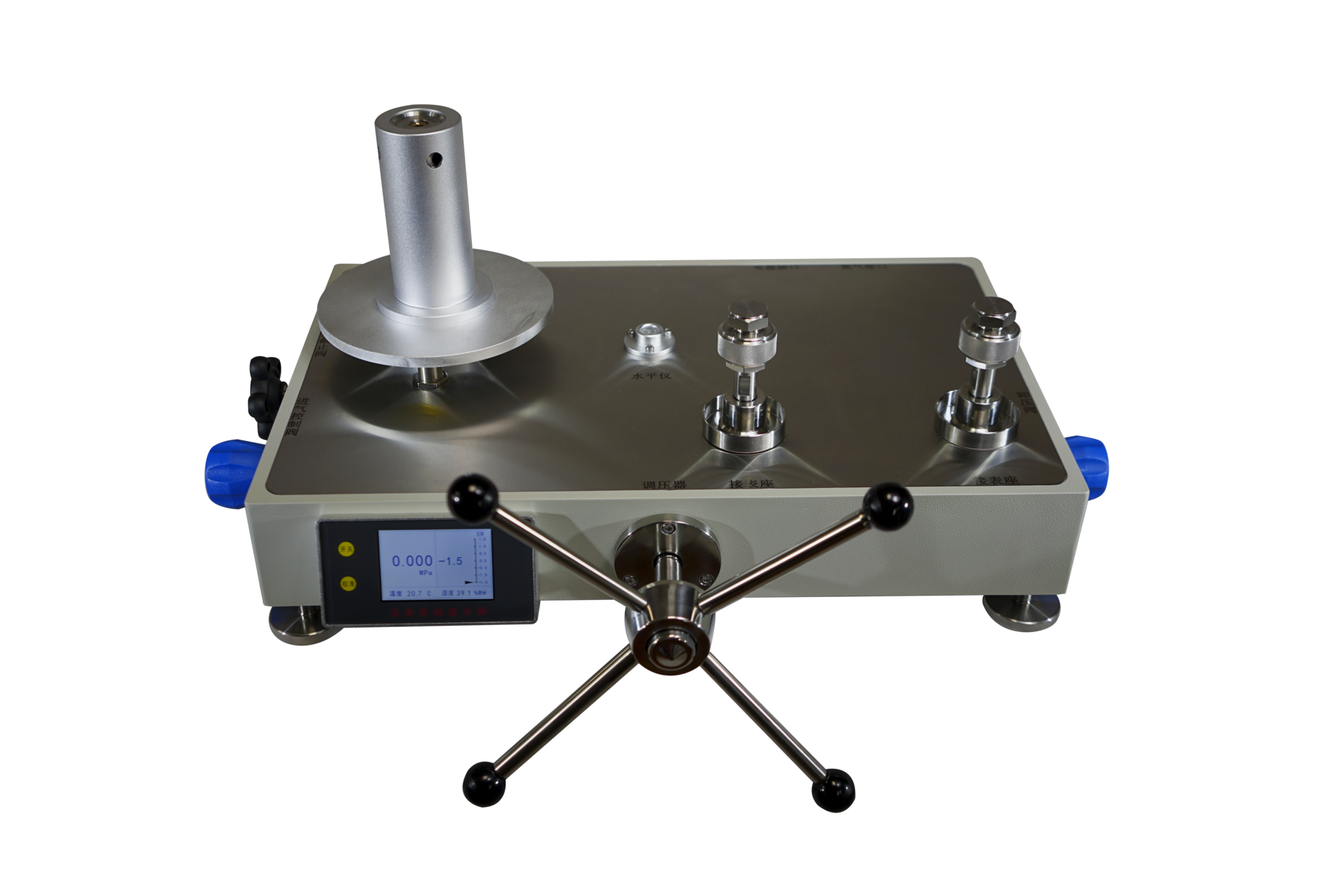
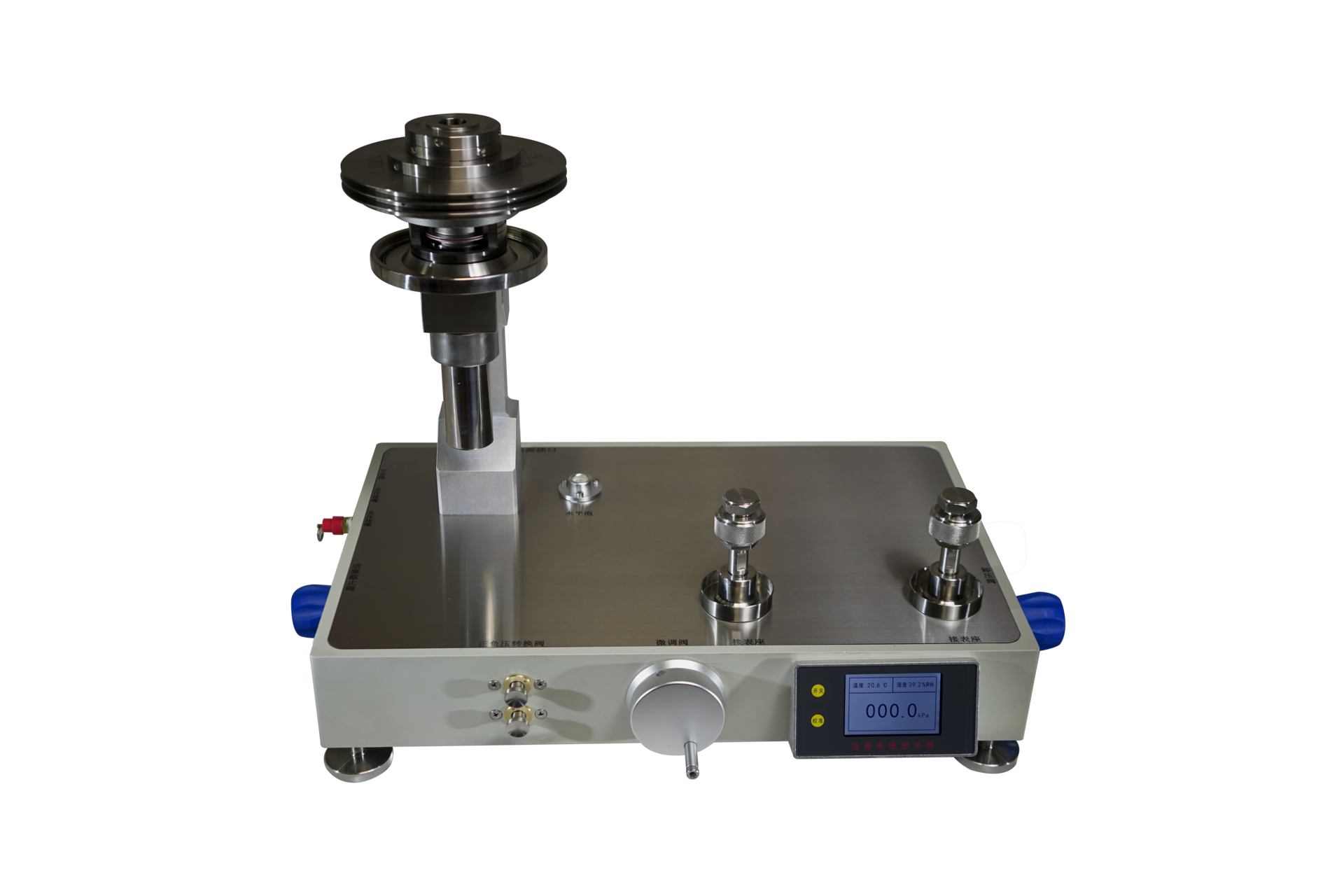
XyQ-60 gas Deadweight tester
Weight configuration table
Functional characteristics
1. The gas piston pressure gauge uses dry pure air or pure nitrogen as the gas source, and the equipment to be inspected is not polluted. It is mainly aimed at clean laboratories, medical industry products and products with high pollution protection levels, etc., with high safety requirements. Place design, simpler and safer.
2. Patented piston pressure system components, novel structure, anti-collision, tool-free disassembly, easy to clean the piston system, replace the sealing ring, convenient, fast and safe.
3. The performance of the pressure regulating system is better than that of the oil pressure regulating system, the pressurization process is easy, it is not easy to leak pressure, and it is maintenance-free.
4. The piston display system adopts a 3.5-inch color display screen, which displays the displacement of the piston rod, the temperature and humidity on site.
5. Equipped with two quick interfaces (M20×1.5) of the meter seat, with a stop valve, which can be used for sealing test.
6. The globe valve and pressure regulator are maintenance-free and easy to operate. Reasonable handle design, personalized design according to the hand posture.
7. The main body shell is made of 12mm thick aluminum alloy plate, which is firm and stable.
Message
Products Recommended
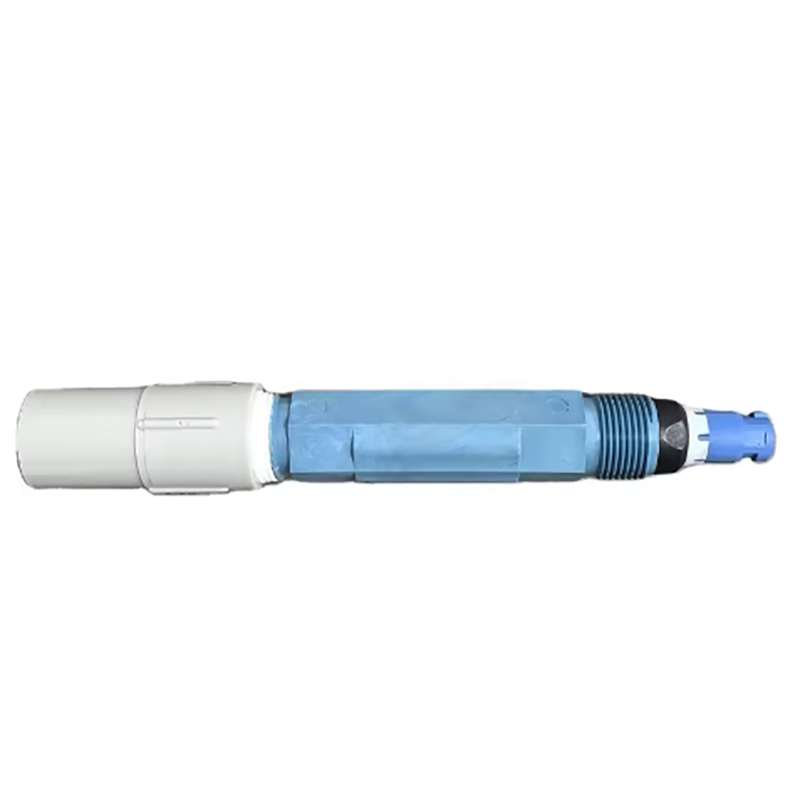
 Endress+Hauser CPS92E Memosens Digital pH Electrode Orbisint pH Sensor For Clean Water Process
 Original E+H CPS71E Digital pH Probe Memosens pH Electrode Industrial Liquid Analysis Sensor
 Endress+Hauser CPS16E Industrial pH/ORP Sensor Electrode for Process Measurement
 Endress+Hauser CPS11E Digital pH Sensor Electrode for Industrial Process Measurement
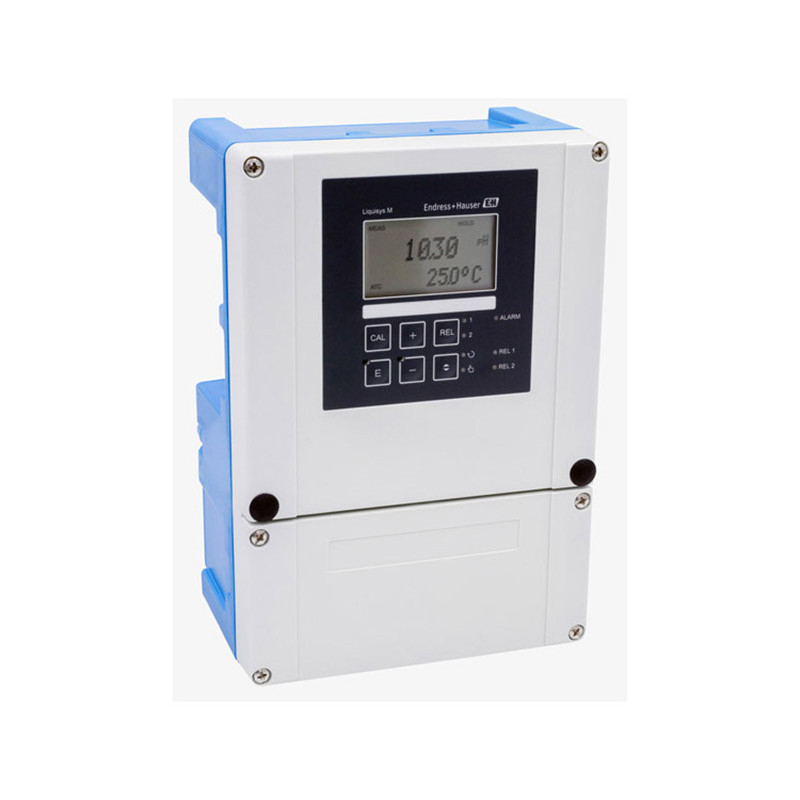
 Endress+Hauser Liquisys CPM225 pH/ORP Transmitter E+H Liquid Analysis Transmitter
 Endress+Hauser CPF82E pH/ORP Analog Sensor Industrial Liquid Measurement pH Electrode
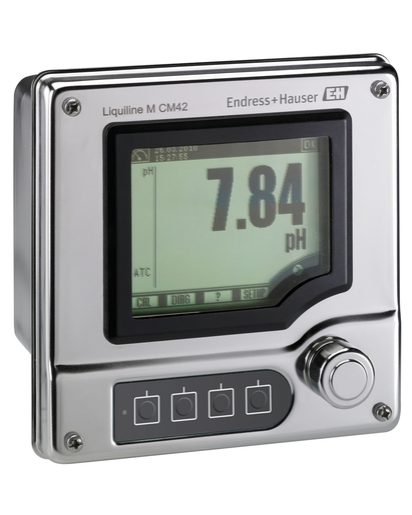
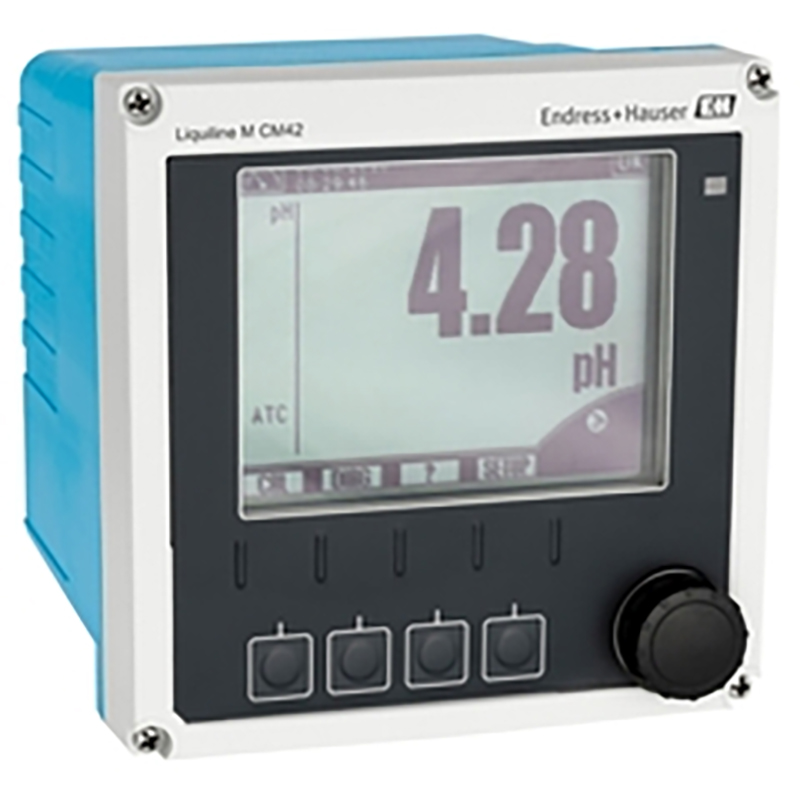
 Original Endress+Hauser CM42B Liquiline M Single Channel Liquid Analysis Transmitter
 ndress+Hauser Liquiline M CM42 Single-Channel Liquid Analysis Transmitter CM42 pH/ORP/Conductivity/Dissolved Oxygen TransmitterEndress+Hauser
 Original Endress+Hauser Deltapilot FMB51 Hydrostatic Level Transmitter 4-20mA HART Level Sensor
 Endress+Hauser Levelflex FMB53 Guided Radar Level Transmitter Hygienic Liquid Level Meter
![]() 压力系列价格查询
压力系列价格查询

Chat Online