


Choosing the right hydraulic calibration pump manufacturer in 2026 is less about finding the lowest quote and more about reducing risk over the full lifecycle of use. For buyers, technicians, operators, and distributors, the best manufacturer is the one that can deliver stable pressure output, repeatable calibration performance, clear technical documentation, dependable after-sales support, and long-term parts availability. If you are comparing a high pressure hydraulic calibration pump for field work, a hydraulic calibration pump for laboratory testing, or a supplier for OEM cooperation, the smartest evaluation method is to assess technical capability, quality consistency, service response, and total cost of ownership together.
What is the real search intent behind evaluating a hydraulic calibration pump manufacturer?
Most readers searching this topic are not looking for a basic definition of a hydraulic calibration pump. They are trying to answer a practical buying question: Which manufacturer can be trusted to provide accurate, durable, supportable equipment in 2026?
That intent usually falls into a few real-world scenarios:
- Procurement teams comparing suppliers before RFQ or tender submission
- Technical evaluators verifying whether a manufacturer can meet calibration and pressure stability requirements
- Maintenance teams checking spare parts, repairability, and service responsiveness
- Distributors and agents assessing whether a brand is suitable for long-term market development
- End users trying to avoid performance problems caused by low-quality pumps
So the most useful article is not one that lists generic features. It is one that helps readers make a confident supplier selection with fewer hidden risks.
What matters most to buyers and technical teams in 2026?
In 2026, readers care about measurable reliability, not just product claims. The key concerns usually include:
- Pressure generation stability: Can the pump build and hold pressure smoothly without drift, leakage, or pulsation issues?
- Calibration accuracy support: Does the pump enable precise comparison and verification work in real applications?
- Build quality: Are the seals, valves, fittings, and body materials suitable for long-term use?
- Safety at high pressure: Does the design reduce operator risk during repeated use?
- Service life and maintenance: How often will parts need replacement, and how easy is maintenance?
- Technical support: Can the manufacturer help with selection, troubleshooting, and documentation?
- Lead time and consistency: Will every batch perform the same, especially for distributors or OEM customers?
- Total ownership cost: Is a lower initial hydraulic calibration pump price hiding higher operating or downtime costs?
If a manufacturer cannot answer these questions clearly, it should raise concern even if its quote looks attractive.
Start with the manufacturer’s technical strength, not the catalog
A polished catalog is easy to produce. Real engineering capability is harder to fake. When evaluating a hydraulic calibration pump manufacturer, begin by examining whether the company has a genuine technical foundation.
Look for evidence such as:
- An in-house engineering or R&D team
- Clear product specifications with working pressure ranges and compatible media
- Ability to support customization or OEM requirements
- Test procedures for pressure verification and leak checking
- Knowledge of calibration workflows and field operating conditions
A technically capable manufacturer usually communicates in a different way. Instead of only selling “high quality,” they can explain pressure control design, sealing solutions, tolerance strategy, and the operating limits of the pump.
This matters because a hydraulic calibration pump is not just a commodity. It directly affects the quality of pressure calibration work. A weak design can lead to instability, operator frustration, failed tests, or safety incidents.
How to verify product quality beyond marketing claims
If you want to compare manufacturers seriously, ask for proof that quality is repeatable. The most useful checks include:
- Pressure holding test records
- Material information for wetted parts, sealing components, and pump body construction
- Inspection standards used before shipment
- Batch consistency controls for mass production
- Traceability for key components and assembly
For example, if your application involves frequent use at high pressure, you should confirm whether the manufacturer has validated performance under repeated pressure cycles. A supplier that only demonstrates short-term operation may not perform well in demanding service environments.
Good manufacturers also provide practical details: recommended operating intervals, seal replacement cycles, contamination control guidance, and storage recommendations. These details often reveal whether the company understands long-term user needs.
Evaluate whether the pump matches your actual application
Not every hydraulic calibration pump is suitable for every use case. A strong manufacturer should help match the product to your working environment rather than pushing a one-size-fits-all option.
Ask these questions:
- Is the pump intended for field use, bench use, or laboratory use?
- What is the maximum pressure requirement in your calibration work?
- Do you need fine pressure adjustment for sensitive calibration points?
- Will multiple pressure instruments be tested regularly?
- How important are portability, weight, and ergonomics?
- What fluids are recommended or restricted?
A hydraulic calibration pump for laboratory testing may prioritize pressure control precision and smooth adjustment, while a high pressure hydraulic calibration pump for industrial maintenance may need stronger durability and easier field handling. A reliable manufacturer should help you make that distinction clearly.
Don’t judge only by hydraulic calibration pump price
Price matters, but it should be interpreted correctly. The cheapest supplier may become the most expensive choice if the pump causes rework, downtime, unstable calibration results, or repeated repairs.
When comparing offers, look at the full cost picture:
- Initial purchase price
- Included accessories and fittings
- Calibration certificates or test reports
- Expected maintenance frequency
- Availability and price of spare parts
- Training and technical support
- Warranty terms
- Product lifespan under your use conditions
This is where experienced procurement teams often create a weighted evaluation sheet. A higher-priced pump from a stronger manufacturer may deliver lower lifecycle cost and fewer operational issues.
Check after-sales support before you place the order
Many buyers evaluate service only after a problem appears. That is too late. In this product category, after-sales capability is part of product value.
Before selecting a hydraulic calibration pump manufacturer, confirm:
- How quickly technical questions are answered
- Whether troubleshooting support is available remotely
- If spare parts are stocked and how long they remain available
- Whether service manuals and maintenance instructions are provided
- If warranty claims have a clear and practical process
This is especially important for distributors, maintenance teams, and users with critical uptime requirements. A technically strong product without responsive support can still create major operational headaches.
Manufacturers with a strong reputation often build that reputation through consistent service, not only through product shipment.
What OEM and distributor partners should examine more carefully
If you are considering hydraulic calibration pump OEM cooperation or planning to represent a manufacturer in your market, your evaluation should go beyond product performance.
You should also review:
- Production capacity and delivery stability
- Private label or customization capability
- Documentation support for local market compliance
- Brand cooperation flexibility
- Training for sales and service teams
- Willingness to support long-term channel development
A good manufacturing partner should not only supply products but also help reduce market entry friction. For industrial distributors, this often determines whether a line is sustainable.
Manufacturers with broad instrumentation experience may also be better at supporting multi-product cooperation. For example, companies that serve process measurement and automation applications often understand system-level user needs beyond a single product line. In heating and building utility applications, products such as the Intelligent Electromagnetic Flowmeter show how strong instrumentation suppliers often combine hardware reliability, digital output integration, and long-term field usability across different categories.
How to assess a manufacturer’s quality system and production maturity
In 2026, buyers are increasingly concerned with consistency, not just prototype performance. One sample may look good, but can the manufacturer repeat that quality across every delivery?
Signs of production maturity include:
- Standardized assembly procedures
- Defined incoming inspection and final inspection processes
- Skilled technical personnel across engineering and production
- Controlled sourcing for critical components
- Documented testing before shipment
This is especially relevant when buying in quantity. A manufacturer with an organized production system is more likely to deliver stable quality, shorter lead-time surprises, and better post-sales traceability.
Companies with multidisciplinary technical teams and an independent innovation mindset often perform better here, because they are less dependent on superficial product copying and more focused on product reliability, brand development, and continuous improvement.
Questions you should ask every hydraulic calibration pump manufacturer
To compare suppliers efficiently, prepare a standard list of questions. Here are some of the most useful ones:
- What pressure range and adjustment resolution does this model support?
- How is pressure holding performance verified before shipment?
- What are the recommended maintenance intervals and common wear parts?
- What warranty is included, and what does it cover?
- Can you provide application references similar to ours?
- Do you support customization, OEM branding, or special connection requirements?
- What is your average lead time for samples and batch orders?
- How do you handle technical issues after delivery?
- What documents are included with the product?
- How do you ensure consistency between batches?
The quality of the answers matters as much as the answers themselves. Clear, technical, confident responses usually indicate a stronger manufacturer.
Warning signs that a manufacturer may not be reliable
It is just as important to recognize red flags. Be careful if you notice any of the following:
- Specifications are vague or inconsistent across documents
- The supplier cannot explain testing procedures clearly
- There is no clear service or warranty policy
- Pricing is unusually low with little technical detail
- Response time is slow even during the pre-sales stage
- Customization is promised easily but without engineering discussion
- There is little evidence of real production capability
In industrial purchasing, early communication often predicts future cooperation quality. If support is weak before payment, it rarely improves afterward.
A practical evaluation framework for 2026 supplier selection
If you need a simple decision method, score each manufacturer across five weighted areas:
- Technical capability – design understanding, specifications, application support
- Product quality – materials, pressure stability, testing, consistency
- Service support – response speed, spare parts, maintenance guidance
- Commercial reliability – lead time, communication, OEM flexibility, reputation
- Total cost – price plus lifecycle and support costs
This approach prevents overemphasis on one factor, especially quoted price. It also helps procurement, engineering, and end users align on a common selection standard.
Conclusion: the best manufacturer is the one that lowers your long-term risk
To evaluate a hydraulic calibration pump manufacturer in 2026, focus on the factors that truly affect long-term use: technical strength, pressure performance, consistency, service, and lifecycle value. A good supplier should be able to explain its product clearly, support your application confidently, and stand behind the equipment after delivery.
For operators, that means easier use and more stable results. For technical evaluators, it means fewer hidden specification risks. For procurement teams, it means better total value. And for distributors, it means a more sustainable partnership.
In short, do not choose based on hydraulic calibration pump price alone. Choose the manufacturer that gives you the highest confidence in performance, support, and long-term cooperation.


 STMicroelectronics Launches First Automotive Safety Combo Sensor for Mass MarketExplore STMicroelectronics' automotive safety combo sensor, featuring integrated motion sensing, stated ISO 26262 compliance and SafeSPI support for mass-market vehicle designs.
 Instrument Maker 301303 Raises Its 2026 Routine Related-Party Transaction EstimateInstrument maker 301303 raises its 2026 routine related-party transaction estimate. Explore what the board approval could mean for joint ventures, procurement and delivery planning.
 OPWILL Named a National Specialized and Innovative 'Little Giant' EnterpriseOPWILL reports national 'Little Giant' recognition for its optical communications test instruments. Explore what it means for domestic sourcing and informed supplier evaluation.
 Sanchuan Wisdom Signs Factory Construction Contract with ZhongkuangSanchuan Wisdom signs a construction contract with Zhongkuang for a smart water meter factory targeting 5 million units annually. Explore the expansion plan and key milestones ahead.
 Skyray Instruments Reports Over 45-Fold Rise in Net Profit in Third-Quarter ReportSkyray Instruments reports a 4,508.23% rise in nine-month net profit in its Q3 report. Explore what the results may mean for instrument buyers and supplier assessments.
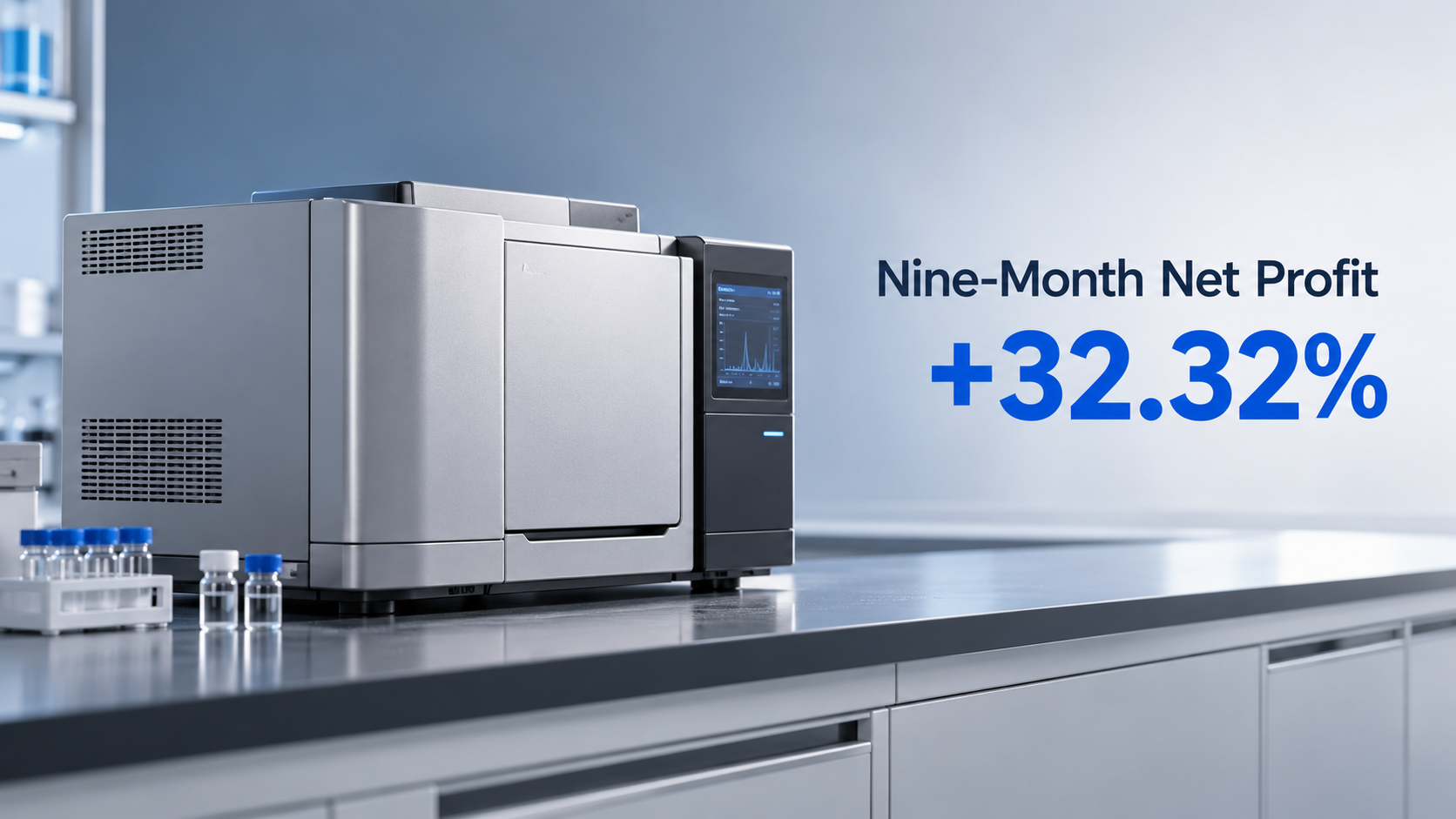
 Sundy Technology Reports 32.32% Rise in Net Profit for First Nine Months of 2026Sundy Technology reports 32.32% net profit growth for the first nine months of 2026. Explore revenue gains, laboratory analytical instrument performance and key earnings trends.

Chat Online