


The event date is not explicitly specified in the supplied information. The summary states that Beijing OPWILL Technology Co., Ltd. announced on October 25 that it had passed the Ministry of Industry and Information Technology's review and received national specialized and innovative 'Little Giant' enterprise recognition for 2026. For optical communications test equipment manufacturers, purchasers and equipment integrators, the announcement may provide an additional reference when assessing domestic suppliers. Its immediate relevance is enterprise recognition; any implications for procurement requirements or product acceptance need separate verification.
National recognition for optical communications testing capabilities
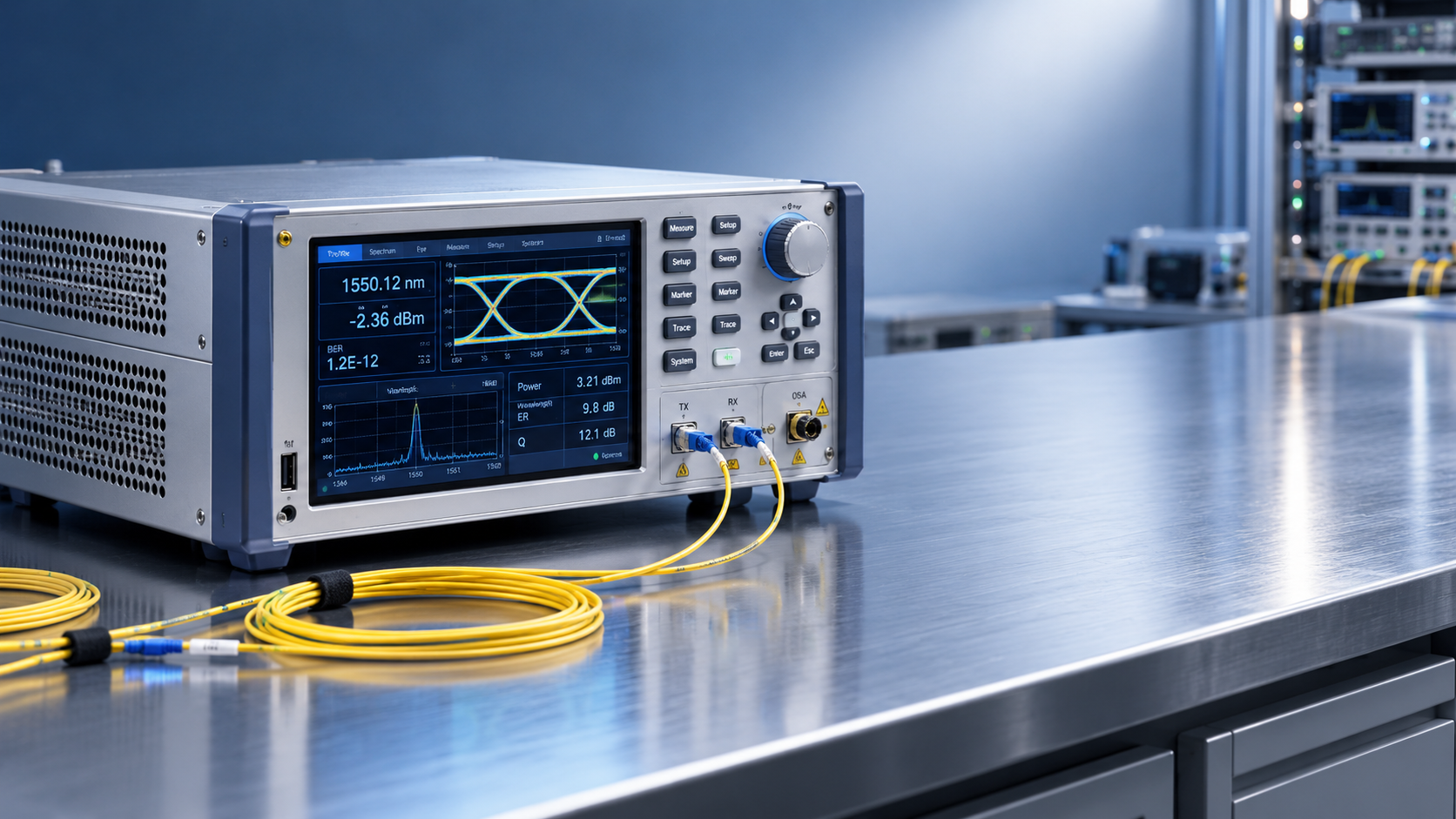
According to the supplied summary, OPWILL specializes in optical communications test instruments. The company announced that it had successfully passed the ministry's assessment and obtained the national enterprise designation for 2026.
The summary links this recognition to the company's capability to develop domestic high-end optical communications test instruments and support greater technological independence and control over domestic testing equipment. It identifies October 25 as the announcement date but does not specify the announcement year.
Supplier assessment may receive an additional reference point
Purchasers evaluating domestic test equipment
From an industry perspective, the designation may give procurement teams an additional reason to examine OPWILL's capabilities when evaluating domestic optical communications test equipment. Its practical value would depend on how those capabilities match the intended testing tasks. The supplied information does not establish any change to mandatory purchasing criteria, supplier admission requirements or tender scoring.
Manufacturers and equipment integrators assessing substitution
Analysis suggests that manufacturers and integrators considering domestic alternatives may pay closer attention to the company's technical offering. The relevant assessment could include measurement performance, compatibility with existing test processes and the work needed to validate a replacement. Enterprise recognition alone does not establish that a particular instrument meets a customer's specifications or can be introduced without further verification.
Testing services and downstream technical support
For testing service providers and teams supporting installed equipment, the announcement may encourage closer examination of available domestic instruments. As a practical consideration, any evaluation could cover documentation, maintenance arrangements and consistency of test results. No changes to these arrangements or to delivery commitments are confirmed in the supplied information.
Keep the designation separate from product acceptance decisions
Check the scope and timing of the recognition
As a verification step, companies considering the announcement in supplier reviews should seek the relevant official notice and confirm the enterprise identity, designation period and applicable scope. The unspecified event date makes it particularly useful to distinguish the October 25 announcement from the stated 2026 recognition year.
Match supporting documents to the intended purchase
For procurement planning, buyers could request technical specifications, relevant test documentation and evidence addressing their own acceptance criteria. This is a suggested assessment approach, not a new obligation arising from the announcement. The supplied summary does not identify any product certificate, test standard or approval covering individual instruments.
Validate domestic alternatives before changing equipment
Where a purchaser is considering replacement of existing instruments, analysis suggests that application-specific validation would be more useful than relying solely on enterprise status. A review could examine whether a proposed instrument supports the required measurements and integrates with the existing workflow. Any decision on replacement scope or timing would remain dependent on the results of that assessment.
Confirm delivery and support through direct evaluation
As a commercial precaution, procurement teams could confirm delivery schedules, technical support and acceptance arrangements with the supplier before adjusting purchasing plans. The recognition announcement provides no basis for assuming shorter lead times, greater production capacity or revised service commitments.
A policy recognition signal with limited evidence of rule changes
At this stage, it is more appropriate to understand the announcement as an enterprise assessment outcome within a national policy framework. The supplied information does not describe a new regulation, revised technical standard, compulsory product certification requirement or change in trade rules.
From an editorial perspective, the development may draw attention to domestic capabilities in high-end optical communications testing. Whether that attention translates into procurement decisions remains open. Subsequent official documentation, any explicit references in tender requirements and feedback from equipment evaluations would provide a firmer basis for judging its market effect.
Procurement relevance will depend on verified capabilities
Analysis suggests that OPWILL's reported recognition is relevant to discussions about domestic sourcing and technological independence in optical communications testing. For businesses, the proportionate response is to treat it as a reason for closer supplier evaluation while retaining application-specific technical and commercial checks. The information currently available supports recognition of the enterprise's capabilities, but it does not establish changes to purchasing obligations, product compliance requirements or delivery conditions.
Basis of reporting and details awaiting verification
This article was prepared solely from the user-provided news title, event-time information and event summary. No specific official source link was included in the input, so the recognition details and announcement timing remain subject to further verification against official documentation.
Relevant follow-up material could include the ministry's recognition notice and the company's announcement. Further observation should focus on any published conditions attached to the designation, its treatment in supplier qualification or tender documents, and feedback from actual equipment evaluations. These are matters to monitor, not developments confirmed by the supplied information.


 OPWILL Named a National Specialized and Innovative 'Little Giant' EnterpriseOPWILL reports national 'Little Giant' recognition for its optical communications test instruments. Explore what it means for domestic sourcing and informed supplier evaluation.
 Sanchuan Wisdom Signs Factory Construction Contract with ZhongkuangSanchuan Wisdom signs a construction contract with Zhongkuang for a smart water meter factory targeting 5 million units annually. Explore the expansion plan and key milestones ahead.
 Skyray Instruments Reports Over 45-Fold Rise in Net Profit in Third-Quarter ReportSkyray Instruments reports a 4,508.23% rise in nine-month net profit in its Q3 report. Explore what the results may mean for instrument buyers and supplier assessments.
 Sundy Technology Reports 32.32% Rise in Net Profit for First Nine Months of 2026Sundy Technology reports 32.32% net profit growth for the first nine months of 2026. Explore revenue gains, laboratory analytical instrument performance and key earnings trends.
 Cubic Sensor Reports Nine-Month Net Profit of RMB 112 Million, Up 4.83%Cubic Sensor reports nine-month net profit of RMB 112 million, up 4.83%, as Q3 profit climbs 38.10%. Explore key results and the outlook for its gas sensor business.
 PANNA’s Premium Brand Launches X55 Gas Chromatograph and M96Explore PANNA’s X55 gas chromatograph and new-generation M96 launch, with insights on core components, supplier qualification and key checks for informed laboratory procurement.


Chat Online