


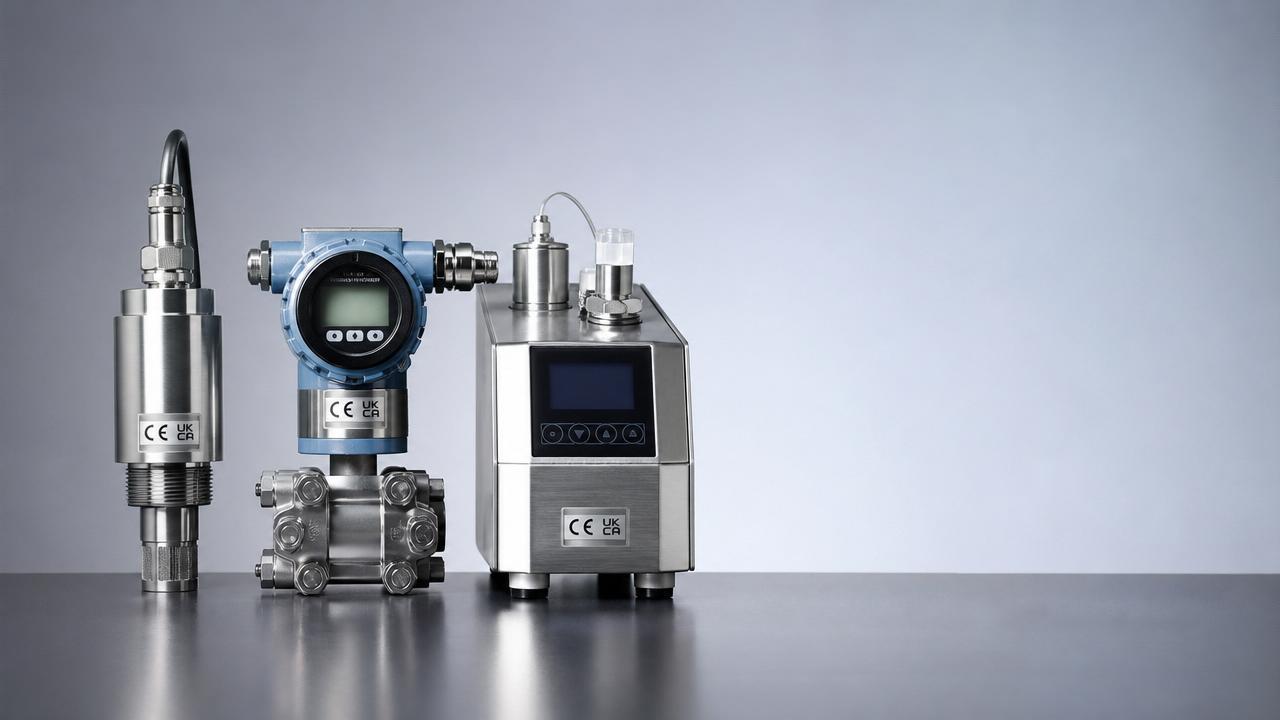
Starting 1 May 2026, Chinese customs will require CE/UKCA compliance self-declaration statements and test reports — issued by CNAS-accredited laboratories — for industrial instrumentation exported to the EU and UK. This applies specifically to environmental monitoring, process control, and laboratory analytical instruments. Companies involved in cross-border trade of such equipment, especially exporters, importers, and distribution partners serving European and UK markets, should treat this as a material operational and compliance consideration.
Event Overview
Effective 1 May 2026, China Customs mandates that exports of industrial instruments (including environmental monitoring, process control, and laboratory analytical equipment) to the European Union and United Kingdom must be accompanied by a CE/UKCA conformity self-declaration statement and supporting test report. These documents must be issued by laboratories accredited by the China National Accreditation Service for Conformity Assessment (CNAS). Shipments lacking valid documentation will face rejection at destination ports or be subject to intensified customs inspections.
Industries and Roles Affected
Direct Exporters (OEMs and Instrument Manufacturers)
These entities bear primary responsibility for providing compliant documentation. Failure to secure CNAS-issued CE/UKCA reports prior to shipment directly impedes customs clearance in the EU/UK, potentially triggering delays, storage fees, or return logistics costs.
Distribution and Channel Partners (Including EU/UK Importers)
Importers acting as the EU/UK Authorized Representative or responsible economic operator must verify the validity and scope of supplier-provided declarations. Under EU Regulation (EU) 2019/1020 and UK Product Safety and Metrology Act 2022, they may be held legally liable for non-compliant products entering the market.
Contract Manufacturers and Sub-Assembly Suppliers
Suppliers providing subcomponents or integrated modules used in final CE/UKCA-marked instruments may be asked to supply partial test data or technical documentation. Their capacity to support compliance verification — even indirectly — now affects their eligibility in export-oriented supply chains.
Logistics and Customs Compliance Service Providers
Freight forwarders and customs brokers handling instrument shipments to the EU/UK will need to validate documentation completeness before release. Inaccurate or incomplete submissions may lead to service-level disputes or contractual liability under new due diligence expectations.
Key Focus Areas and Practical Responses
Verify Supplier Certification Capability Before Order Placement
Importers and distributors should request evidence of current CNAS accreditation scope covering relevant CE/UKCA test standards (e.g., EN 61000-6-2, EN 61000-6-4, EN 61326-1) — not just general lab accreditation. A certificate listing applicable directives and harmonized standards is essential.
Confirm Reporting Requirements per Destination Market
CE and UKCA are separate conformity routes: CE applies to the EU; UKCA applies to Great Britain (England, Scotland, Wales). Northern Ireland follows EU rules under the Windsor Framework. Reports must clearly state which regime(s) they support — dual declarations are permissible but must be technically justified and separately validated.
Review Existing Stock and Shipment Schedules Against the 1 May 2026 Deadline
Shipments scheduled for dispatch in late April 2026 must allow sufficient time for testing, reporting, and document review. CNAS-accredited labs report lead times of 10–20 working days for full electromagnetic compatibility (EMC) and safety assessments. Rush requests may incur premium fees or be declined.
Update Internal Compliance Checklists and Procurement Contracts
Procurement terms with Chinese suppliers should explicitly reference the requirement for CNAS-issued CE/UKCA documentation, including version control, retention period (minimum 10 years), and language (English or local official language required by EU/UK authorities).
Editorial Perspective / Industry Observation
Observably, this measure reflects an institutional shift toward upstream enforcement of third-country product compliance — moving verification responsibility earlier in the export workflow, from destination-market authorities to origin-country customs. Analysis shows it is less a standalone regulatory change and more an operationalization of long-standing CE/UKCA obligations, now enforced via Chinese customs controls. From an industry perspective, it signals growing alignment between Chinese export oversight and international market access requirements — but does not introduce new technical standards. Current implementation appears focused on documentation traceability rather than technical re-evaluation. Continuous monitoring is warranted for potential expansion to other regulated product categories or additional destination markets beyond the EU and UK.
It is important to note that this rule applies only to instruments falling under applicable CE/UKCA directives (e.g., EMC Directive 2014/30/EU, Low Voltage Directive 2014/35/EU, Radio Equipment Directive 2014/53/EU where applicable). Instruments exempt from CE marking (e.g., certain research-use-only devices) remain outside this requirement — provided their classification is correctly documented and defensible.
Conclusion
This regulation marks a procedural tightening in export documentation governance rather than a substantive revision of technical compliance criteria. Its significance lies in shifting accountability to the point of departure — making pre-shipment verification non-negotiable for affected instrument categories. For stakeholders, it is best understood not as an isolated policy event, but as a formalization of existing due diligence expectations now embedded in China’s customs clearance process. Proactive alignment with CNAS-accredited testing capacity and precise documentation management remains the most effective response.
Information Sources
Main source: Official notice issued by General Administration of Customs of the People’s Republic of China (GACC), effective 1 May 2026.
Note: Expansion to other product categories or jurisdictions beyond the EU and UK remains unconfirmed and is under observation.


 1259 New National Standards Take Effect in May 20261259 new national standards effective May 2026 mandate GFAAS, LC-MS/MS & GC-MS for compliance—key for exporters, labs & instrument suppliers.
 GWM Patents AI-Driven Multi-Screen Quality Switching for Vehicle HMIsGWM's AI-driven multi-screen quality switching patent unlocks adaptive display tech for industrial HMIs, DCS stations & explosion-proof touchscreens — watch for certified deployments.
 US-China Tariffs Unified at 10% for InstrumentsUS-China tariffs on instruments unified at 10%—boosting cost efficiency for industrial process instruments, environmental monitoring equipment & energy meters. Act now.
 EN 61000-6-4:2026 Enters Force for Industrial EMC ComplianceEN 61000-6-4:2026 is now mandatory for industrial EMC compliance — stricter 1–6 GHz emissions & dynamic AI-device testing. Act now to avoid EU market delays.
 New China Export Rules for Instruments Effective May 2026New China export rules for instruments require CNAS-issued CE/UKCA reports by May 2026 — ensure compliance now to avoid EU/UK shipment delays.
 EU CE-EPD Digital Compliance Label Mandatory from May 2026EU CE-EPD digital compliance label becomes mandatory for instrumentation exports from May 2026 — discover how Chinese OEMs, suppliers & EMS providers can prepare now.


Chat Online