


Digital Pressure Gauges Working Principle
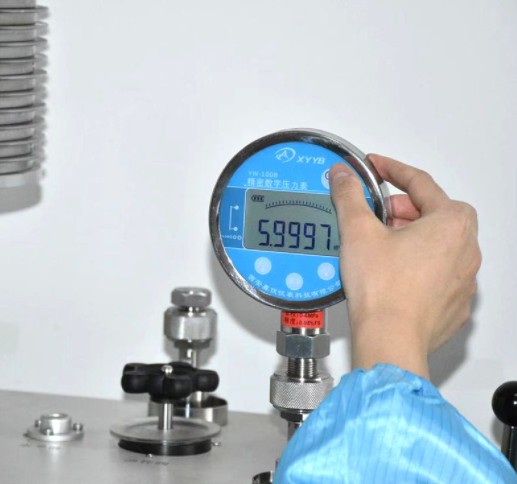
Digital pressure gauges use pressure sensors that convert pressure to an equivalent electronic signal. Different types of pressure sensors are suitable for digital gauges; however, piezoresistive pressure sensors are used most frequently due to their robust design and lower price than capacitive sensors.
A piezoresistive pressure sensor consists of a diaphragm equipped with piezoresistive elements. The pressure of the medium causes the diaphragm to deflect; this deflection causes a change in the cross-sectional area of the piezoresistive elements that changes the material’s electrical resistance creating a voltage difference. The gauge's internal microprocessor then processes the voltage to display a pressure reading on the digital display.
Some digital gauges also have additional features such as temperature compensation, data logging, and wireless connectivity. Read our electronic pressure measurement principles article for an in-depth guide on how different sensor types work.



 1259 New National Standards Take Effect in May 20261259 new national standards effective May 2026 mandate GFAAS, LC-MS/MS & GC-MS for compliance—key for exporters, labs & instrument suppliers.
 GWM Patents AI-Driven Multi-Screen Quality Switching for Vehicle HMIsGWM's AI-driven multi-screen quality switching patent unlocks adaptive display tech for industrial HMIs, DCS stations & explosion-proof touchscreens — watch for certified deployments.
 US-China Tariffs Unified at 10% for InstrumentsUS-China tariffs on instruments unified at 10%—boosting cost efficiency for industrial process instruments, environmental monitoring equipment & energy meters. Act now.
 EN 61000-6-4:2026 Enters Force for Industrial EMC ComplianceEN 61000-6-4:2026 is now mandatory for industrial EMC compliance — stricter 1–6 GHz emissions & dynamic AI-device testing. Act now to avoid EU market delays.
 New China Export Rules for Instruments Effective May 2026New China export rules for instruments require CNAS-issued CE/UKCA reports by May 2026 — ensure compliance now to avoid EU/UK shipment delays.
 EU CE-EPD Digital Compliance Label Mandatory from May 2026EU CE-EPD digital compliance label becomes mandatory for instrumentation exports from May 2026 — discover how Chinese OEMs, suppliers & EMS providers can prepare now.

Chat Online