


On May 15, ChuanYi Co., Ltd. released its 2026 business plan, announcing a revenue target of RMB 7.1 billion (approx. USD 710 million) and a strategic pivot to strengthen end-to-end instrumentation delivery for overseas EPC projects—particularly in the Middle East, Southeast Asia, and East Africa. The move directly addresses growing demand from international EPC contractors for domestically developed, system-level instrument solutions compliant with SIL2/3, API RP 14C, and IEC 61511 standards. This development is especially relevant for process automation suppliers, instrumentation OEMs, EPC subcontractors, and local service providers operating in oil & gas, LNG terminal, and industrial control markets.
Event Overview
On May 15, ChuanYi Co., Ltd. published its 2026 operational plan. The company stated it will leverage collaboration platforms with central SOEs—including China Energy Engineering Group (CEEC) and Sinopec Engineering Group—to expand export of integrated DCS + smart field instruments + intrinsic safety barriers solutions. It aims to raise overseas revenue share to 32%. ChuanYi confirmed completion of a production line for SIL2/3-certified intrinsically safe pressure and temperature transmitters, and full validation under API RP 14C and IEC 61511.
Industries Affected
Instrumentation OEMs and System Integrators
These firms face intensified competitive pressure as ChuanYi’s system-level offering targets direct substitution for Emerson and Rosemount in EPC-driven deployments. Impact manifests in bid competitiveness, especially where EPC contractors require certified, pre-integrated packages rather than discrete components.
EPC Contractors and Subcontractors (especially in Oil & Gas/LNG)
International EPC firms working on brownfield upgrades or greenfield LNG receiving stations may now evaluate ChuanYi as a qualified local-system supplier. This affects procurement timelines, certification alignment, and vendor management workflows—particularly when project specifications mandate API or IEC functional safety compliance.
Local Service Providers and Aftermarket Distributors
With ChuanYi scaling overseas delivery, regional partners may see increased demand for commissioning support, spare parts logistics, and SIL verification services. However, this depends on whether ChuanYi extends its service network—or relies on existing third-party channels.
Component Suppliers to Industrial Automation
Suppliers of sensors, ASICs, or safety-certified circuitry may experience indirect volume shifts if ChuanYi’s expanded production drives higher internal sourcing or revised BOM requirements—but no such shift is confirmed in the disclosed plan.
What Enterprises and Practitioners Should Monitor and Act On
Track official tender participation and contract awards involving CEEC/Sinopec Engineering overseas projects
ChuanYi’s strategy explicitly ties growth to these SOE platforms. Monitoring actual bid wins—not just capability statements—is essential to gauge real market traction.
Assess specification language in upcoming LNG and refinery tenders for references to ‘system-level delivery’, ‘SIL2/3-certified transmitter bundles’, or ‘IEC 61511-compliant safety loop integration’
Such phrasing signals adoption of the model ChuanYi is targeting—and may indicate tightening technical requirements for bidders beyond component-level compliance.
Distinguish between policy-level endorsement and operational readiness
The plan confirms product certification and production capacity, but does not disclose evidence of deployed projects, customer acceptance reports, or after-sales infrastructure. Stakeholders should treat current announcements as capability signaling—not proven performance.
Review internal engineering and procurement protocols for compatibility with bundled instrumentation packages
Engineering firms and owner-operators should verify whether their design standards, FAT/SAT procedures, and spare parts planning accommodate pre-integrated systems versus traditional point-device procurement.
Editorial Perspective / Industry Observation
Observably, this announcement functions primarily as a strategic signal—not an outcome. It reflects a deliberate response to documented procurement trends among Chinese SOE-led EPC consortia expanding abroad, particularly where cost-sensitive clients seek alternatives to Western instrumentation vendors without compromising functional safety certification. Analysis shows that ChuanYi’s emphasis on API RP 14C and IEC 61511 validation—rather than broader industrial IoT or AI features—underscores its focus on high-trust, regulated segments. From an industry perspective, this is less about immediate market displacement and more about redefining the minimum viable scope for instrumentation bids in EPC contexts: ‘certified system’ is increasingly becoming the baseline expectation, not the exception.
Concluding, this initiative marks a structural shift in how domestic instrumentation manufacturers position themselves within global energy infrastructure supply chains—not as component vendors, but as certified subsystem providers aligned with EPC execution models. It is best understood not as a near-term revenue inflection point, but as a multi-year capability-building milestone with implications for tender design, vendor qualification criteria, and long-term service ecosystem development.
Source: ChuanYi Co., Ltd. 2026 Business Plan (released May 15). Note: Contract award data, overseas deployment status, and partner service network details remain unconfirmed and are subject to ongoing observation.


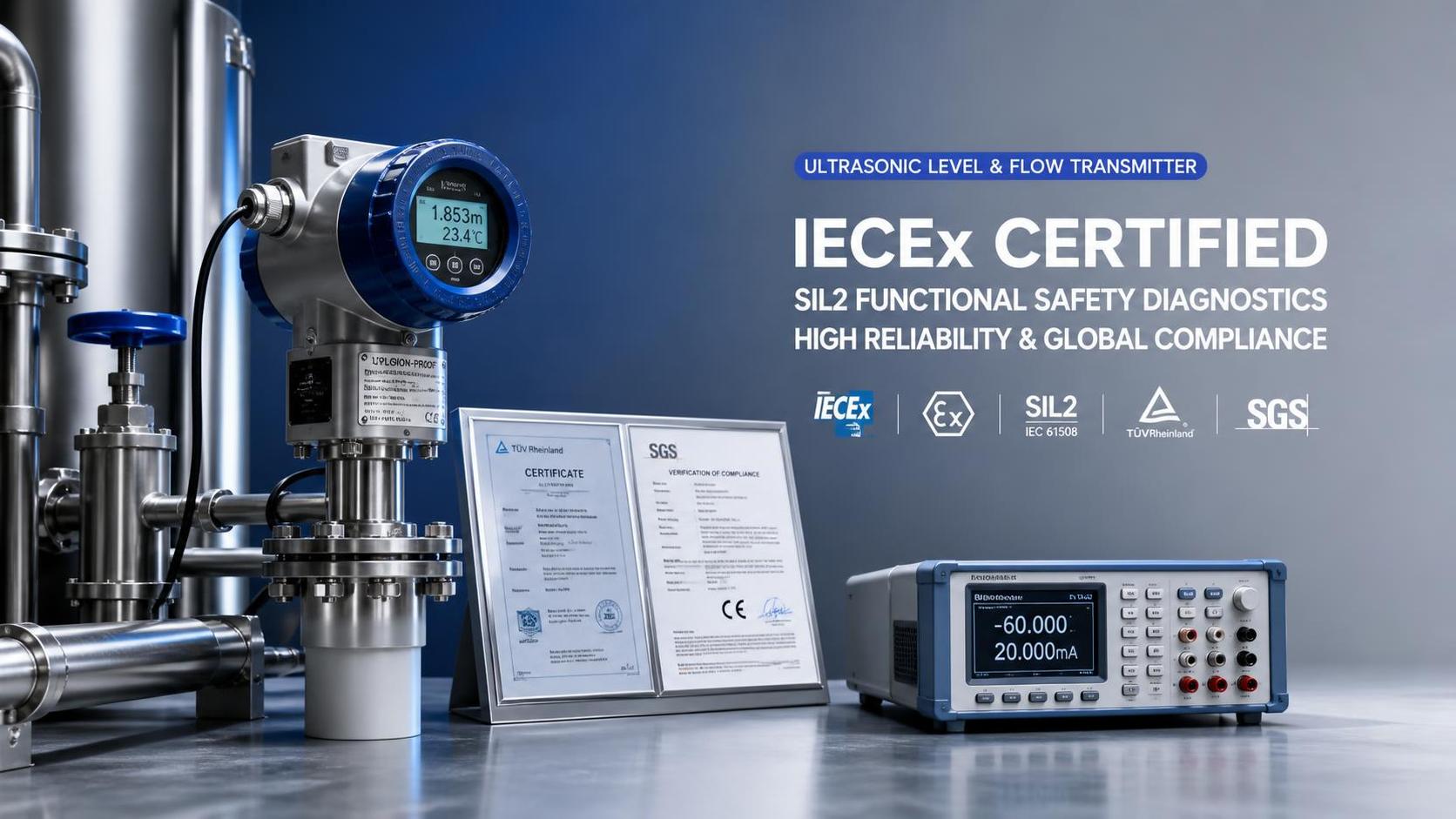
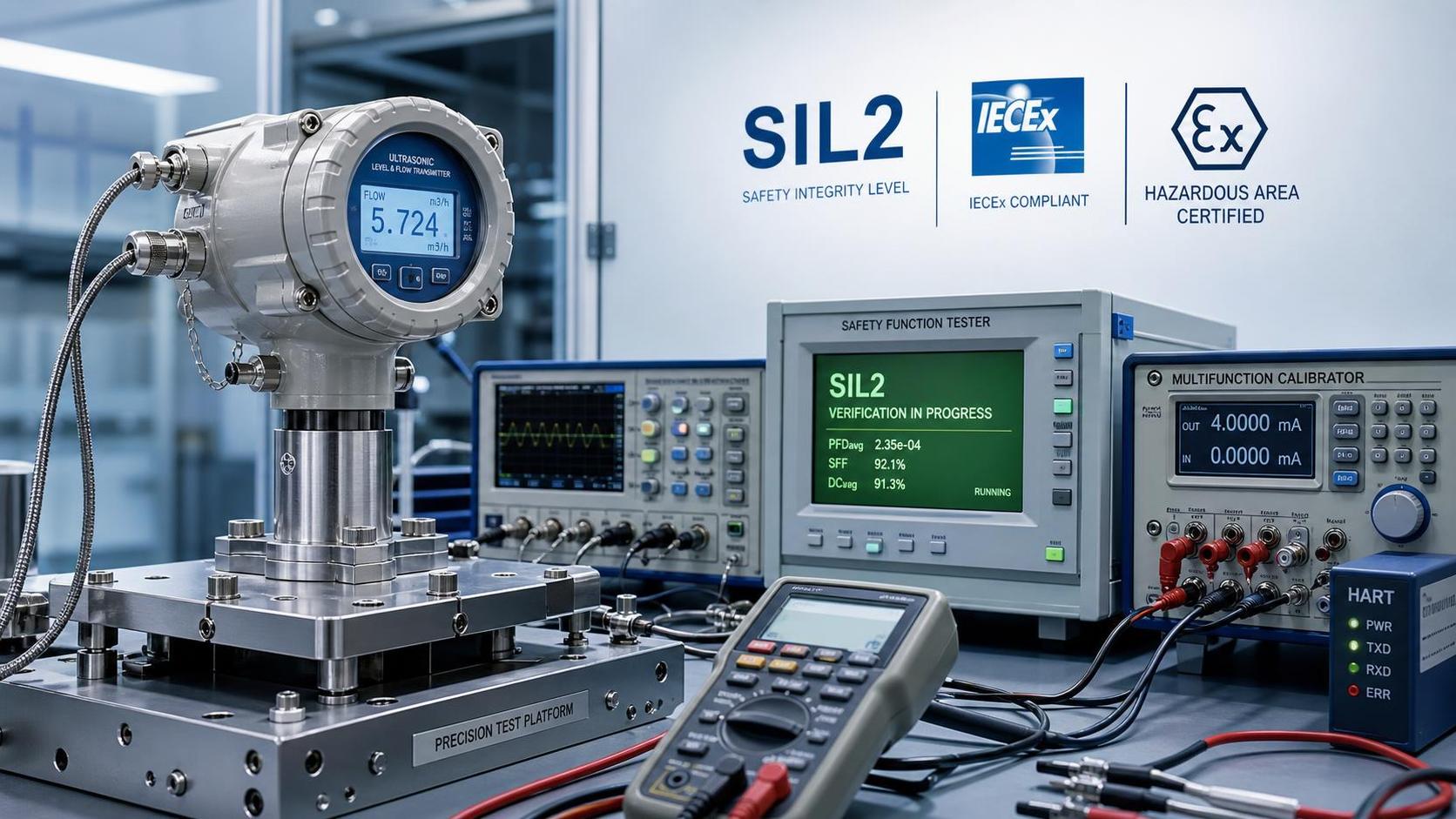
 New IECEx Rule Requires SIL2 Diagnostic Validation for Chinese Ultrasonic Transmitter ExportsIECEx rule update: SIL2 diagnostic validation is now required for Chinese ultrasonic transmitter exports. Learn how IEC 61508, 90% DC reports, and procurement risks affect bids and delivery.
 IECEx Rule Change Makes SIL2 Diagnostics Mandatory for Chinese Ultrasonic Transmitter ExportsIECEx now requires SIL2 diagnostics for Chinese ultrasonic transmitter exports, reshaping Ex d and Ex ia compliance. Learn what changes, who is affected, and how to stay ahead.
 IEC 61511-3:2026 Tightens SIL2 RulesIEC 61511-3:2026 tightens SIL2 rules for flow meters and pressure transmitters, adding HFT ≥ 1 and DC ≥ 90% requirements—see what suppliers, EPCs, and buyers must act on now.
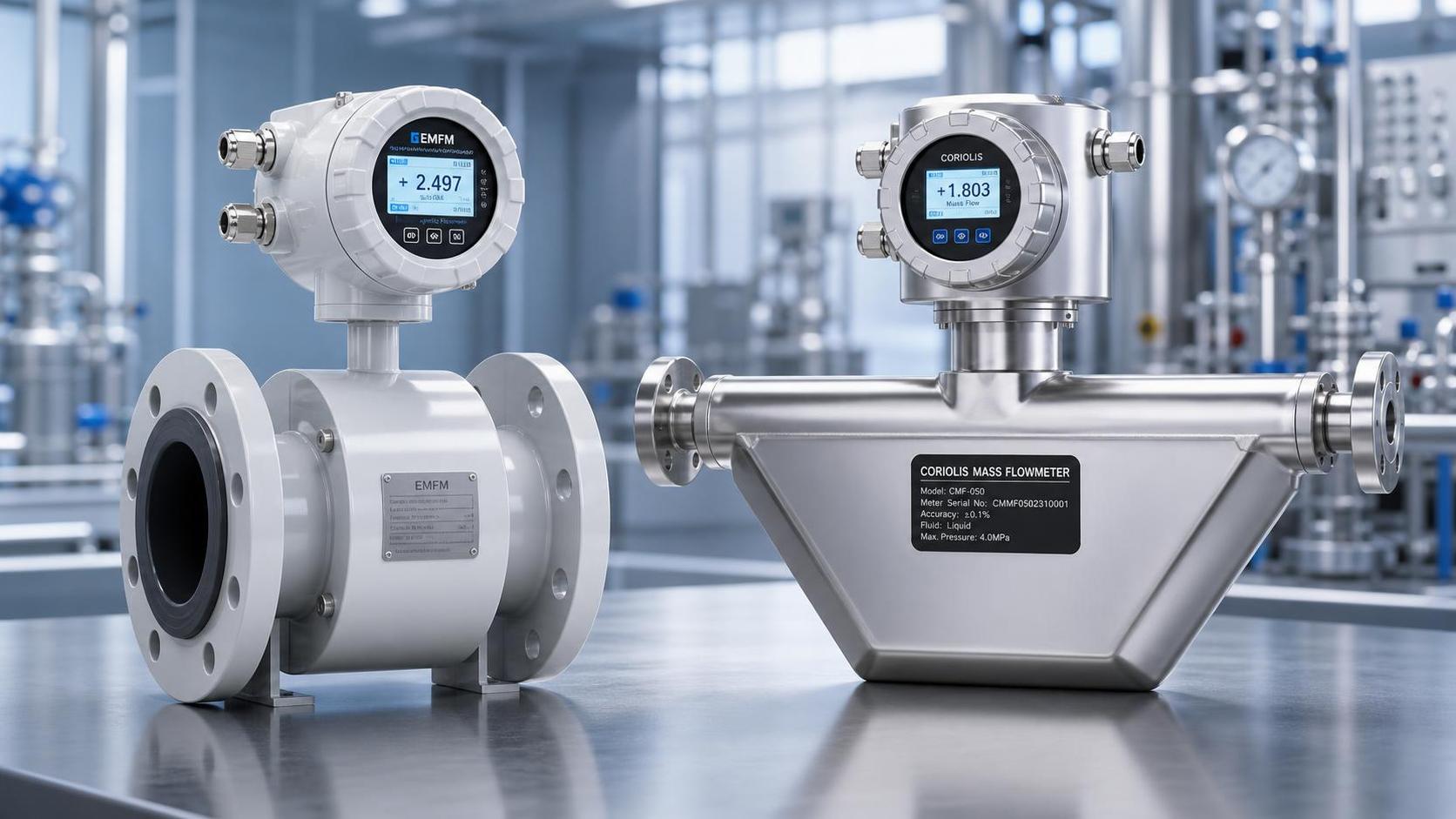
 Q2 2026 Flowmeter Export Prices Rise 9.3%Flowmeter export prices rose 9.3% in Q2 2026, driven by high-end electromagnetic and Coriolis models. See what this means for buyers, contracts, and budgets.
 Saudi SASO Tightens Pressure Instrument RulesSaudi SASO tightens pressure instrument rules from 2026-10-01. Learn how local testing and registration reshape compliance, lead times, and market access for exporters.
 Saudi SASO Ends China Type-Approval Route for Pressure InstrumentsSaudi SASO ends the China type-approval route for pressure instruments, requiring full lab testing from Oct 2026. Learn the cost, lead-time, and compliance impact now.
Chat Online