


On April 2, 2026, a joint statement issued after the Geneva economic and trade talks confirmed that both the United States and China have adjusted their reciprocal tariffs on selected instruments to a uniform rate of 10%, replacing previous punitive rates as high as 25%. This change directly affects exporters and importers of temperature, pressure, flow, and analytical instruments (HS codes 9025–9031), with implications for cost structure, customs clearance timelines, and procurement planning—particularly for firms in process instrumentation, environmental monitoring, and laboratory analysis equipment.
Event Overview
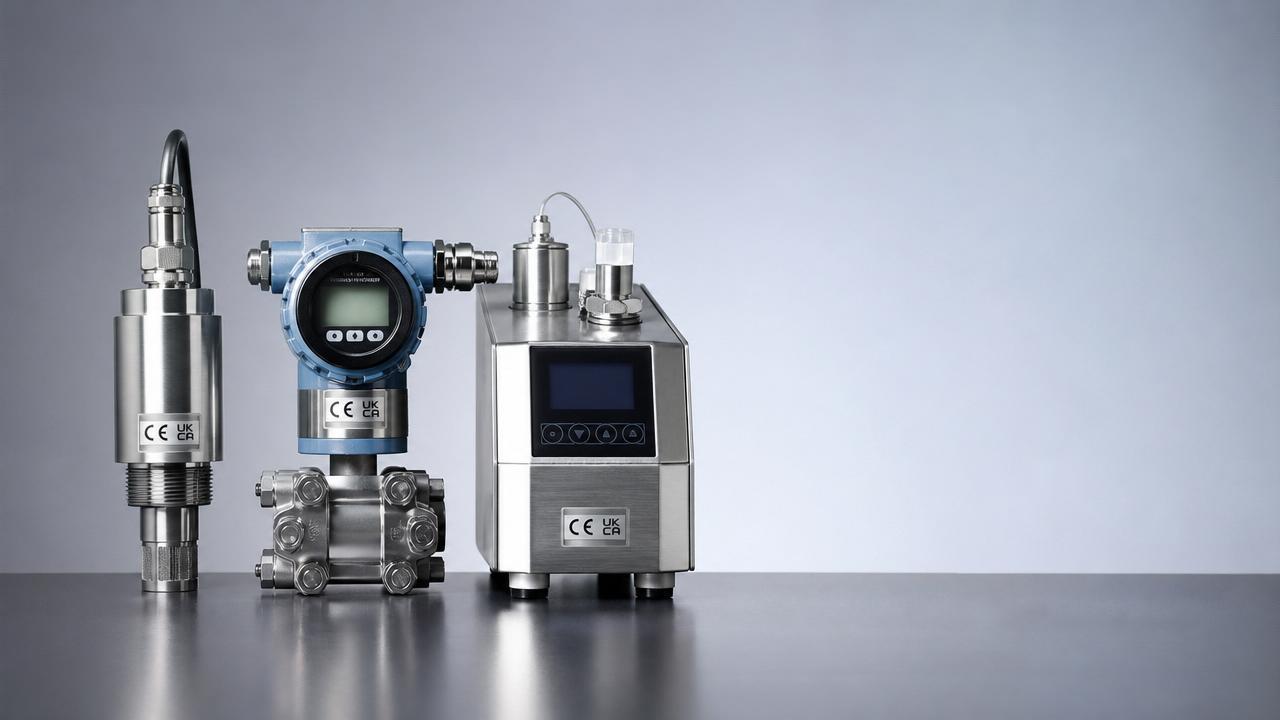
On April 2, 2026, the U.S. and China announced in a joint statement following bilateral economic and trade talks in Geneva that mutual tariffs on goods under HS chapters 9025–9031 would be standardized at 10%. The adjustment supersedes earlier higher tariff rates applied under Section 301 and corresponding Chinese countermeasures. The statement explicitly identifies these tariff changes as applicable to measuring and checking instruments—including thermometers, manometers, flow meters, gas analyzers, and related laboratory apparatus.
Industries Affected by the Tariff Adjustment
Direct Exporters and Importers
Companies engaged in cross-border trade of instruments under HS 9025–9031 face immediate shifts in landed cost calculation and margin visibility. The reduction from up to 25% to 10% directly lowers duty payable at U.S. and Chinese ports of entry, improving price competitiveness in downstream markets. Customs valuation, documentation alignment, and tariff classification verification become more predictable—but only for covered HS subheadings.
Manufacturers and OEMs
Domestic manufacturers exporting process control devices or environmental sensors benefit from enhanced order visibility and reduced pricing friction with overseas distributors. However, impact is limited to finished goods falling strictly within HS 9025–9031; components, software, or integrated systems not classified under these headings remain unaffected. Margins may improve, but only where export declarations correctly reflect the updated tariff treatment.
Distributors and Channel Partners
U.S.- and EU-based distributors of Chinese-made analytical or field instrumentation now face revised procurement budgets and delivery scheduling assumptions. With lower duties, landed costs stabilize, supporting more reliable lead-time commitments to end users—especially in regulated sectors such as water quality monitoring or pharmaceutical QC labs where validation timelines are tight.
Supply Chain and Logistics Service Providers
Cargo forwarders, customs brokers, and bonded warehousing operators handling instrument shipments must update tariff code databases, retrain staff on new duty rates for HS 9025–9031, and revise commercial invoice templates. While the change simplifies compliance for covered items, it does not alter broader customs procedures, origin certification requirements, or anti-dumping enforcement mechanisms.
Key Considerations and Recommended Actions
Monitor official implementation guidance
Confirm whether U.S. Customs and Border Protection (CBP) and China’s General Administration of Customs (GACC) issue formal notices specifying effective dates, retroactivity (if any), and documentation requirements for claiming the 10% rate—especially for shipments in transit as of April 2, 2026.
Verify HS code alignment for specific products
Not all instruments marketed as ‘analytical’ or ‘process control’ fall under HS 9025–9031. Conduct internal tariff classification audits for key SKUs; misclassification could result in incorrect duty application or post-clearance audits—even with the new rate in place.
Distinguish policy signal from operational impact
The agreement reflects a coordinated de-escalation step, but does not indicate broader tariff rollbacks beyond HS 9025–9031. Companies should avoid extrapolating this adjustment to other instrument categories (e.g., optical instruments under HS 9001–9022) or non-instrument exports without explicit confirmation.
Update commercial terms and logistics planning
Reassess Incoterms usage—particularly DAP or DDP arrangements where duty liability falls on the seller. Revise pro forma invoices, quotation templates, and delivery schedules to reflect the new 10% duty assumption for covered items, and communicate adjustments clearly to overseas partners ahead of next shipment cycles.
Editorial Observation / Industry Perspective
Observably, this tariff standardization is best understood as a targeted, technical recalibration—not a structural shift in bilateral trade policy. Analysis shows the move enhances short-term predictability for a defined set of instrument categories, but leaves broader trade frameworks unchanged. From an industry perspective, it signals renewed attention to sector-specific supply chain stability, particularly in measurement-critical domains like emissions monitoring and industrial automation. However, its durability depends on follow-up implementation consistency and absence of new trade actions targeting overlapping product scopes. Continued monitoring remains warranted—not for immediate transformation, but for early detection of scope expansion or procedural divergence.
For the instrument sector, this development marks a measurable, bounded improvement in trade cost and timing certainty for a well-defined product group. It neither resolves long-standing non-tariff barriers nor alters competitive dynamics outside HS 9025–9031. Current interpretation should emphasize precision: this is a calibrated adjustment, not a turning point.
Source: Joint Statement of the U.S.–China Economic and Trade Talks, Geneva, April 2, 2026. Note: Implementation details—including CBP and GACC administrative guidance—are pending official publication and remain under observation.


 1259 New National Standards Take Effect in May 20261259 new national standards effective May 2026 mandate GFAAS, LC-MS/MS & GC-MS for compliance—key for exporters, labs & instrument suppliers.
 GWM Patents AI-Driven Multi-Screen Quality Switching for Vehicle HMIsGWM's AI-driven multi-screen quality switching patent unlocks adaptive display tech for industrial HMIs, DCS stations & explosion-proof touchscreens — watch for certified deployments.
 US-China Tariffs Unified at 10% for InstrumentsUS-China tariffs on instruments unified at 10%—boosting cost efficiency for industrial process instruments, environmental monitoring equipment & energy meters. Act now.
 EN 61000-6-4:2026 Enters Force for Industrial EMC ComplianceEN 61000-6-4:2026 is now mandatory for industrial EMC compliance — stricter 1–6 GHz emissions & dynamic AI-device testing. Act now to avoid EU market delays.
 New China Export Rules for Instruments Effective May 2026New China export rules for instruments require CNAS-issued CE/UKCA reports by May 2026 — ensure compliance now to avoid EU/UK shipment delays.
 EU CE-EPD Digital Compliance Label Mandatory from May 2026EU CE-EPD digital compliance label becomes mandatory for instrumentation exports from May 2026 — discover how Chinese OEMs, suppliers & EMS providers can prepare now.
Chat Online