


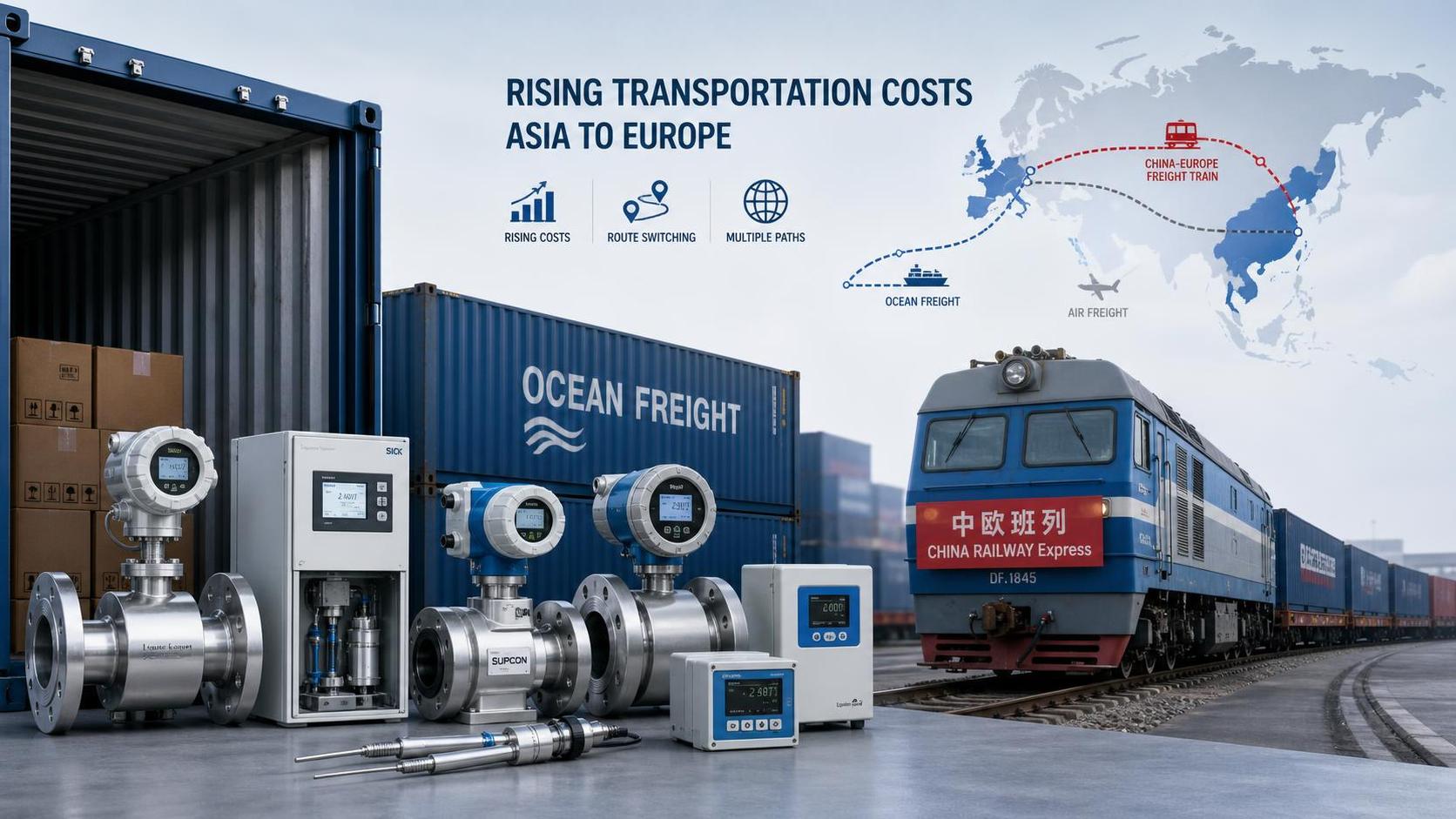
On May 5, 2026, Maersk, Hapag-Lloyd, and Ocean Network Express (ONE) jointly announced an immediate surcharge adjustment for Precision Cargo Slots on the Far East–North Europe trade lane—specifically impacting high-sensitivity instrumentation shipments between Shanghai and Rotterdam. With a 35% premium applied to allocated slots and transit times extended by 10–12 days, the move directly affects industries reliant on time- and condition-critical ocean transport of laboratory analyzers, metrology standards equipment, and similar precision instruments.
Event Overview
On May 5, 2026, Maersk, Hapag-Lloyd, and ONE confirmed the implementation of an increased附加 fee—termed the ‘Precision Cargo Slot’ surcharge—for the Far East–North Europe corridor. The Shanghai–Rotterdam leg carries the highest uplift at 35%, attributed to acute shortages of temperature-controlled, shock-dampened, and ESD-protected containers following new EU regulatory requirements. The adjustment is effective immediately and applies to bookings under FOB terms, requiring shippers to incorporate additional logistics buffer into pricing.
Industries Affected by Segment
Direct Exporting Manufacturers (e.g., Lab Instrument Makers)
These firms ship finished precision instruments directly from Chinese production sites to European end-users or distributors. They face direct cost increases (via FOB price adjustments) and longer lead times—potentially breaching contractual delivery windows or service-level agreements. Delays may also trigger customer escalation or inventory stockouts at downstream labs or calibration centers.
Import-Dependent Calibration & Service Providers
European entities offering certified calibration, maintenance, or repair services for imported analytical equipment rely on predictable inbound container availability. Extended transit times and slot scarcity reduce planning certainty, increasing idle time for technicians and raising operational overhead per serviced unit.
Global Procurement & Supply Chain Teams in Multinationals
Central procurement units managing cross-border instrument sourcing across APAC–EMEA regions must now reassess landed cost models and safety-stock assumptions. The 10–12 day extension impacts demand forecasting accuracy and may require revising material requirement planning (MRP) parameters for high-value, low-turnover calibration assets.
Freight Forwarders Specializing in High-Value Scientific Cargo
Forwarders handling niche scientific shipments face tighter coordination windows, higher documentation scrutiny (e.g., for temperature logs or anti-static certification), and reduced slot flexibility. Their quoting and booking workflows must now accommodate earlier lead-time commitments and pre-validation of container specifications with carriers.
What Stakeholders Should Monitor and Act On
Track official carrier communications on slot allocation mechanisms
Maersk, Hapag-Lloyd, and ONE have not yet published detailed criteria for Precision Cargo Slot eligibility or booking priority rules. Stakeholders should monitor carrier portals and weekly service advisories for updates on how slots are reserved, verified, and enforced—especially regarding proof-of-container-spec compliance.
Validate impact on specific product categories and destination ports
The 35% premium and delay apply explicitly to Shanghai–Rotterdam. Shippers using alternative gateways (e.g., Hamburg, Antwerp) or transshipment hubs (e.g., Singapore, Colombo) should confirm whether surcharges extend to those legs—and whether rerouting offers net time or cost advantages despite added handling risk.
Distinguish regulatory intent from operational reality
The surcharge cites EU regulatory drivers, but no EU regulation has been publicly referenced in carrier announcements. Observably, this reflects supply-side constraints—not a formal tariff or levy. Companies should avoid conflating the measure with customs duty changes or CE marking compliance timelines.
Adjust procurement and logistics buffers proactively
FOB quotations now require explicit logistics buffer coefficients. For instruments with strict installation or commissioning deadlines (e.g., for ISO/IEC 17025-accredited labs), forwarders and buyers should build in minimum +14-day transit contingency—and revalidate insurance clauses covering extended voyage durations.
Editorial Observation / Industry Perspective
This adjustment is best understood as a market signal—not a one-off cost event. Analysis shows it reflects structural pressure at the intersection of tightening regulatory infrastructure (e.g., EN 61326-1-aligned transport conditions) and finite specialized container capacity. It is not yet evidence of broad-based rate inflation across general cargo, nor does it indicate imminent expansion of precision-capable fleets. Rather, it highlights growing friction in moving mission-critical physical assets across jurisdictions where technical compliance and physical integrity requirements are converging. Continued monitoring is warranted—not because further hikes are inevitable, but because slot scarcity may persist beyond short-term regulatory rollout cycles.
This development underscores that precision instrumentation logistics is increasingly governed less by standard maritime schedules and more by equipment-specific environmental governance. For stakeholders, it signals a shift toward treating container specification as a first-order procurement parameter—on par with freight rate or port choice.
From an industry standpoint, the May 5 announcement serves as a functional stress test: it reveals which supply chains have embedded resilience for condition-sensitive handoffs—and which remain exposed to single-point failures in specialized container access.
Current implications remain operational and tactical—not strategic or systemic. Yet the precedent matters: when three major alliances align on a differentiated surcharge tied to verifiable physical attributes (not just weight or volume), it sets a template others may follow on other lanes involving pharmaceuticals, aerospace components, or quantum hardware.
In summary, this is not a disruption—but a recalibration. It signals growing specialization in maritime logistics infrastructure, and reminds stakeholders that ‘standard shipping’ no longer applies uniformly across all high-value physical goods.
Information Sources: Official joint statement issued by Maersk, Hapag-Lloyd, and Ocean Network Express (ONE) on May 5, 2026; carrier service advisories dated May 5–6, 2026, referencing Precision Cargo Slot surcharge implementation. No external regulatory text or third-party container fleet data was cited in the announcement—this remains a point for ongoing observation.


 Asia-Europe Freight Surcharges Lift Costs for Instrument ExportsAsia-Europe Freight Surcharges are raising instrument export costs fast. See how HS 9026/9027 cargo, booking quotas, rail alternatives, and trade risk shifts could impact your supply chain.
 EU Opens Anti-Dumping Probe Into Chinese Welded Steel MeshEU anti-dumping probe into Chinese welded steel mesh could reshape instrumentation export costs, sourcing risk, and EU supply chain planning. Read the key impacts now.
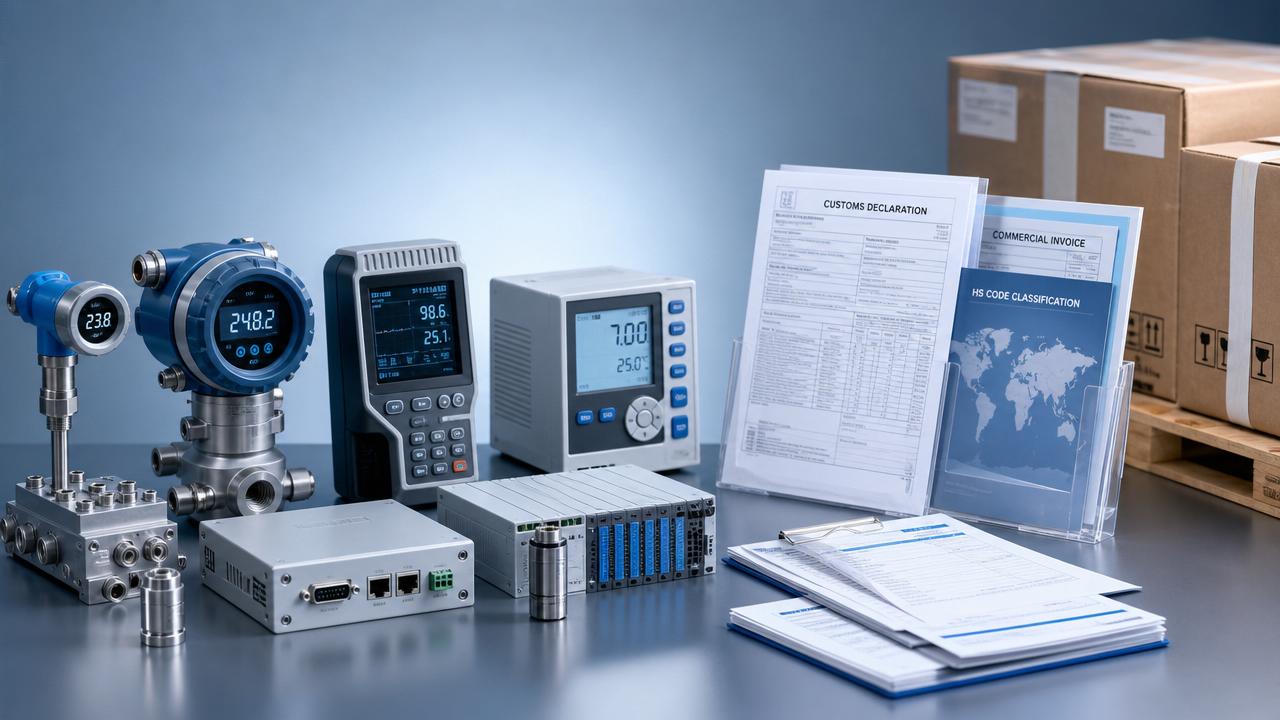
 China Customs Rolls Out AI HS Tool for Instrument ExportsChina Customs rolls out an AI HS tool for instrument exports under HS Chapter 90. Learn how it improves classification accuracy, speeds clearance, and impacts export compliance.
 China Customs Launches Smart HS Tool for Instrument ExportsChina Customs Launches Smart HS Tool for Instrument Exports, boosting HS code accuracy to 98.2%. Learn how it improves compliance, reduces clearance risk, and supports smoother global instrument shipments.
 China Customs Launches Smart HS Tool for Instrument ExportsChina Customs launches a smart HS tool for instrument exports, helping manufacturers and exporters improve HS code accuracy, reduce compliance risks, and speed up customs clearance.
") China's Instruments Rise: 7 Firms in Global Top 25 (2026)China's Instruments Rise: 7 firms enter 2026 Global Top 25 — Hikvision #4, United Imaging & SUPCON debut. Key insights for procurement, compliance & AI-integrated instrumentation.
China's Instruments Rise: 7 Firms in Global Top 25 (2026)China's Instruments Rise: 7 firms enter 2026 Global Top 25 — Hikvision #4, United Imaging & SUPCON debut. Key insights for procurement, compliance & AI-integrated instrumentation.


Chat Online