


On May 6, 2026, China’s Ministry of Industry and Information Technology (MIIT) formally approved Guodian High-Tech to conduct a two-year satellite-based Internet of Things (IoT) commercial trial using the Tianqi Constellation. This development is particularly relevant for industrial instrumentation manufacturers, marine fisheries, energy & water infrastructure, and cross-border logistics — sectors where reliable connectivity remains challenging in remote or network-denied environments.
Event Overview
On May 6, 2026, the Ministry of Industry and Information Technology (MIIT) issued an official approval for Guodian High-Tech to launch a two-year satellite IoT commercial trial. The trial leverages the Tianqi Constellation to deliver wide-area, low-power, and high-reliability IoT connectivity services. These services are intended for application in marine fisheries, energy and water resources management, transportation, and logistics. The capability enables domestic industrial instruments—including smart pressure transmitters, flow meters, and environmental monitoring sensors—to transmit data and report operational status remotely from locations without terrestrial network coverage, such as offshore platforms, remote oil and gas wells, and cross-border power transmission lines.
Impact on Specific Industry Segments
Industrial Instrument Manufacturers (OEMs)
These companies face growing demand for system-level interoperability in overseas projects. The MIIT trial signals formal recognition of satellite IoT as a viable backhaul channel for industrial sensors. Impact manifests in product design cycles—supporting satellite uplink capability may become a differentiating feature in export tenders, especially for infrastructure projects in developing regions with limited ground networks.
System Integrators & Engineering Contractors
Contractors delivering turnkey monitoring solutions for energy, water, or transport infrastructure may now include satellite-enabled telemetry as a standardized option—not just as a custom add-on. This affects proposal structuring, compliance documentation, and integration testing workflows, particularly for deployments across maritime or sparsely connected geographies.
Export-Oriented Distributors & Channel Partners
Distributors serving markets with fragmented telecom infrastructure (e.g., Southeast Asia, Africa, Latin America) may see increased customer inquiries regarding satellite-compatible instrumentation. The trial does not mandate hardware changes yet, but it validates a technical pathway that could influence future procurement specifications—especially in government-backed infrastructure tenders.
Supply Chain & Certification Service Providers
Third-party test labs and certification bodies supporting industrial instrument exports may need to assess whether satellite communication modules (e.g., LoRaWAN over satellite, NB-IoT via LEO relay) fall under new conformity assessment scopes. While no regulatory requirement has been issued yet, alignment with evolving MIIT-endorsed architecture is increasingly relevant for pre-market validation.
What Relevant Enterprises or Practitioners Should Focus On Now
Monitor official follow-up documents from MIIT and the State Radio Regulation Authority
The current approval is for a trial phase; subsequent technical specifications, spectrum allocation details, or interoperability guidelines—once published—will define practical implementation boundaries. Stakeholders should track announcements related to ‘satellite IoT terminal access requirements’ or ‘industrial sensor communication protocol extensions’.
Assess compatibility of existing instrument firmware and data protocols with satellite uplink constraints
Satellite links impose limitations on packet size, transmission frequency, and power budget. Companies should review whether their current sensor firmware supports adaptive reporting intervals, compressed payload encoding, or store-and-forward logic—capabilities critical for cost-effective and reliable satellite operation.
Distinguish between policy signal and near-term commercial readiness
This approval reflects regulatory endorsement of a technical approach—not immediate market availability of certified devices or service SLAs. Enterprises should avoid premature hardware redesigns but begin evaluating pilot use cases aligned with the trial’s stated focus areas: offshore monitoring, remote wellhead telemetry, and long-haul transmission line surveillance.
Prepare for potential shifts in customer RFP language and tender evaluation criteria
Early adopters among state-owned enterprises or EPC contractors may begin referencing satellite backhaul capability in upcoming bids. Suppliers should update technical datasheets and compliance summaries to clarify satellite readiness—e.g., listing supported modulation schemes, latency ranges, or fallback behavior—without overstating current deployment maturity.
Editorial Perspective / Industry Observation
Observably, this MIIT decision functions primarily as a regulatory signal—not an operational rollout. It confirms satellite IoT’s formal entry into China’s industrial connectivity framework, but actual device certification, service pricing, and cross-border data routing policies remain undefined. From an industry perspective, the trial is better understood as a foundational step toward harmonizing satellite communication standards with industrial automation requirements—not as evidence of imminent large-scale adoption. Continued attention is warranted because MIIT’s involvement increases the likelihood of future mandatory interoperability frameworks or preferential treatment in public-sector procurement.
Concluding, this approval marks a structural shift in how industrial connectivity is governed—not merely an expansion of bandwidth options. Its significance lies less in immediate revenue impact and more in its role as a catalyst for aligning hardware design, data architecture, and regulatory compliance across China’s industrial instrumentation value chain. Currently, it is more accurate to interpret this development as an enabling policy milestone than as a trigger for urgent commercial action.
Source: Official approval notice issued by the Ministry of Industry and Information Technology (MIIT), dated May 6, 2026. No additional background documents, technical annexes, or implementation roadmaps have been publicly released as of the approval date. Ongoing observation is recommended for updates on trial progress reports, spectrum licensing outcomes, or supplementary technical guidance from MIIT or affiliated standardization bodies.


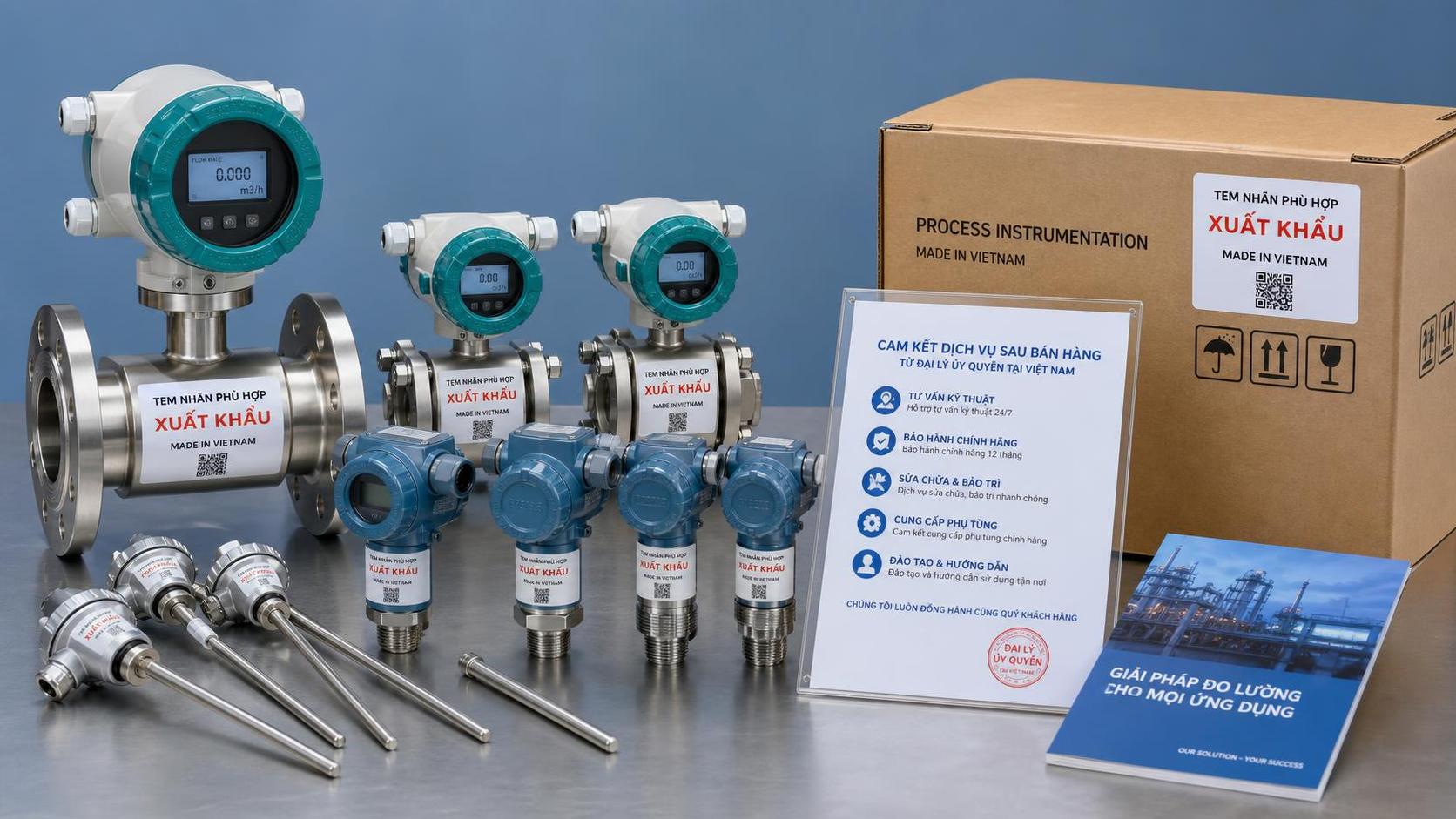
 Vietnam Rule Takes Effect Sept. 1: Imported Industrial Instruments Need Vietnamese Labels and Local After-Sales CommitmentVietnam’s Sept. 1 rule requires Vietnamese labels and local after-sales support for imported industrial instruments. See what HS 9026/9028 exporters and buyers must do now.
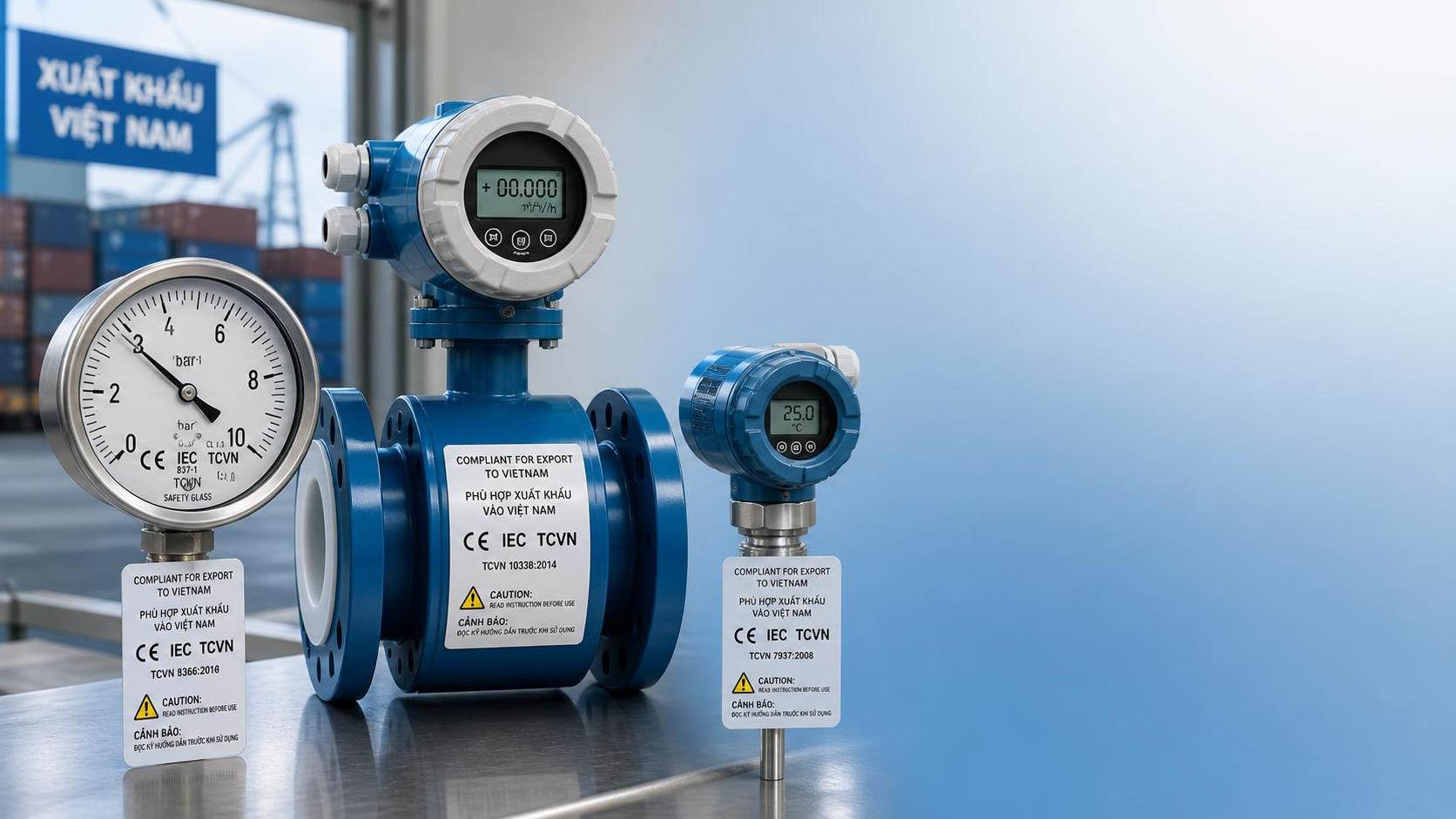
 Vietnam MOIT Rule Tightens Labeling for Imported Industrial InstrumentsVietnam MOIT Rule Tightens Labeling for Imported Industrial Instruments: learn how new Vietnamese label, CE/IEC/TCVN, and local service contact rules affect customs clearance and market access.
 EU Energy Rule Takes Effect: Flow Meters Need Data InterfacesEU energy rule now requires industrial flow meters with data interfaces. Learn how EN 16857:2026, MQTT/HTTPS, and updated compliance affect exports, customs, and buying decisions.
 EU Efficiency Rule Adds Data Interface Mandate for FlowmetersFlowmeters face a major EU compliance shift: from Sept. 1, 2026, new models must support MQTT or OPC UA and direct energy-data reporting. See how this rule impacts design, CE documents, and EU exports.
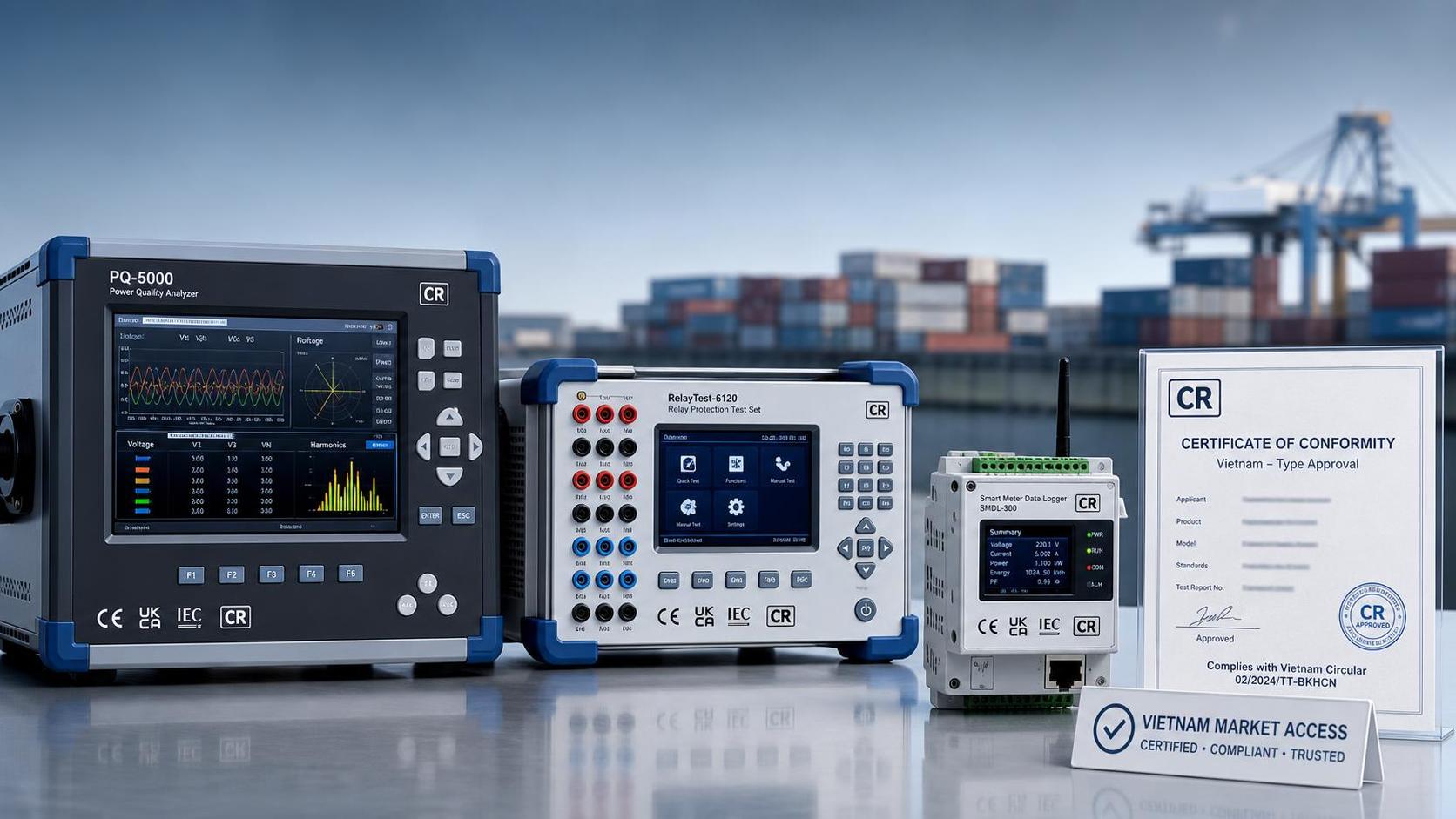
 Vietnam MOIT Makes QCVN 112:2026 MandatoryVietnam MOIT Makes QCVN 112:2026 Mandatory for imported power monitoring instruments from Sept 1, 2026. Learn certification, CR mark, and supply-chain impacts now.
 IEC 62053-22:2026 Mandates Secure OTA for Class 1 MetersIEC 62053-22:2026 mandates secure OTA for Class 1 meters, reshaping smart meter compliance, procurement, and market access. Learn what manufacturers and buyers must prepare now.



Chat Online