


The timing of the underlying event is not explicitly stated in the source input, but the available information shows that in June 2026 Shenghong Petrochemical put into operation in Lianyungang what is described as the chemical industry’s first full-process “AI dark lab.” For companies involved in analytical instruments, process control, laboratory operations, procurement, and localized technical service, this development deserves attention because it points to a more concrete shift toward unattended, high-precision, high-throughput analysis systems in large-scale chemical production.
What Has Been Confirmed About the Project
According to the provided information, Shenghong Petrochemical completed and launched a full-process unmanned analytical laboratory described as an “AI dark lab.” The project was put into operation in Lianyungang in June 2026.
The confirmed system scope includes fully automated sample pretreatment, intelligent spectroscopy and mass spectrometry analysis, and a LIMS-AI closed-loop decision system. The project is presented as a demonstration case for the chemical sector.
The same source material states that this project reflects rising demand among large Chinese chemical enterprises for analytical instruments that combine high accuracy, high throughput, and unattended operation. It also indicates that imported high-end process analyzers, including online NIR and LIBS systems, may see faster local adaptation and more localized service support.
Why Different Market Participants Are Likely to Watch It Closely
For instrument suppliers, the signal is moving beyond standalone hardware
Analysis shows that suppliers of spectroscopy, mass spectrometry, and process analysis equipment may be affected because the project combines instruments with automation and decision-layer integration. The business impact is not only about selling analyzers, but also about fitting into an operating environment that expects automated sample handling, data connectivity, and closed-loop workflows. What deserves closer attention is whether customer demand increasingly centers on integrated delivery and local service capability rather than on instrument specifications alone.
For chemical manufacturers, laboratory capacity is becoming a production-side issue
From an industry perspective, large chemical producers may view this type of laboratory not only as a testing function, but as part of production efficiency and quality control. The most relevant business links are routine analysis, response speed, and consistency in unattended operation. Companies following this development may need to watch whether future procurement priorities shift toward systems that can support stable throughput and tighter links between lab data and operational decisions.
For localization and service teams, implementation depth may matter more than branding
Observably, the reference to imported high-end process analyzers such as online NIR and LIBS highlights a practical issue for service providers and localization teams: deployment in China may increasingly depend on adaptation to local operating environments and on-site support responsiveness. The impact is likely to appear in commissioning, maintenance, application tuning, and user support rather than in product positioning alone.
For procurement and supply-chain roles, delivery expectations may become more complex
Analysis shows that buyers and supply-chain coordinators may face more complex evaluation criteria if projects increasingly involve automated pretreatment, advanced analytical instruments, and LIMS-AI system integration in one package. The affected business stages include supplier screening, technical document review, delivery coordination, and post-installation support planning. What deserves closer attention is whether vendors can demonstrate compatibility, service readiness, and implementation coordination across multiple subsystems.
What Companies Should Monitor Next
Watch for further official wording around scope and replication
Companies should pay close attention to how Shenghong Petrochemical or other market participants describe similar projects in future official communications. Analysis shows that wording matters: a demonstration project does not automatically mean broad replication, but it can signal where procurement and technical evaluation standards are heading.
Separate technical demonstration from broad commercial rollout
From an industry perspective, the current information confirms a completed and operational project, but it does not by itself confirm how widely similar systems will be deployed across the sector. Companies should distinguish between a landmark project and an established market pattern, especially when planning product positioning, channel strategy, or inventory and staffing decisions.
Prepare for deeper requirements in local adaptation and service response
For suppliers and service providers, the more immediate practical issue may be readiness in localized adaptation, application support, and delivery coordination. If demand is indeed moving toward unattended analytical workflows, customer discussions are likely to place more weight on implementation detail, service capability, and workflow fit.
Review documentation and communication around integrated delivery
Procurement teams, integrators, and vendors may need to strengthen how they prepare technical documents, interface descriptions, service commitments, and delivery schedules. Analysis shows that in projects combining instruments, automation, and LIMS-AI logic, customer communication and fulfillment planning can become just as important as equipment selection.
How This Development Is Best Understood at This Stage
Observably, this news is more than a routine project update because it ties laboratory automation, advanced analysis, and decision-system integration into one operating model. At the same time, it is more appropriate to understand this as a strong industry signal rather than as proof that the entire market has already shifted.
Analysis shows that the clearest meaning of the project lies in demand structure: large chemical enterprises appear to be placing more attention on precision, throughput, and unattended operation in one analytical environment. Whether that translates into wider procurement cycles, new service models, or broader standard-setting still requires continued observation.
A Practical Reading of the Signal
This development is best read as a concrete marker of where parts of the chemical analysis market may be heading. It suggests that integrated analytical capability, automation, and localized support are becoming more central in high-end chemical laboratory and process-analysis discussions.
A neutral conclusion is that the project does not yet establish a full market outcome on its own, but it does offer a meaningful reference point for instrument makers, chemical producers, procurement teams, and service providers. At the current stage, it is more appropriate to understand the news as a medium- to long-term industry signal that merits continued tracking rather than as a complete and immediate market transformation.
Basis of This Article
This article is generated based on the user-provided news title, event timing description, and event summary. The specific official source link was not provided in the input, so further verification is still necessary.
For this type of industry update, commonly relevant source categories may include company announcements, official statements, industry association releases, authoritative media reports, and standard-setting or technical documentation. Continued attention should focus on any later official disclosures that clarify project scope, technical implementation details, and whether similar models expand into broader commercial adoption.


 Vietnam Tightens Import Rules for Industrial Instruments From SeptemberVietnam tightens import rules for industrial instruments from September 2026. Learn how Vietnamese labeling and local after-sales commitments may affect customs clearance, costs, and exporter compliance.
 IECEx Rules Raise the Bar for Ultrasonic Transmitters in SIS ExportsIECEx rules now demand SIL2 diagnostic proof and third-party conformity reports for ultrasonic transmitters in SIS exports—learn how this impacts compliance, bidding, and market access.
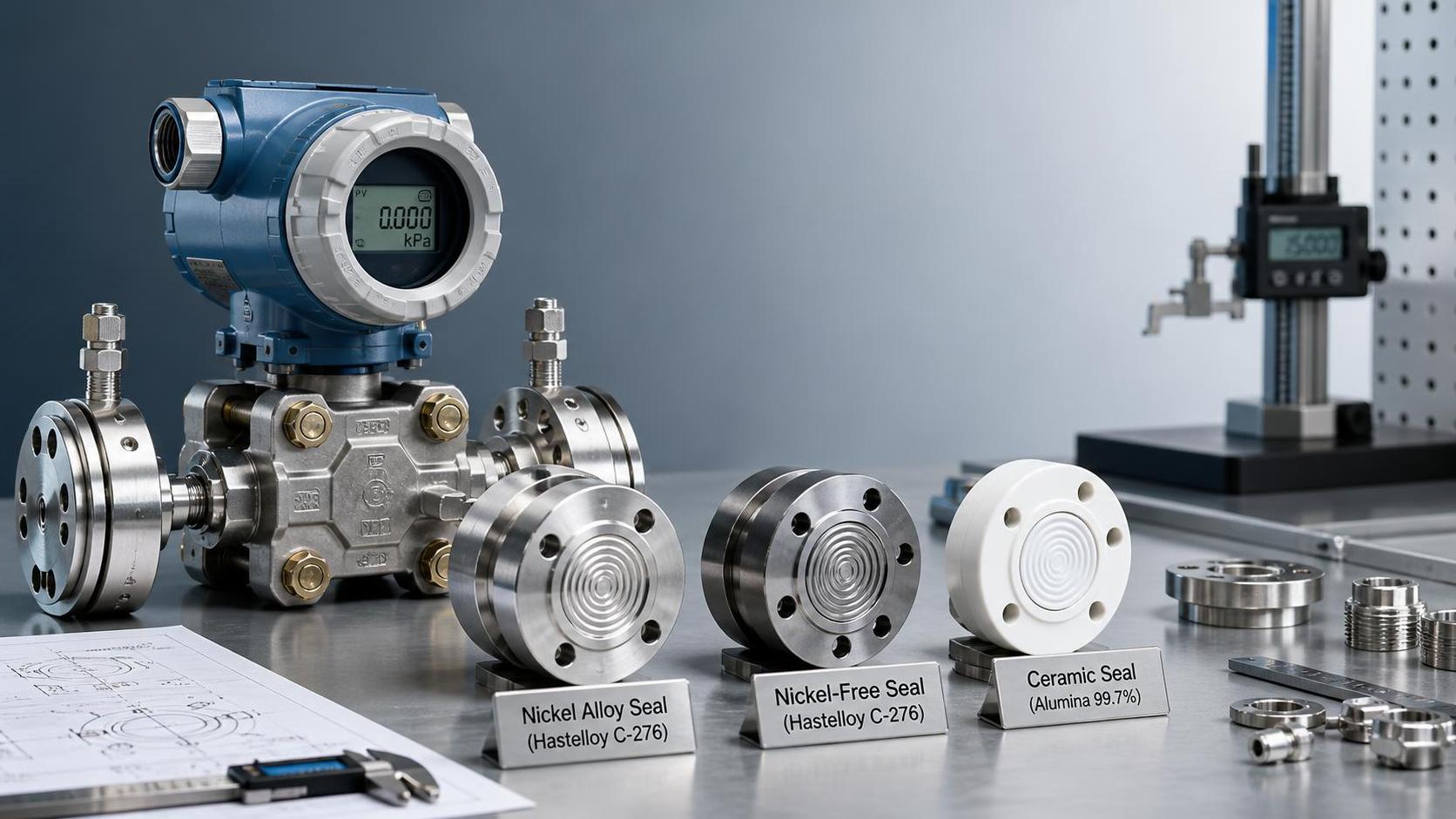
 EU REACH Annex XVII Targets Nickel SealsEU REACH Annex XVII now targets nickel seals in industrial instruments. Learn how pressure transmitters and flow meters must adapt before the 2027 enforcement deadline.
 China Flowmeter Export Prices Rise 9.3% in Q2 2026China flowmeter export prices rose 9.3% in Q2 2026 as Middle East petrochemical and Southeast Asia hydrogen demand lifted premium meter exports. See what it means for buyers and exporters.
 EU PFAS Ban Hits Chemical Instrument ImportsEU PFAS ban now impacts chemical instrument imports into the EU. Learn how REACH rules affect flow meters, transmitters, sourcing, compliance files, and delivery planning.
 EU REACH Adds Phthalate Ban for Process InstrumentsEU REACH adds a phthalate ban for process instruments from Sept 1, 2026. Learn how level gauges, pressure transmitters, and flow switches can meet EU compliance and documentation rules.

Chat Online