


On July 20, 2026, the European Chemicals Agency put a revised REACH requirement into effect that changes how certain imported industrial instruments are cleared into the EU. Importers of industrial sensors, process analyzers, and field instruments used in chemical, pharmaceutical, and food applications must now submit an SVHC-related compliance declaration together with full supply chain information before customs clearance. This matters not only for EU importers, but also for exporters shipping pH, dissolved oxygen, conductivity transmitters, gas detection modules, and similar products into the European market, because compliance timing is now more directly tied to documentation readiness.
What the new requirement covers
The confirmed change is that, from July 20, 2026, the revised REACH rule is formally in force under ECHA implementation. The requirement applies to imported industrial sensors, process analytical instruments, and field devices that contain substances of very high concern, or SVHCs, and are used in chemical, pharmaceutical, and food-sector settings. Before customs clearance, importers must provide a compliance declaration and complete supply chain information. The information provided also makes clear that the rule directly affects the compliance route and delivery timeline for core products exported from China to the EU, including pH, DO, and conductivity transmitters, as well as gas detection modules.
Where the pressure is likely to appear first
Import and export coordination will tighten
From an industry perspective, direct trading companies are likely to feel the impact first because customs clearance is now tied to whether the required SVHC declaration and supply chain information are ready in advance. The practical pressure point is no longer only product shipment, but also document completeness before goods enter the EU process.
Manufacturers will face more document-driven checks
For processing and equipment manufacturing businesses, the likely impact is concentrated in product compliance preparation and supplier information collection. Analysis shows that exporters of industrial transmitters, gas detection modules, and related instruments may need closer coordination with upstream suppliers so that import-side declarations can be supported without delay.
Supply chain service providers may see longer verification steps
For logistics, customs, and broader supply chain service roles, the change may be reflected in longer pre-clearance review steps and more back-and-forth over technical and supplier records. What deserves closer attention is whether documentation can move through the chain in a complete and consistent way, since delivery timing is explicitly linked to the new compliance path.
End users and buyers may need earlier compliance confirmation
For industrial buyers in chemical, pharmaceutical, and food applications, the main issue is not only product selection but delivery certainty. Observably, procurement teams may need earlier confirmation from suppliers and import partners on whether the required declaration package is already in place for the relevant instrument models.
What companies should watch now
Focus on the product categories named by the development
The most immediate task is to identify whether current shipments involve the product groups directly mentioned in the available information, especially pH, DO, conductivity transmitters, gas detection modules, industrial sensors, process analyzers, and field instruments intended for EU entry.
Check whether supply chain records are complete before shipment
Analysis shows that the rule is not only about whether SVHCs are present, but also about whether complete supply chain information can be presented before customs clearance. Companies should therefore pay attention to how supplier records, technical declarations, and product-level compliance materials are assembled and handed over across the chain.
Separate formal rule language from operational execution
What deserves closer attention is the gap between the legal requirement taking effect and how it is implemented in day-to-day trade operations. Businesses should watch for how customs-facing documentation expectations are interpreted in practice and whether internal timelines for order confirmation, production release, and shipment preparation need adjustment.
Prepare customer communication around lead times
Because the provided information states that compliance routes and delivery cycles are directly affected, exporters and importers should be ready to explain possible timing changes to customers and channel partners. In practical terms, this is a communication issue as much as a compliance issue.
Why this should be read as more than a one-day update
As an editorial observation, this development is better understood as an operational compliance signal rather than a standalone customs formality. The confirmed fact is narrow and specific, but the business implication is broader: documentation depth is becoming more closely connected to market access for industrial instrumentation entering the EU. At the same time, it would be premature to treat this as a fully settled outcome across every workflow, because the available information does not provide detailed implementation cases, enforcement patterns, or additional official clarifications.
How to interpret the current stage
At this stage, it is more appropriate to understand the July 20 REACH change as an active compliance requirement with immediate procedural consequences for affected imports, and as a continuing signal that supply chain transparency is becoming harder to separate from delivery execution. The direct impact is clearest for importers and exporters handling covered instruments, while the broader industry effect still requires continued observation through actual trade practice.
Basis of this article
This article is based on the user-provided news title, event date, and event summary concerning the REACH revision implemented by ECHA on July 20, 2026, and the resulting SVHC declaration requirement for imported industrial sensors and related instruments. For this type of development, relevant source categories typically include official regulatory notices, company compliance updates, industry association releases, authoritative media coverage, and standards-related documents. A specific official source link was not provided in the input, so the exact official publication path still requires ongoing verification. Continued attention should be paid to any further official wording, implementation clarification, and customs-facing documentation practice related to the affected product categories.


 Vietnam Tightens Import Rules for Industrial Instruments From SeptemberVietnam tightens import rules for industrial instruments from September 2026. Learn how Vietnamese labeling and local after-sales commitments may affect customs clearance, costs, and exporter compliance.
 IECEx Rules Raise the Bar for Ultrasonic Transmitters in SIS ExportsIECEx rules now demand SIL2 diagnostic proof and third-party conformity reports for ultrasonic transmitters in SIS exports—learn how this impacts compliance, bidding, and market access.
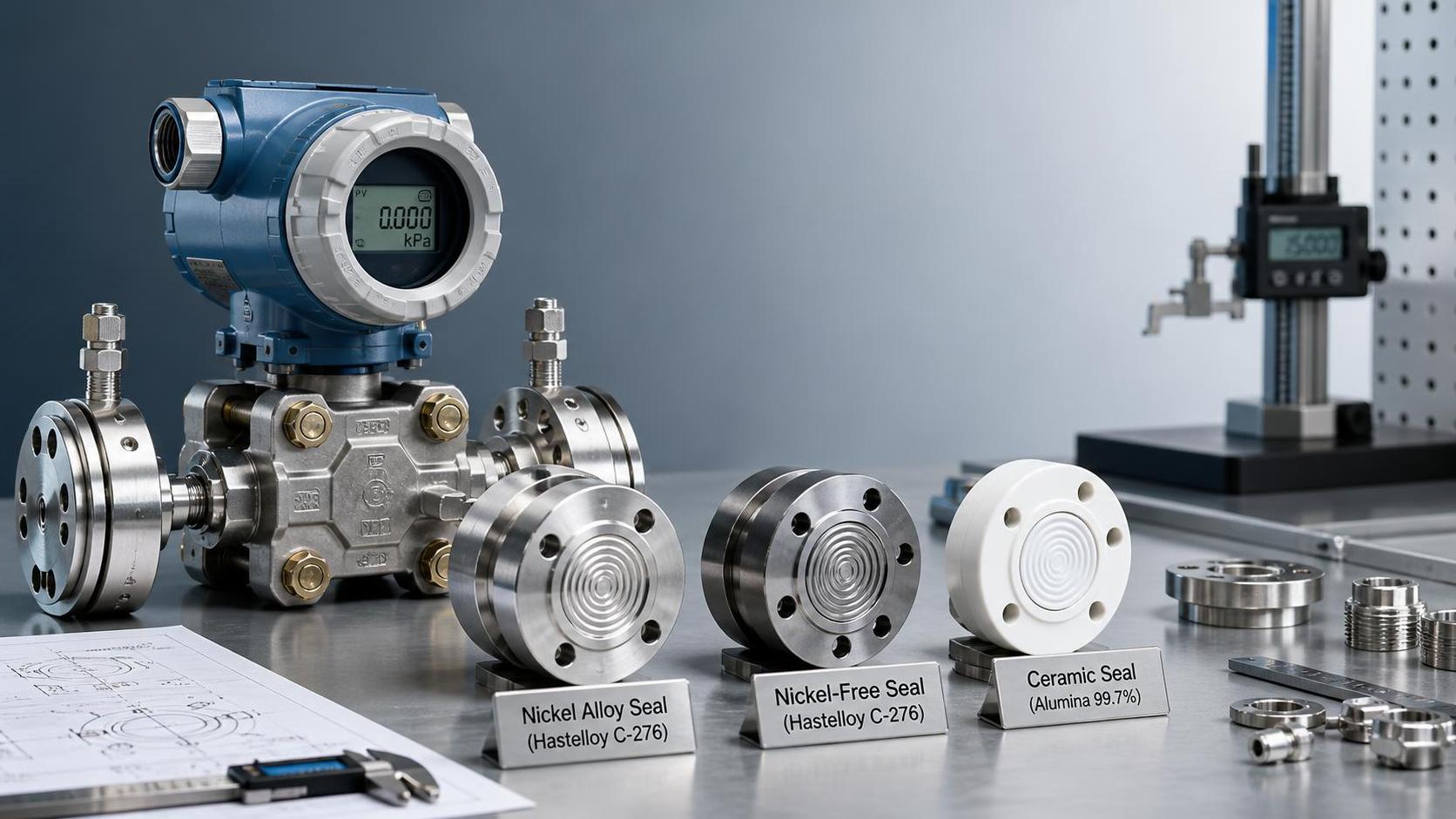
 EU REACH Annex XVII Targets Nickel SealsEU REACH Annex XVII now targets nickel seals in industrial instruments. Learn how pressure transmitters and flow meters must adapt before the 2027 enforcement deadline.
 China Flowmeter Export Prices Rise 9.3% in Q2 2026China flowmeter export prices rose 9.3% in Q2 2026 as Middle East petrochemical and Southeast Asia hydrogen demand lifted premium meter exports. See what it means for buyers and exporters.
 EU PFAS Ban Hits Chemical Instrument ImportsEU PFAS ban now impacts chemical instrument imports into the EU. Learn how REACH rules affect flow meters, transmitters, sourcing, compliance files, and delivery planning.
 EU REACH Adds Phthalate Ban for Process InstrumentsEU REACH adds a phthalate ban for process instruments from Sept 1, 2026. Learn how level gauges, pressure transmitters, and flow switches can meet EU compliance and documentation rules.



Chat Online