


The timing of the event itself is not clearly specified in the source input, but the disclosed information states that in June 2026, Shenghong Petrochemical completed and put into operation China’s first full-process unmanned analysis laboratory for a chemical setting. The project deserves attention from chemical producers, industrial park operators, laboratory service teams, and equipment suppliers because it links AI-enabled operation with round-the-clock unattended analysis and, at the same time, serves as a reference case for the deployment of domestic high-end analytical instruments in demanding chemical environments.
What has been confirmed about the project
According to the provided information, Shenghong Petrochemical built a full-process unmanned analysis laboratory described as an “AI + lights-out laboratory” in June 2026. The laboratory integrates domestic analytical instrument systems including near-infrared spectroscopy, online chromatography, and intelligent sample pretreatment.
The facility is designed for 24-hour unattended operation. The demonstration project is also described as having verified the reliability and intelligence level of domestic high-end analytical equipment under harsh chemical operating conditions.
The same information further indicates that the project provides a replicable model of intelligent analytical solutions for chemical park customers in the Middle East and Southeast Asia.
Why different market participants may pay attention
For chemical producers, the focus is the operating model
From an industry perspective, chemical manufacturers may view this development through the lens of process continuity, quality monitoring, and laboratory organization. If full-process unattended analysis can be implemented reliably, the most immediate business relevance would be in how testing workflows, instrument coordination, and around-the-clock analytical support are arranged inside production environments.
What deserves closer attention is not only the concept of a lights-out laboratory, but also whether the integrated model of spectroscopy, chromatography, and intelligent sample preparation can be adapted to different production scenarios without adding operational complexity.
For domestic instrument suppliers, the signal is about validation
Analysis shows that suppliers of domestic analytical equipment may read this case as a reference point for application credibility. The provided information explicitly ties the project to verification of reliability and intelligence in harsh chemical environments, which matters because industrial users often evaluate instruments not only on specifications, but on stability under real operating conditions.
The business impact here is likely to center on product qualification discussions, project-based solution design, and the ability to present deployable systems rather than stand-alone devices.
For chemical park developers and service providers, the interest is in replication
For industrial park operators, laboratory integrators, and technical service providers, the most relevant part of the update is the statement that the project offers a replicable model for customers in the Middle East and Southeast Asia. Observably, that frames the laboratory not only as an internal facility, but as a demonstrable solution structure.
The related business concern is whether this kind of model can be standardized for delivery, localized for different client environments, and supported through implementation and maintenance arrangements.
For procurement and cross-border project teams, the issue is solution readiness
Procurement teams and project delivery functions may be affected because the news shifts attention from individual instruments to integrated analytical systems. In practical terms, they may need to watch how buyers assess bundled capabilities such as online analysis, sample pretreatment, and unattended operation as one package rather than as separate purchases.
They may also need to track how customers ask for proof of operating reliability, system compatibility, and project documentation when evaluating similar intelligent laboratory projects.
What companies should watch next
How “replicable” is defined in actual projects
Analysis shows that one of the most important follow-up points is how the idea of a replicable solution is expressed in future project communication. Companies should distinguish between a successful demonstration case and a repeatable delivery model that can be transferred across sites, clients, and operating conditions.
Whether integrated systems become the core purchasing unit
What deserves closer attention is whether customer demand shifts from buying single analytical devices toward procuring coordinated systems that combine detection, pretreatment, and unattended operation. That distinction matters for suppliers, integrators, and buyers because it changes technical discussions, bidding scope, and delivery expectations.
How harsh-environment validation is communicated
For suppliers and service providers, the practical issue is how reliability claims are supported in customer communication. Since the provided information emphasizes verification in harsh chemical environments, companies involved in similar projects should pay close attention to qualification materials, operating records, and the way project performance is described in formal documentation.
Which overseas opportunities move from concept to execution
The reference to the Middle East and Southeast Asia is notable, but it should still be treated carefully. From an industry perspective, companies should watch whether future updates provide clearer signs of actual project rollout, customer adoption, or implementation pathways in those markets, rather than assuming immediate large-scale expansion.
How this development should be interpreted now
Observably, this update is best understood as a concrete signal that AI-enabled, lights-out laboratory concepts are being applied in a real chemical analysis scenario rather than remaining at the level of general discussion. That makes it relevant beyond one company, especially for participants assessing the maturity of domestic analytical equipment and intelligent laboratory integration.
At the same time, analysis shows that this is more appropriately understood as a directional industry signal than as proof of broad market conversion. The available information confirms a demonstration outcome and a reference model, but it does not by itself establish how fast similar systems will be adopted across other chemical sites or regions.
What this means for the sector at this stage
At this stage, the Shenghong Petrochemical project points to a meaningful development in the intersection of chemical operations, laboratory automation, and domestic high-end analytical equipment. The confirmed facts suggest that unattended full-process analysis has moved into an operational demonstration in a demanding industrial environment.
A balanced reading is that the news should be seen as an important case signal with practical reference value, especially for chemical producers, equipment suppliers, and project service providers evaluating intelligent analysis models. It is more appropriate to understand this as a development that merits continued tracking, rather than as a settled conclusion about the pace or scale of broader industry adoption.
Basis of this article and what still needs verification
This article is generated based on the user-provided news title, event timing note, and event summary. The specific official source link was not provided in the input, so further verification is still needed through channels commonly associated with this type of industry update, such as official company announcements, corporate disclosures, industry association information, authoritative media reporting, and relevant technical or standards-related documents.
Further observation should focus on whether later public information clarifies the event timing, provides more detail on project implementation, and shows how the stated replicable model is carried forward into additional chemical park or overseas application scenarios.


 Vietnam Tightens Import Rules for Industrial Instruments From SeptemberVietnam tightens import rules for industrial instruments from September 2026. Learn how Vietnamese labeling and local after-sales commitments may affect customs clearance, costs, and exporter compliance.
 IECEx Rules Raise the Bar for Ultrasonic Transmitters in SIS ExportsIECEx rules now demand SIL2 diagnostic proof and third-party conformity reports for ultrasonic transmitters in SIS exports—learn how this impacts compliance, bidding, and market access.
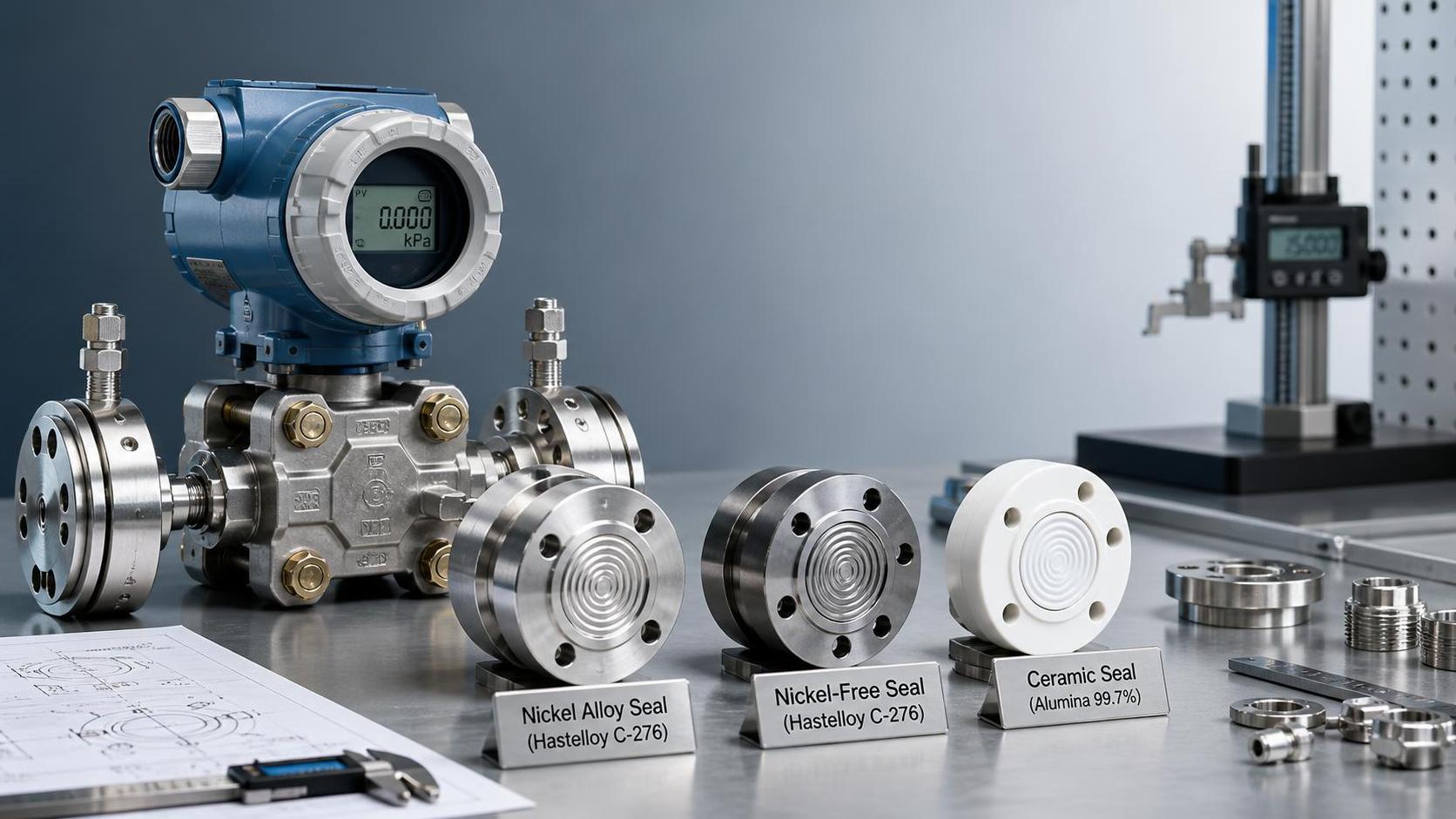
 EU REACH Annex XVII Targets Nickel SealsEU REACH Annex XVII now targets nickel seals in industrial instruments. Learn how pressure transmitters and flow meters must adapt before the 2027 enforcement deadline.
 China Flowmeter Export Prices Rise 9.3% in Q2 2026China flowmeter export prices rose 9.3% in Q2 2026 as Middle East petrochemical and Southeast Asia hydrogen demand lifted premium meter exports. See what it means for buyers and exporters.
 EU PFAS Ban Hits Chemical Instrument ImportsEU PFAS ban now impacts chemical instrument imports into the EU. Learn how REACH rules affect flow meters, transmitters, sourcing, compliance files, and delivery planning.
 EU REACH Adds Phthalate Ban for Process InstrumentsEU REACH adds a phthalate ban for process instruments from Sept 1, 2026. Learn how level gauges, pressure transmitters, and flow switches can meet EU compliance and documentation rules.


Chat Online