


At MICONEX 2026, which opened in Hefei on 2026-08-12, the first day’s interest in intrinsically safe gas detectors and SIL2 fire detection controllers suggests that certification compatibility, calibration support, and export-ready documentation are now moving closer to the center of industrial safety procurement. For manufacturers, distributors, and service providers involved in cross-border sales of industrial monitoring equipment, this is best read as a market signal tied to ATEX and IECEx alignment, not just a trade-show sales story.
What was confirmed on the opening day
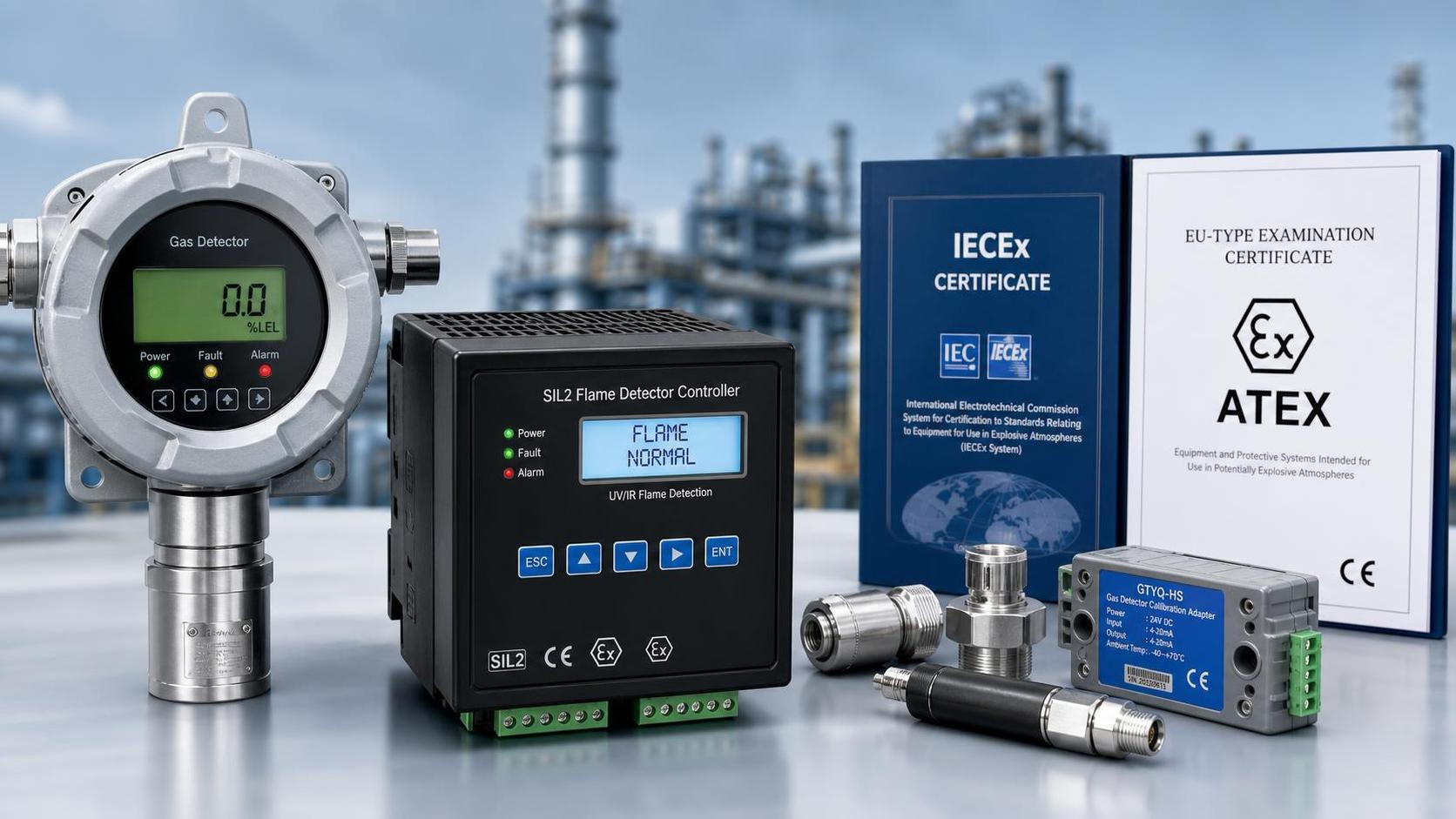
The 34th China International Measurement, Control and Instrumentation Exhibition (MICONEX 2026) opened in Hefei on 2026-08-12. On the first day, companies including Zhongke Bowen and Wanliyan Technology drew interest from distributors from Germany, the United States, and the Netherlands. The products attracting attention included intrinsically safe gas detectors and SIL2-level flame detection controllers. According to the event summary, several distributors signed technical evaluation memorandums on site, with the discussion centered on ATEX and IECEx certification compatibility and the ability to provide localized calibration services.
Why the certification angle matters across the chain
Export-oriented manufacturers face a tighter specification test
For manufacturers selling industrial safety monitoring equipment into Europe and other overseas markets, the practical issue is not simply whether a product performs well in domestic use. The first commercial hurdle is whether the device can fit the certification and technical documentation expectations attached to ATEX and IECEx-oriented procurement. That affects product design, test records, labeling, manuals, and the way technical claims are expressed in bids or distributor negotiations.
Distributors now weigh compliance depth, not only price
The fact that multiple overseas distributors focused on certification adaptability and calibration support indicates that channel partners may place more weight on verification materials and after-sales capability when screening suppliers. In this type of transaction, a distributor is not just buying inventory; it is assessing whether the supplier can support market access, local acceptance, and ongoing service obligations that may be expected by downstream buyers.
Calibration and service partners become part of market access
Localized calibration service capability is not a side issue in industrial safety equipment. It can affect delivery planning, acceptance checks, maintenance commitments, and the credibility of long-term support. For service providers and technical partners, the relevant change is that calibration is increasingly tied to commercialization, not treated as an isolated technical task.
What companies should watch next
Certification files need to be ready before commercial talks deepen
For firms aiming at export or distributor channels, the immediate priority is to review whether product dossiers are aligned with ATEX and IECEx-related expectations. That includes test reports, conformity-related records, operating instructions, technical parameters, and any materials a distributor may need to support internal due diligence or customer-side review.
Technical claims should match the actual scope of approval
Where certification scope is narrow or still being expanded, companies should avoid presenting product capability more broadly than the current documentation supports. In practice, that means keeping sales language, distributor briefs, and bid materials synchronized with the confirmed approval scope and with any stated calibration or servicing commitments.
Delivery planning should account for review cycles
Technical evaluation memorandums are not final purchase orders, but they usually mean the next stage will involve more document checks and possible sample or specification review. Companies that treat this as a simple lead-generation event may underestimate the time needed for certification review, document revision, and service-network coordination.
After-sales support can become a bidding condition
For industrial safety devices, the ability to offer local calibration support may move from a commercial advantage to a practical requirement in some procurement settings. Firms should pay attention to whether downstream buyers or distributors begin to treat service availability, turnaround time, and traceability records as mandatory qualification items.
How to read this signal now
Analysis shows that this event is better understood as an execution signal than as a completed rule change. The confirmed fact is that distributors are actively testing the fit between Chinese industrial safety monitoring products and overseas certification and service requirements. What deserves closer attention is whether this interest later appears in formal procurement language, certification review practice, or distributor qualification standards. For now, the clearest takeaway is that compliance depth and localized service capability are becoming commercial filters, not just technical add-ons.
What this means in practical terms
From an industry perspective, MICONEX 2026 points to a market where industrial safety monitoring equipment is judged not only by performance but by how well it can move through certification, distribution, calibration, and acceptance steps across borders. It is more appropriate to understand this as an early indication of stricter commercial screening around ATEX and IECEx compatibility, with downstream impact still depending on how buyers, distributors, and service networks apply those requirements in practice.
Source basis and follow-up
This article was generated from the user-provided title, event date, and event summary. The specific official source link was not provided in the input and should continue to be verified against official exhibition notices, regulator releases, customs or trade authority information, industry association materials, standard-body documents, and authoritative media reports. Further attention should stay on certification execution language, distributor qualification terms, calibration service commitments, and any later procurement or acceptance requirements that may emerge from market feedback.


 EU REACH Annex XVII Update Bars Imports of Instruments Using Nickel-Containing Seals from 2027EU REACH Annex XVII update will bar imports of instruments using nickel-containing seals from 2027. Learn how this affects pressure transmitters, control valves, analyzers, testing, and compliance planning.
 MICONEX 2026 Signals Higher ATEX, IECEx ScrutinyMICONEX 2026 spotlights ATEX and IECEx scrutiny for gas detectors and SIL2 fire controllers, highlighting certification, calibration, and export-ready service needs.
 MICONEX 2026 Opens in Hefei as Chinese Safety Devices Draw Overseas BuyersMICONEX 2026 highlights Chinese industrial safety monitoring equipment as overseas buyers focus on IEC 61508 SIL2 intelligent gas detection systems for higher-end global projects.
 IMO Updates EGCS Monitoring Guidance for 2026IMO updates EGCS monitoring guidance for 2026, highlighting pH, ORP and turbidity compliance, CMS connectivity, and ISO 17025 traceability for maritime buyers.
 Saudi SASO Rule Adds Arabic UI and EMI Test DutySaudi SASO rule update: Arabic UI and IEC 61326-2-3 EMI testing will become mandatory for environmental monitoring instruments from Nov 1, 2026. See key export and compliance impacts.
 SASO Tightens Cyber Rules for Monitoring ImportsSASO tightens cyber rules for monitoring imports in Saudi Arabia. Learn how IEC 62443-3-3 certification and SASO-recognized penetration testing will reshape environmental monitoring equipment access.
Chat Online