


Vietnam’s Ministry of Industry and Trade (MOIT) has issued a new rule that will require imported power monitoring instruments to pass mandatory type certification under QCVN 112:2026 starting 1 September 2026. For distributors of power equipment, local system integrators, and buyers handling power quality analyzers, relay test sets, and smart-meter data collection terminals, the change matters because market access in Vietnam will now depend more directly on certification status and CR marking.
What the new rule actually requires
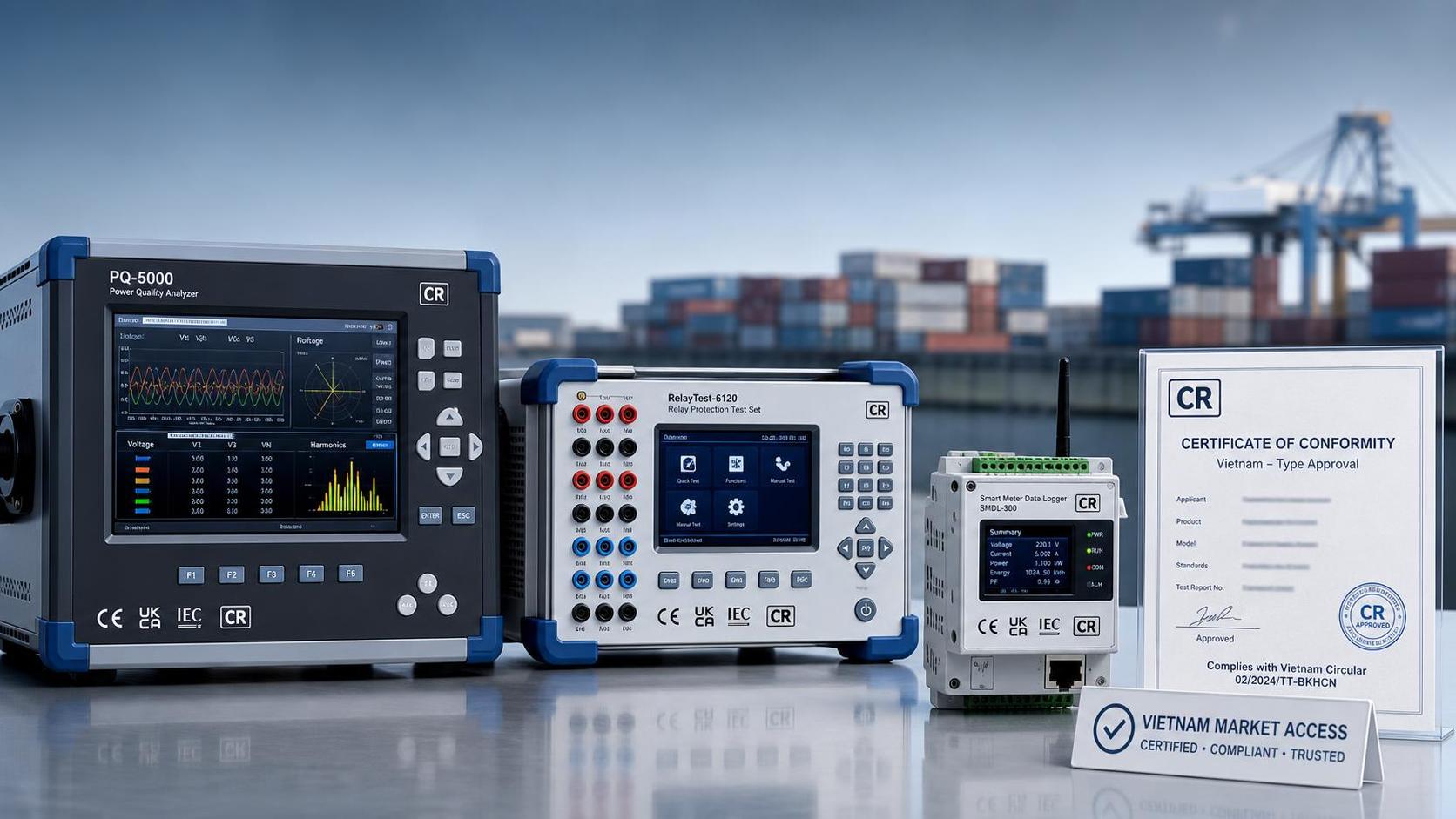
On 5 August 2026, MOIT issued Circular No. 18/2026/TT-BCT. The rule covers imported power monitoring instruments, including power quality analyzers, relay protection test instruments, and data collection terminals used with smart meters. These products must obtain type certification recognized by Vietnam’s TCVN system under QCVN 112:2026 and carry the CR mark. The requirement becomes mandatory on 1 September 2026. Products without certification are stated to be refused at Hanoi and Ho Chi Minh ports.
Where the pressure will show up in the supply chain
Importers and channel distributors
For importers and channel distributors, the immediate impact is on customs clearance and product availability. The rule raises the entry threshold for products that were previously able to move through the market on a commercial basis without this certification path. Inventory already in transit, sales commitments, and replenishment plans now need to be checked against certification status before shipment.
Local system integrators and project buyers
Local system integrators and project buyers are likely to feel the effect in procurement timing and vendor selection. If certification is not in place, the product cannot be treated as a straightforward substitute in project delivery. That makes approved documentation, lead time, and supplier readiness part of the buying decision, not just technical specification.
Cross-border equipment suppliers
For Southeast Asian equipment suppliers serving Vietnam, the rule adds another compliance step to market entry. The business issue is not only product performance but also whether the supplier can align testing, marking, and documentation with the new certification requirement before goods reach port.
What companies should check now
Certification status before shipment
Companies handling affected product categories should verify whether each model already has QCVN 112:2026 type certification and the correct CR marking process in place. This is especially important for goods already planned for shipment near the enforcement date.
Document control and customer communication
Suppliers should align product documentation with the certification requirement and explain the compliance status clearly to distributors and end buyers. In this kind of rule change, missing paperwork can become a commercial issue even when the hardware itself is ready.
Portfolio and delivery planning
Firms with mixed product portfolios should separate certified and uncertified items in sales planning. The practical question is whether a product can be delivered into Vietnam on the intended timeline, not whether it fits the technical need alone.
How to read the policy signal
Analysis shows this is more than a routine paperwork update. It signals a tighter market-access regime for a defined class of electrical monitoring equipment in Vietnam. What deserves closer attention is the enforcement side: the rule explicitly ties non-compliance to rejection at key ports, which makes certification a gatekeeper rather than a post-entry formality. At the same time, the broader market effect should be read carefully. The rule clearly raises the threshold for affected products, but the final commercial impact will depend on how quickly suppliers adapt their certification and logistics workflows.
What this means for the market now
It is more appropriate to understand this as an immediate compliance shift with broader procurement consequences, not as a general verdict on the market. The key change is that access to Vietnam for certain power monitoring instruments now depends on formal certification under QCVN 112:2026. For businesses active in the region, the issue is whether existing supply plans can still support delivery after 1 September 2026.
Source basis and follow-up
This article is based on the user-provided title, event date, and summary. The related source types for verification would normally include MOIT notices, Circular No. 18/2026/TT-BCT, TCVN-related certification documents, customs or port clearance guidance, and coverage from authoritative industry or trade media. No specific official source link was provided in the input, so the exact primary document should continue to be verified against official publications and later enforcement updates.


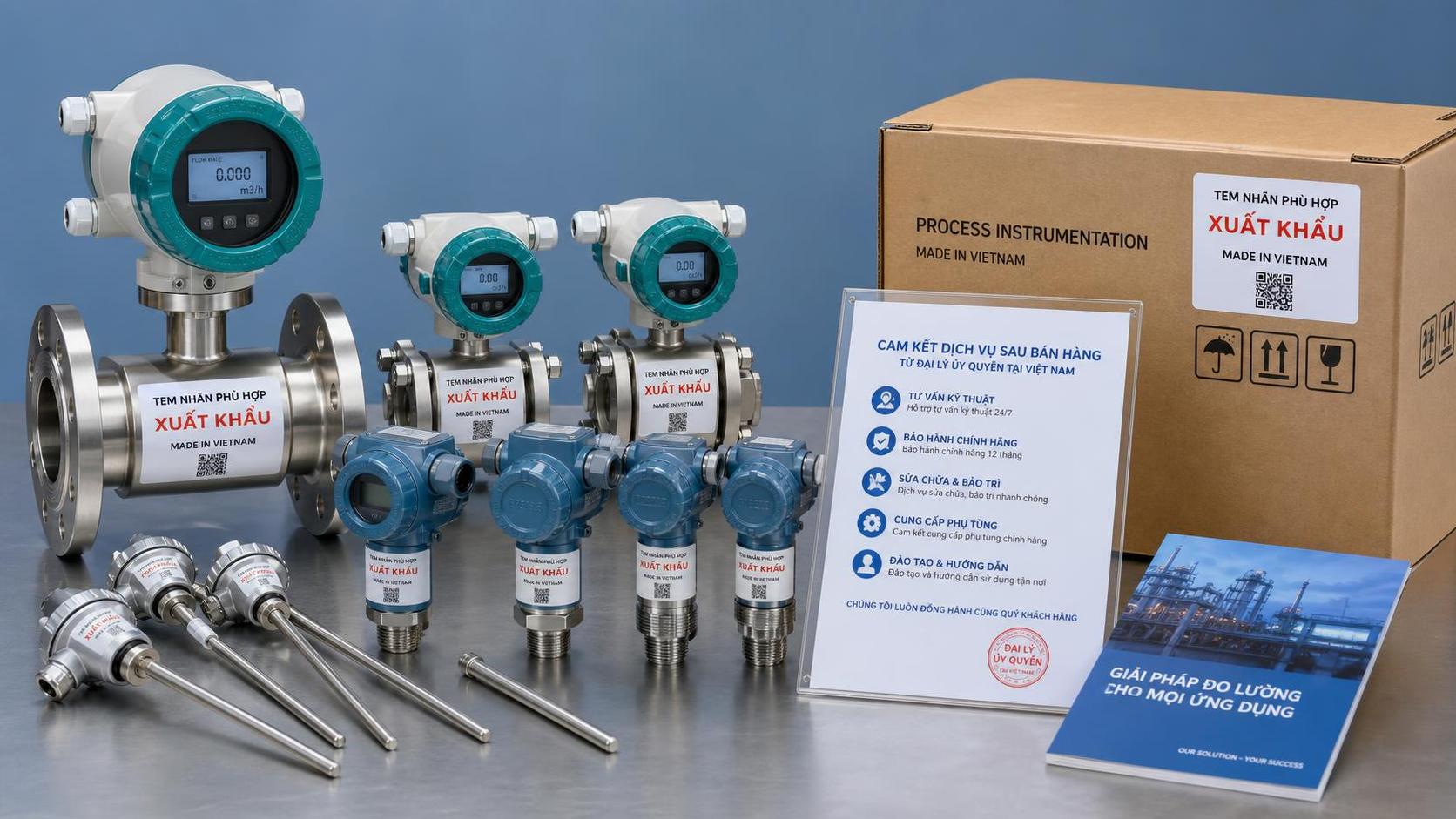
 Vietnam Rule Takes Effect Sept. 1: Imported Industrial Instruments Need Vietnamese Labels and Local After-Sales CommitmentVietnam’s Sept. 1 rule requires Vietnamese labels and local after-sales support for imported industrial instruments. See what HS 9026/9028 exporters and buyers must do now.
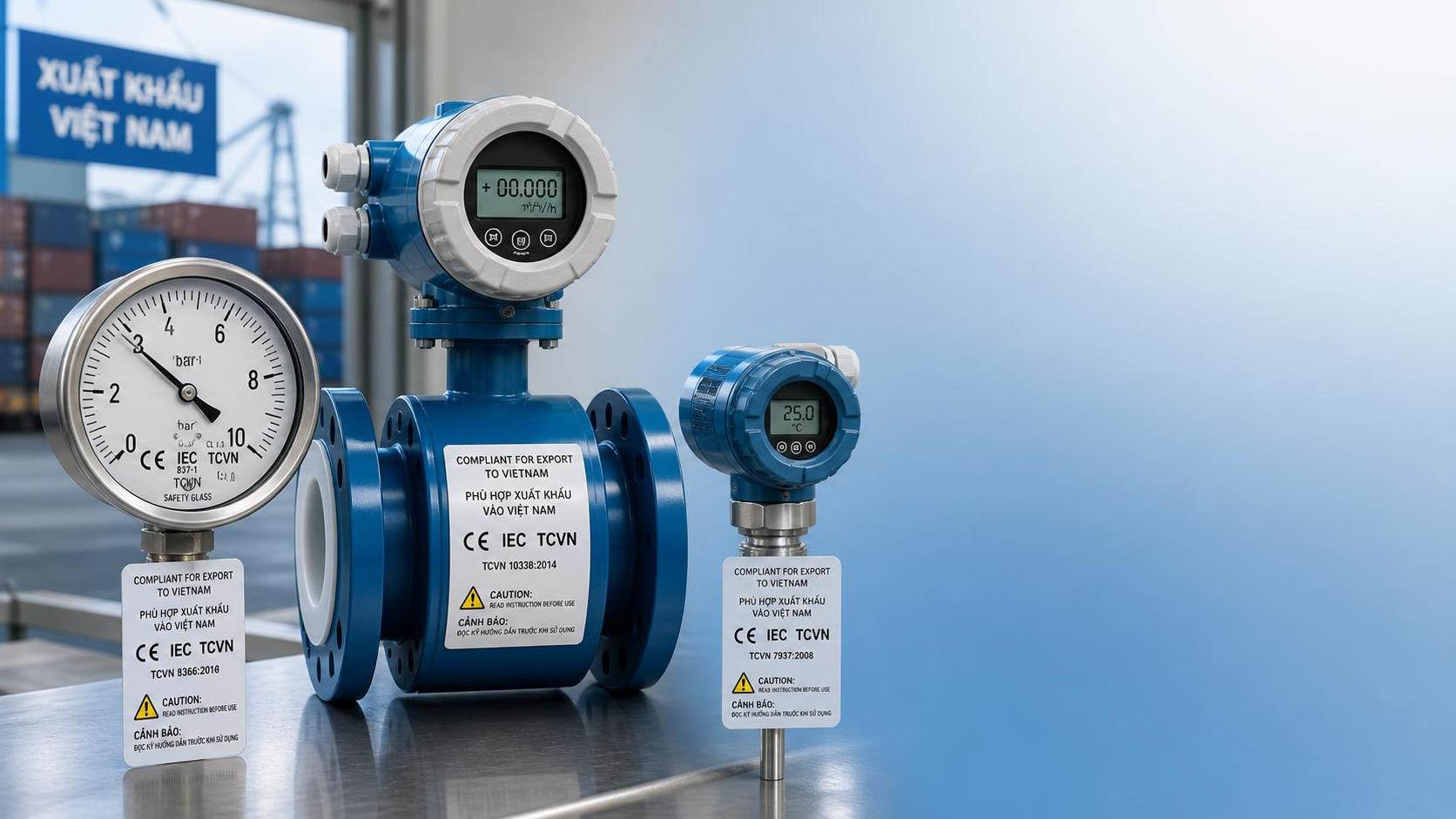
 Vietnam MOIT Rule Tightens Labeling for Imported Industrial InstrumentsVietnam MOIT Rule Tightens Labeling for Imported Industrial Instruments: learn how new Vietnamese label, CE/IEC/TCVN, and local service contact rules affect customs clearance and market access.
 EU Energy Rule Takes Effect: Flow Meters Need Data InterfacesEU energy rule now requires industrial flow meters with data interfaces. Learn how EN 16857:2026, MQTT/HTTPS, and updated compliance affect exports, customs, and buying decisions.
 EU Efficiency Rule Adds Data Interface Mandate for FlowmetersFlowmeters face a major EU compliance shift: from Sept. 1, 2026, new models must support MQTT or OPC UA and direct energy-data reporting. See how this rule impacts design, CE documents, and EU exports.
 Vietnam MOIT Makes QCVN 112:2026 MandatoryVietnam MOIT Makes QCVN 112:2026 Mandatory for imported power monitoring instruments from Sept 1, 2026. Learn certification, CR mark, and supply-chain impacts now.
 IEC 62053-22:2026 Mandates Secure OTA for Class 1 MetersIEC 62053-22:2026 mandates secure OTA for Class 1 meters, reshaping smart meter compliance, procurement, and market access. Learn what manufacturers and buyers must prepare now.


Chat Online