


The Yangtze River Delta International Smart Instrument Industry Expo opened in Jinhu, Jiangsu Province, from May 10–12, 2026. With nearly 2,000 instrument manufacturers exhibiting, and 12 specialized procurement delegations from the Middle East and Africa—including Saudi Arabia, the UAE, and Nigeria—engaging in targeted meetings on explosion-proof and hygienic flow meters, this event signals growing international attention to Jinhu’s niche manufacturing capabilities. Industrial automation integrators, food & beverage equipment suppliers, oil & gas instrumentation providers, and process control system vendors should take note: the event reflects an evolving pattern of direct, scenario-specific sourcing from Chinese industrial clusters.
Event Overview
The Yangtze River Delta International Smart Instrument Industry Expo was held in Jinhu, Jiangsu Province, from May 10 to 12, 2026. Approximately 2,000 instrument enterprises participated. Twelve professional procurement delegations from Saudi Arabia, the United Arab Emirates, Nigeria, and other countries attended, focusing discussions on explosion-proof electromagnetic and vortex flow meters, as well as food-grade hygienic mass flow meters. According to organizers, over 60% of overseas buyers attended for the first time to directly connect with Chinese source manufacturers through this exhibition.
Impact on Specific Industry Segments
Direct Trade Enterprises: These firms—especially those exporting to hazardous or regulated environments (e.g., petrochemical plants, pharmaceutical cleanrooms)—face intensified demand validation for certified explosion-proof and hygienic-rated instruments. The presence of regional procurement delegations indicates a shift toward direct supplier vetting rather than reliance on intermediaries, potentially compressing margins but improving product specification alignment.
Process Equipment Manufacturers (e.g., food processing lines, chemical skids): As end-users increasingly specify hygienic mass flow meters for compliance with ISO 22000 or EHEDG standards, OEMs must verify whether their current supply chain can provide traceable, third-party-certified units meeting both regional safety codes (e.g., IECEx, ATEX) and sanitary design criteria (e.g., 3-A, FDA-compliant wetted materials).
Instrumentation Distributors & System Integrators: Their role as technical intermediaries is under pressure where buyers bypass them to engage directly with manufacturers on application-specific performance (e.g., turndown ratio under low-flow sanitary conditions, intrinsic safety certification documentation). This may accelerate consolidation among distributors with strong local engineering support and certification management capacity.
Supply Chain Service Providers (e.g., certification consultants, logistics specialists for hazardous goods): Increased cross-border engagement around explosion-proof devices implies higher demand for services supporting IECEx/ATEX documentation preparation, hazardous-area classification verification, and customs clearance for dual-use instrumentation—particularly for shipments to GCC or ECOWAS markets.
What Relevant Companies or Practitioners Should Focus On Now
Monitor official follow-up announcements from Jinhu’s industrial bureau and the expo organizer
Analysis shows that while the event concluded, formalized buyer–supplier matchmaking outcomes (e.g., MOUs, pilot order volumes, post-show audit timelines) have not yet been disclosed. Tracking these will clarify whether the ‘60% first-time direct engagement’ figure translates into sustained procurement channel shifts—or remains a one-off exhibition effect.
Assess exposure to Middle East and African markets for explosion-proof and hygienic flow meter categories
Observably, the delegation focus was narrow: electromagnetic/vortex flow meters with explosion-proof certification, and hygienic mass flow meters for food-grade use. Companies outside these two categories—even within broader instrumentation—should not assume broad-based export opportunity. Current more relevant action is to benchmark product certifications, lead times, and documentation readiness against these specific use cases.
Distinguish between policy-level intent and operational readiness
From industry perspective, the Jinhu cluster’s ‘international procurement response efficiency’ is cited as a strength—but this refers to logistical and communication responsiveness, not necessarily scalability or global after-sales coverage. Firms evaluating partnerships should separately assess field service capability, spare parts availability in target regions, and multilingual technical documentation—not just factory responsiveness during the show.
Prepare for potential downstream specification tightening
Current more appropriate interpretation is that increased direct engagement often precedes stricter pre-qualification requirements (e.g., mandatory third-party witnessed testing, local agent registration). Export-oriented manufacturers should review existing certifications against GCC Standardization Organization (GSO) or SONCAP (Nigeria) requirements—and initiate gap analysis if targeting repeat engagement with these delegations.
Editorial Perspective / Industry Observation
This event is better understood as a signal—not yet an outcome—of structural recalibration in how certain high-compliance instrumentation segments are sourced internationally. The concentration of delegations on two highly regulated subcategories (explosion-proof and hygienic) suggests demand is being driven less by general cost arbitrage and more by urgent, localized compliance needs that existing global suppliers struggle to meet at scale or speed. Observably, Jinhu’s advantage lies not in broad instrument diversity, but in rapid iteration within narrowly defined technical constraints—a dynamic more common in German Mittelstand clusters than in typical Chinese OEM hubs. That makes it a case worth watching, but not yet a wholesale model for replication across other industrial sectors.
Conclusion: The Jinhu expo does not indicate a sudden, broad-based opening of Middle Eastern or African instrumentation markets. Rather, it highlights a maturing, demand-driven specialization within China’s industrial base—one where regulatory alignment, not just production capacity, defines competitive advantage. For stakeholders, this is best interpreted as evidence of fragmentation in global procurement logic: buyers are increasingly segmenting sourcing strategies by risk profile and compliance burden, rather than by geography or brand. Accordingly, relevance hinges on precise technical positioning—not general market access.
Source: Official announcements from the Yangtze River Delta International Smart Instrument Industry Expo organizing committee; publicly confirmed participant list and delegation composition (Saudi Arabia, UAE, Nigeria); statements attributed to event organizers regarding buyer origin and engagement patterns. Note: Post-event transaction data, long-term buyer retention rates, and certification compliance verification status remain unconfirmed and require ongoing observation.


 Vietnam Tightens Import Rules for Industrial Instruments From SeptemberVietnam tightens import rules for industrial instruments from September 2026. Learn how Vietnamese labeling and local after-sales commitments may affect customs clearance, costs, and exporter compliance.
 IECEx Rules Raise the Bar for Ultrasonic Transmitters in SIS ExportsIECEx rules now demand SIL2 diagnostic proof and third-party conformity reports for ultrasonic transmitters in SIS exports—learn how this impacts compliance, bidding, and market access.
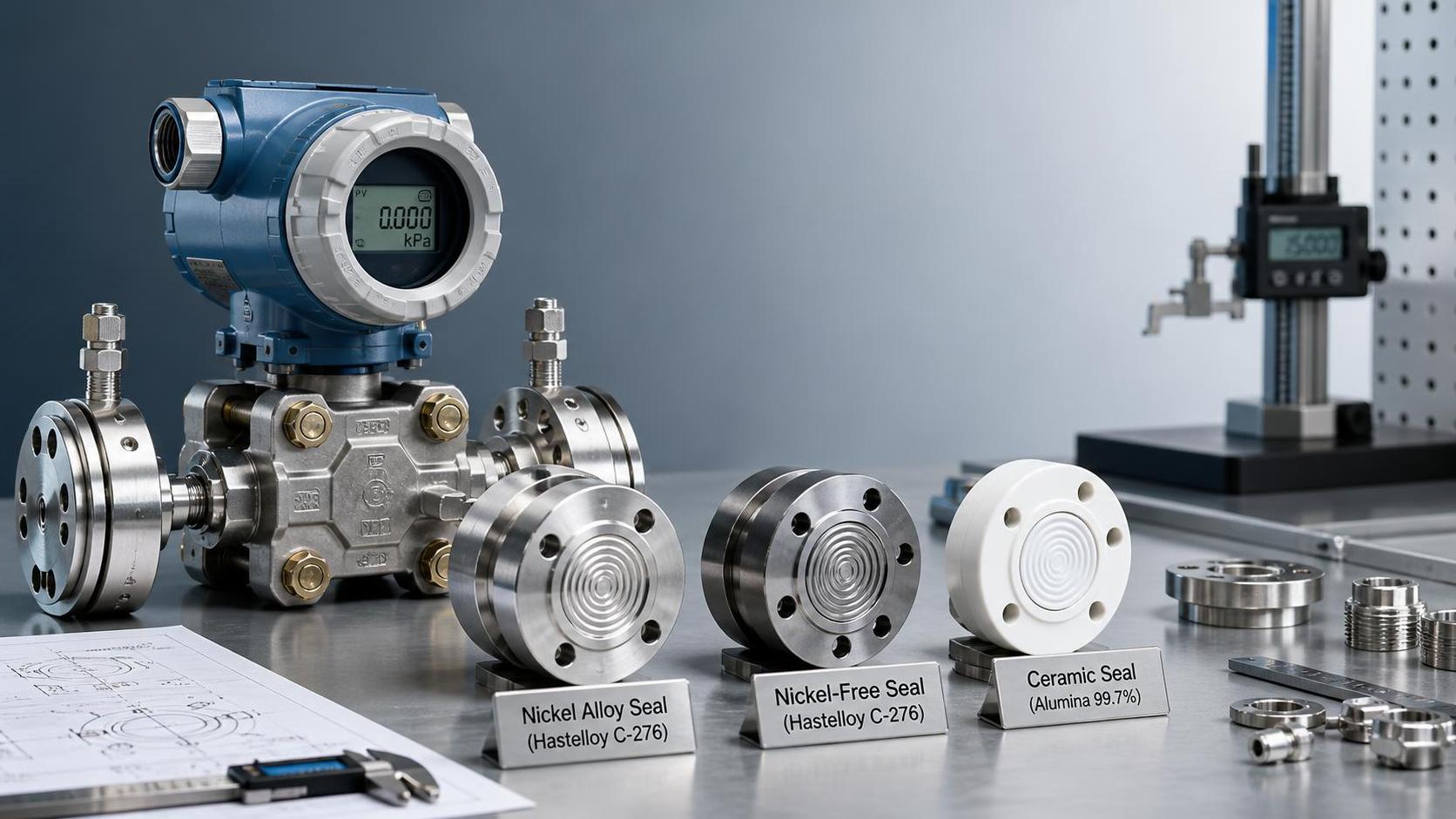
 EU REACH Annex XVII Targets Nickel SealsEU REACH Annex XVII now targets nickel seals in industrial instruments. Learn how pressure transmitters and flow meters must adapt before the 2027 enforcement deadline.
 China Flowmeter Export Prices Rise 9.3% in Q2 2026China flowmeter export prices rose 9.3% in Q2 2026 as Middle East petrochemical and Southeast Asia hydrogen demand lifted premium meter exports. See what it means for buyers and exporters.
 EU PFAS Ban Hits Chemical Instrument ImportsEU PFAS ban now impacts chemical instrument imports into the EU. Learn how REACH rules affect flow meters, transmitters, sourcing, compliance files, and delivery planning.
 EU REACH Adds Phthalate Ban for Process InstrumentsEU REACH adds a phthalate ban for process instruments from Sept 1, 2026. Learn how level gauges, pressure transmitters, and flow switches can meet EU compliance and documentation rules.


Chat Online