


Merk KGaA announced a global price adjustment for key reference standards, calibration solutions, and chromatography columns, effective May 12, 2026. The move follows rising U.S.–China tariff pressures and increased logistics costs. Laboratories, instrument integrators, and manufacturers relying on Merck-certified reference materials—particularly those pursuing overseas regulatory certification for analytical instruments—should monitor downstream cost and timeline implications closely.
Event Overview
On May 11, 2026, Merck publicly confirmed that, starting May 12, 2026, it would implement price increases of 8%–15% across selected critical consumables—including certified reference materials (CRMs), calibration liquids, and HPLC/GC columns—for all global markets. No regional exemptions or phased rollouts were indicated in the official announcement.
Which Subsectors Are Affected
International Laboratory Service Providers
These providers rely on Merck’s traceable CRMs and calibration solutions to deliver accredited instrument calibration and verification services. The price increase directly raises their cost of service delivery, potentially compressing margins or prompting fee adjustments for end clients—especially in regulated sectors such as pharmaceutical QC and environmental testing.
Instrument Integration & OEM Partners
Companies integrating analytical instruments (e.g., spectrometers, mass spectrometers) into turnkey systems often bundle Merck-certified calibration kits or pre-validated workflows. Higher input costs may delay system validation timelines or require re-negotiation of service-level agreements with end users.
Chinese Analytical Instrument Exporters
Exporters seeking international regulatory acceptance (e.g., FDA 510(k), EU IVDR, or ISO/IEC 17025 accreditation) frequently use Merck reference standards to demonstrate measurement traceability. Cost and availability changes may slow down conformity assessment submissions, especially where Merck materials are specified by foreign notified bodies or reference labs.
Global Distributors & Channel Partners
Distributors handling Merck’s laboratory portfolio face margin pressure from both upstream pricing and downstream client pushback. Inventory valuation, lead time management, and contract renewal timing become more sensitive—particularly for high-turnover items like standard solutions and guard columns.
What Relevant Enterprises or Practitioners Should Monitor and Do Now
Track official Merck communications for product-level granularity
The initial announcement cites a range (8%–15%) but does not specify exact increases by SKU or region. Enterprises should request updated price lists and confirm whether legacy contracts or blanket purchase agreements are grandfathered—or subject to immediate revision.
Assess exposure by CRM dependency and regulatory pathway
For exporters and QA/QC teams: identify which Merck-certified materials are explicitly required in current or pending certification dossiers. Where alternatives exist (e.g., NIST-traceable equivalents or locally accredited CRMs), initiate technical equivalence assessments now—not after submission delays occur.
Review procurement cycles and buffer stock strategy
Given the May 12 effective date, orders placed before that date may lock in pre-increase pricing—but only if shipment and invoicing occur under prior terms. Procurement teams should verify incoterms, order cutoff deadlines, and warehouse receipt windows with Merck’s local distribution partners.
Document calibration traceability chains proactively
Regulatory auditors increasingly scrutinize the full chain—from primary standard to working solution. Any shift in Merck material sourcing or lot availability may trigger re-validation. Labs should audit and update their traceability documentation templates ahead of next scheduled audits.
Editorial Perspective / Industry Observation
Observably, this is not an isolated pricing action but a signal of sustained structural cost pressure at the infrastructure layer of analytical science—where certified reference materials function as foundational metrological anchors. Analysis shows that while Merck remains one of few globally recognized suppliers for many high-purity CRMs, the 8%–15% range suggests selective application rather than uniform inflation; certain high-complexity matrices (e.g., biopharmaceutical impurity standards) likely sit at the upper end. From an industry standpoint, the timing—coinciding with tightening export controls and fragmented logistics corridors—makes this less a tactical adjustment and more a marker of longer-term supply chain recalibration. Current attention should focus less on reversal likelihood and more on substitution feasibility, validation burden, and cross-border compliance continuity.
This notice underscores how upstream metrological infrastructure—often overlooked in equipment-centric discussions—exerts tangible influence on global analytical readiness. It is best understood not as a short-term cost shock, but as a reminder that measurement traceability carries embedded geopolitical and logistical dependencies. Enterprises should treat it as a prompt to map, stress-test, and diversify their reference material supply pathways—not just for cost control, but for regulatory resilience.
Source: Merck KGaA official press release, issued May 11, 2026. Note: Merck’s regional pricing schedules and contractual applicability remain under observation; no further updates have been published as of May 12, 2026.


 Vietnam Tightens Import Rules for Industrial Instruments From SeptemberVietnam tightens import rules for industrial instruments from September 2026. Learn how Vietnamese labeling and local after-sales commitments may affect customs clearance, costs, and exporter compliance.
 IECEx Rules Raise the Bar for Ultrasonic Transmitters in SIS ExportsIECEx rules now demand SIL2 diagnostic proof and third-party conformity reports for ultrasonic transmitters in SIS exports—learn how this impacts compliance, bidding, and market access.
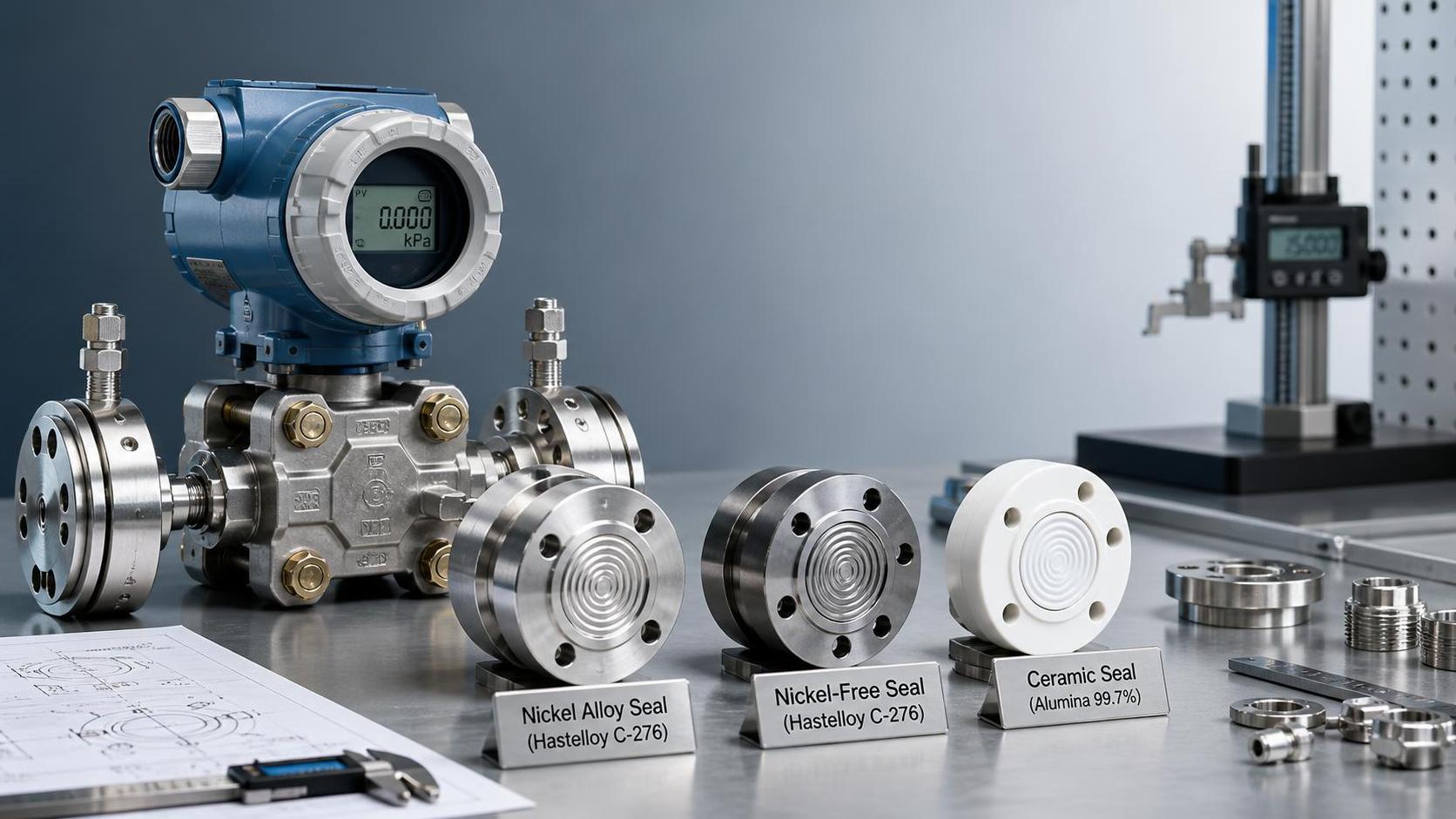
 EU REACH Annex XVII Targets Nickel SealsEU REACH Annex XVII now targets nickel seals in industrial instruments. Learn how pressure transmitters and flow meters must adapt before the 2027 enforcement deadline.
 China Flowmeter Export Prices Rise 9.3% in Q2 2026China flowmeter export prices rose 9.3% in Q2 2026 as Middle East petrochemical and Southeast Asia hydrogen demand lifted premium meter exports. See what it means for buyers and exporters.
 EU PFAS Ban Hits Chemical Instrument ImportsEU PFAS ban now impacts chemical instrument imports into the EU. Learn how REACH rules affect flow meters, transmitters, sourcing, compliance files, and delivery planning.
 EU REACH Adds Phthalate Ban for Process InstrumentsEU REACH adds a phthalate ban for process instruments from Sept 1, 2026. Learn how level gauges, pressure transmitters, and flow switches can meet EU compliance and documentation rules.



Chat Online