


In June 2026, Shenghong Petrochemical put into operation what it described as China’s first full-process unmanned analysis laboratory for the chemical industry, bringing an AI-enabled dark lab model into a live production setting. The development matters not only for laboratory operations, but also for raw material control, in-process quality management, finished-product verification, and for petrochemical companies evaluating how far automation can move from pilot projects into routine analytical work.
What has been confirmed so far
According to the information provided, Shenghong Petrochemical built an “AI + dark lab” in June 2026 for the chemical sector. The laboratory integrates near-infrared spectroscopy, online gas chromatography, and an intelligent sample pretreatment system.
The stated purpose is to achieve fully automated closed-loop analysis covering raw materials, intermediates, and finished products. The information also states that the model has opened a technology output interface and can support customized deployment for overseas petrochemical enterprises.
Why this draws attention across the value chain
For producers focused on process control
From an industry perspective, chemical manufacturers are the most directly affected group because the announced setup connects analysis across multiple production stages rather than limiting automation to a single testing point. The business area to watch is whether analytical work becomes more tightly linked to production rhythm, especially where raw material, intermediate, and final product decisions depend on continuous and consistent testing.
For procurement and raw material management teams
Analysis shows that procurement-related functions may pay closer attention to how incoming materials are checked and documented. If analytical workflows become more automated and closed-loop, the practical impact is likely to fall on acceptance standards, communication with suppliers, and the speed of quality confirmation at the front end of the supply chain.
For laboratory service and automation solution providers
What deserves closer attention is the combination of analytical instruments with intelligent sample pretreatment inside one operating model. For service providers, this points less to a single device sale and more to integrated deployment capability, including how different analytical steps are connected into a workable unattended process.
For overseas petrochemical users evaluating deployment options
The announced opening of a technology output interface matters because it suggests the model is not being framed only as an internal facility. For overseas petrochemical companies, the key business implication is the possibility of customized deployment, which makes interoperability, implementation scope, and local adaptation issues more relevant than a simple equipment comparison.
What companies should monitor next
How the technical scope is described in future updates
Companies following this development should watch how Shenghong Petrochemical or related parties further describe the laboratory’s operating boundaries. The current confirmed information identifies the system architecture and the closed-loop coverage, but future official wording may clarify how the model is positioned in actual production and quality workflows.
Which business links are most affected first
Observably, the first areas worth tracking are raw material inspection, intermediate transfer decisions, and finished-product release workflows, because those are the stages explicitly covered by the announced closed-loop analysis structure. Companies comparing their own setups should focus on these links rather than treating “unmanned lab” as a broad label.
What overseas customization may mean in practice
The opening of a technology output interface is a practical point for companies with cross-border operations. Relevant teams should pay attention to how customized deployment is later presented in terms of project scope, system integration, documentation, and communication between technology providers and end users.
How suppliers and customers may adjust expectations
For commercial teams, a useful near-term focus is whether more automated analysis changes expectations around qualification materials, testing records, response timing, or delivery communication. This is not yet a confirmed outcome, but it is a reasonable area to monitor when analytical systems become more integrated with operational execution.
How this development is best understood at this stage
Analysis shows that this news is more meaningful as a signal about the direction of industrial laboratory automation in chemicals than as proof of a sector-wide shift already completed. The confirmed facts indicate that an AI-enabled dark lab model has moved into an operating chemical scenario and that the concept is being positioned for external output as well.
It is more appropriate to understand this as a long-term industry signal with immediate practical relevance, rather than as a short-term market turning point. The reason is straightforward: the announcement confirms a concrete deployment and an exportable interface, but it does not by itself establish how widely or how quickly similar models will be adopted elsewhere.
What this means for the market now
At this point, the industry significance lies in the fact that unattended, full-process analysis is being presented not merely as a laboratory concept, but as an applied chemical production model. For market participants, the core takeaway is not to assume rapid universal adoption, but to recognize that analytical automation, process linkage, and deployable system integration are moving closer together in real industrial settings.
A neutral reading is that this development deserves continued attention from producers, procurement teams, laboratory operators, and solution providers. Current evidence supports treating it as an important operational signal and a case that warrants follow-up, rather than a final conclusion about where the entire chemical sector is headed.
Basis of this article and follow-up points
This article is generated from the user-provided news title, event date, and event summary. The current version is based on the provided information that the event occurred on 2026-06-15 and that, in June 2026, Shenghong Petrochemical established an AI-enabled dark lab integrating near-infrared spectroscopy, online gas chromatography, and intelligent sample pretreatment for fully automated closed-loop analysis, with a technology output interface available for customized overseas deployment.
For this type of industry update, source categories typically worth checking include official company announcements, corporate disclosures, industry association releases, authoritative media coverage, and relevant technical or standard-setting documents. A specific official source link was not provided in the input, so further verification is still necessary. Follow-up attention should remain on subsequent official descriptions, implementation scope, and how any external deployment cases are later communicated.


 Vietnam Tightens Import Rules for Industrial Instruments From SeptemberVietnam tightens import rules for industrial instruments from September 2026. Learn how Vietnamese labeling and local after-sales commitments may affect customs clearance, costs, and exporter compliance.
 IECEx Rules Raise the Bar for Ultrasonic Transmitters in SIS ExportsIECEx rules now demand SIL2 diagnostic proof and third-party conformity reports for ultrasonic transmitters in SIS exports—learn how this impacts compliance, bidding, and market access.
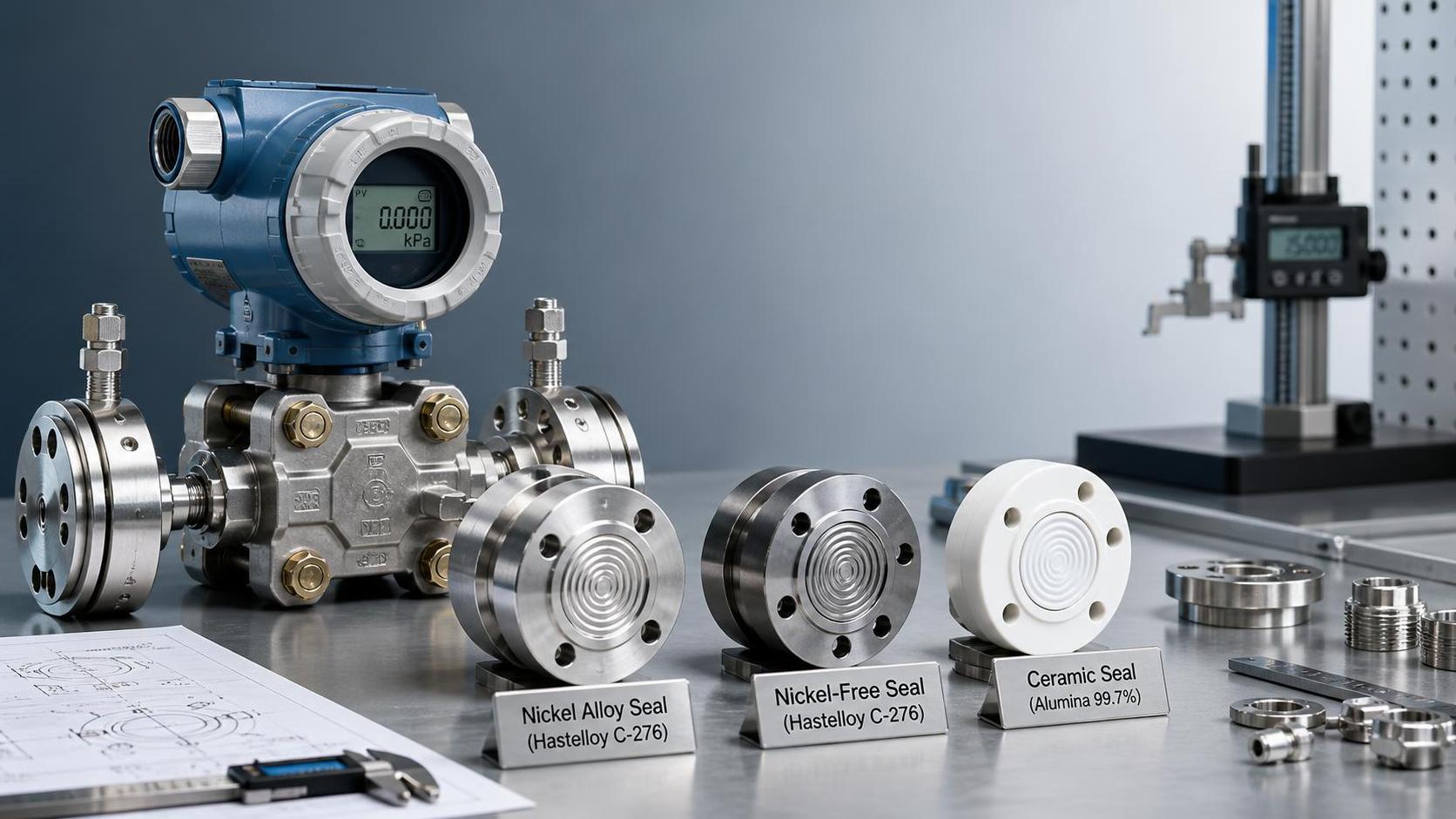
 EU REACH Annex XVII Targets Nickel SealsEU REACH Annex XVII now targets nickel seals in industrial instruments. Learn how pressure transmitters and flow meters must adapt before the 2027 enforcement deadline.
 China Flowmeter Export Prices Rise 9.3% in Q2 2026China flowmeter export prices rose 9.3% in Q2 2026 as Middle East petrochemical and Southeast Asia hydrogen demand lifted premium meter exports. See what it means for buyers and exporters.
 EU PFAS Ban Hits Chemical Instrument ImportsEU PFAS ban now impacts chemical instrument imports into the EU. Learn how REACH rules affect flow meters, transmitters, sourcing, compliance files, and delivery planning.
 EU REACH Adds Phthalate Ban for Process InstrumentsEU REACH adds a phthalate ban for process instruments from Sept 1, 2026. Learn how level gauges, pressure transmitters, and flow switches can meet EU compliance and documentation rules.

Chat Online