


From May 27–28, 2026, the sixth edition of CEMENT & CONCRETE EXPO VIETNAM — Southeast Asia’s largest building materials supply chain event — concluded at the ADORA Center in Ho Chi Minh City. The exhibition drew heightened attention from infrastructure and real estate project owners, EPC contractors, and distribution partners across Vietnam and ASEAN, particularly regarding concrete admixtures and integrated technical solutions. This development signals shifting procurement dynamics in the regional construction materials market — one that trade, manufacturing, and supply chain professionals across the cement and concrete value chain should monitor closely.
Event Overview
The sixth Vietnam International Cement & Concrete Exhibition (CEMENT & CONCRETE EXPO VIETNAM) took place on May 27–28, 2026, at the ADORA Center in Ho Chi Minh City. Red Wall Co., Ltd. exhibited concrete admixtures and integrated technical solutions. The event attracted significant interest from Vietnamese and ASEAN-based real estate developers, infrastructure project owners, EPC general contractors, and distribution channel representatives. Multiple technical consultations and sample testing intentions were confirmed on-site. Exhibitor count rose 22% year-on-year; 68% of attending buyers held annual import decision-making authority.
Impact on Specific Industry Segments
Direct Exporters and Trading Firms: With 68% of attendees holding annual import decision authority, the event reflects a concentrated window for export qualification and relationship initiation. Impact manifests in shorter lead times for technical validation and faster progression from inquiry to trial orders — especially for performance-critical inputs like admixtures.
Raw Material Procurement Entities: Increased demand for certified, export-compliant admixture formulations may trigger upstream adjustments. Suppliers of key raw materials (e.g., polycarboxylate ether monomers, industrial-grade amines) could see elevated inquiry volume from manufacturers preparing for ASEAN market entry or scale-up — though no direct order data is available yet.
Concrete Additive Manufacturers: The emphasis on ‘integrated technical solutions’ — not just products — indicates growing buyer expectations around application support, dosage optimization, and compatibility testing. This raises the bar for technical service capability beyond standard product supply.
Distribution and Channel Partners: Local distributors in Vietnam and neighboring markets reported intensified engagement during the show. Their role is evolving from logistics facilitators toward localized technical intermediaries — requiring deeper product knowledge and field-testing capacity to support EPC and contractor clients.
Supply Chain Service Providers: Logistics firms specializing in chemical goods and certification agencies supporting ASEAN regulatory compliance (e.g., Vietnam’s QCVN standards, ASEAN Mutual Recognition Arrangements) may experience increased demand for documentation preparation, customs classification advisory, and pre-shipment conformity assessments.
What Relevant Companies or Practitioners Should Focus On Now
Monitor official post-show procurement timelines and pilot project schedules
While technical dialogues and sample testing intentions were recorded, no public confirmation exists on contract awards, delivery volumes, or pilot implementation dates. Stakeholders should track follow-up communications from participating buyers over the next 6–12 weeks to distinguish exploratory interest from actionable procurement pipelines.
Assess readiness for ASEAN-specific technical and regulatory requirements
Concrete admixtures exported to Vietnam must comply with national technical regulation QCVN 16:2019/BXD. Firms without prior ASEAN certifications or local technical support infrastructure should prioritize gap analysis — especially for labeling, safety data sheet (SDS) localization, and batch traceability systems.
Differentiate between policy-level signals and actual market traction
The 22% exhibitor growth and high concentration of decision-makers reflect structural demand, but do not equate to immediate sales uplift. Current traction remains at the technical alignment and sampling stage. Commercial conversion will depend on field performance under tropical climate conditions and local mix design practices — factors requiring validation beyond exhibition settings.
Prepare for localized technical coordination, not just product supply
Buyer engagement centered on integrated solutions suggests growing expectation for on-site support: dosage trials, slump retention testing, early-age strength monitoring. Exporters should evaluate whether their current service model includes trained regional application engineers or requires partnerships with local technical service providers.
Editorial Perspective / Industry Observation
Observably, this exhibition functions less as a transactional marketplace and more as a technical alignment forum — where procurement decisions are preceded by extended validation cycles. Analysis shows the 68% figure for buyers with annual import authority underscores institutionalized demand, not ad hoc purchasing. However, the absence of disclosed commercial outcomes means the event is best understood as a signal of maturing technical procurement standards in ASEAN infrastructure projects — rather than evidence of near-term market share shifts. From an industry perspective, the rising emphasis on integrated solutions points to a broader trend: downstream buyers are increasingly treating chemical additives as engineered components, not commoditized inputs. That shift demands corresponding upgrades in technical responsiveness, regulatory preparedness, and local service infrastructure — all of which take time to build.
Conclusion: The 2026 Vietnam Cement Expo confirms sustained institutional interest in advanced concrete technologies across ASEAN infrastructure development. Yet it remains a precursor phase — valuable for mapping technical requirements and stakeholder priorities, but not yet indicative of scaled commercial deployment. It is more accurately interpreted as a benchmark for technical readiness and regional service maturity, rather than a near-term sales catalyst.
Source Disclosure:
Primary source: Official event summary and attendance data released by CEMENT & CONCRETE EXPO VIETNAM 2026 organizers.
Note: No commercial agreements, order values, or implementation timelines have been publicly disclosed. These elements remain subject to ongoing observation.


 How to Read Hydraulic Calibration Pump Specifications CorrectlyHydraulic calibration pump specifications explained clearly: learn how to assess pressure range, stability, fine control, and compatibility to choose the right pump with confidence.
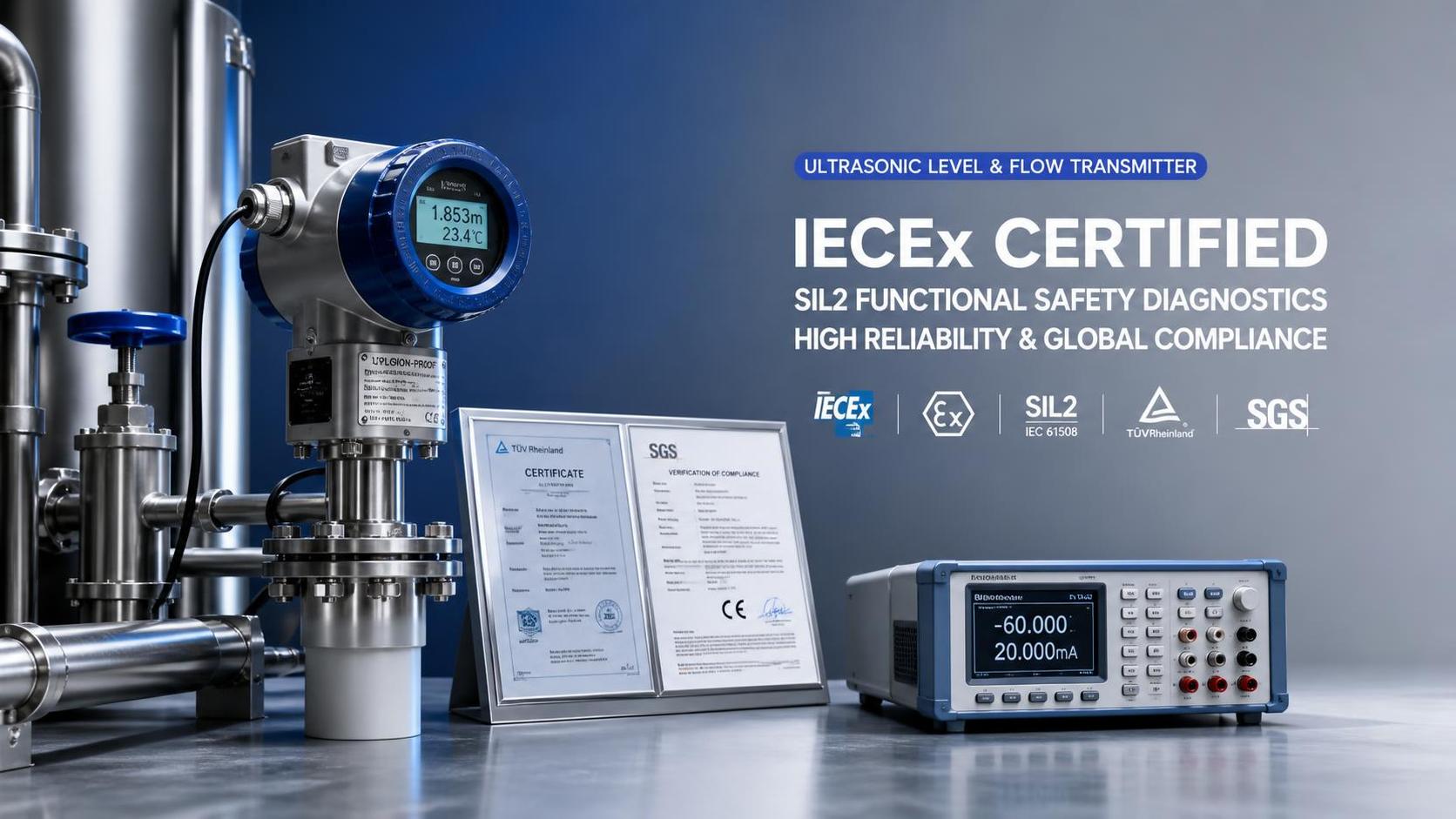
 New IECEx Rule Requires SIL2 Diagnostic Validation for Chinese Ultrasonic Transmitter ExportsIECEx rule update: SIL2 diagnostic validation is now required for Chinese ultrasonic transmitter exports. Learn how IEC 61508, 90% DC reports, and procurement risks affect bids and delivery.
 FDA Draft Guidance Raises Compliance Bar for Pharma Pressure and Flow InstrumentsFDA draft guidance tightens compliance for pharma pressure and flow instruments, raising USP<1058> qualification demands and market entry barriers for suppliers.
 China Tightens Export Controls on Instruments for New Energy Production LinesChina tightens export controls on instruments for new energy production lines, impacting high-purity gas flowmeters. Learn how 100% filing rules may affect compliance, delivery, and global sourcing.
 IECEx Rule Change Makes SIL2 Diagnostics Mandatory for Chinese Ultrasonic Transmitter ExportsIECEx now requires SIL2 diagnostics for Chinese ultrasonic transmitter exports, reshaping Ex d and Ex ia compliance. Learn what changes, who is affected, and how to stay ahead.
 China Tightens Export Controls on Flow Meters for New Energy Production LinesChina tightens export controls on flow meters and MFCs for new energy production lines. Learn how the 2026 filing rule may affect compliance, lead times, and global shipments.





Chat Online