


Although the exact event date was not specified, a wave of procurement announcements from eight Chinese universities—including Dalian University of Technology, Ocean University of China, and Inner Mongolia University of Science and Technology—was publicly released between April 23–27, 2026. These notices signal accelerating domestic substitution in scientific instrumentation, with implications for global suppliers, export-oriented manufacturers, and third-party testing laboratories.
Procurement Intentions Confirmed Across Eight Institutions
Between April 23 and 27, 2026, eight higher education institutions jointly published their government procurement intentions for May–June 2026. The aggregate budget exceeds RMB 220 million. Key equipment categories include high-resolution mass spectrometers, intelligent transmission electron microscopes, and magnetic sector mass spectrometry systems. Multiple notices explicitly state a preference for products certified under China’s ‘First-of-a-Kind Domestic Equipment’ program.
Impact Across Supply Chain Roles
Export-Oriented Manufacturing Enterprises
These procurement guidelines directly affect manufacturers exporting analytical instruments to international academic and testing institutions. Since tender criteria now emphasize technical equivalence and CNAS calibration capability, exporters must verify alignment between their product specifications and those cited in Chinese university tenders—particularly for resolution, stability, and traceable metrology documentation.
Raw Material and Component Suppliers
Suppliers providing critical subsystems—such as ultra-high-vacuum chambers, superconducting magnets, or time-of-flight detectors—may experience increased demand if their components support certified domestic platforms. However, qualification timelines may tighten, requiring earlier submission of material compliance reports and long-term reliability data.
Contract Manufacturing and Assembly Firms
Firms engaged in final assembly or system integration must prepare for stricter scrutiny of production process controls and factory acceptance test (FAT) protocols. Preference for domestically certified equipment implies greater emphasis on documented quality management systems aligned with ISO/IEC 17025 and GB/T 19001 standards.
Supply Chain Support Services
Logistics, customs brokerage, and technical documentation service providers face evolving requirements: bilingual certification packages (Chinese/English), CNAS-accredited calibration certificates issued prior to shipment, and traceability records compliant with national instrument verification regulations.
Strategic Priorities for Equipment Manufacturers
Verify First-of-a-Kind Certification Eligibility
Manufacturers should confirm whether their models are listed in official ‘First-of-a-Kind Domestic Equipment’ catalogs. Where not yet certified, parallel application preparation—including performance validation reports and third-party type-test documentation—should be prioritized ahead of upcoming tender windows.
Align Technical Specifications with Tender Requirements
Technical bid alignment is essential: parameters such as mass accuracy (≤1 ppm), spatial resolution (<0.1 nm), and dynamic range (>10⁶) must match or exceed stated thresholds. Supporting evidence—e.g., inter-laboratory comparison reports validated by CNAS-accredited labs—is increasingly expected.
Prepare Calibration and Metrology Documentation
Procurement notices highlight CNAS calibration capability as a differentiator. Exporters must ensure their calibration certificates reference accredited laboratories, include measurement uncertainty statements, and conform to JJF 1059.1–2012 (Evaluation of Measurement Uncertainty) or ISO/IEC 17025:2017 Annex A.
Review Delivery Schedules Against Tender Timelines
Given the May–June 2026 delivery window, manufacturers should assess production lead times, import licensing cycles for foreign-sourced subcomponents, and customs clearance readiness—especially where dual-use technologies or controlled materials are involved.
Industry Observation: A Shift Toward System-Level Compliance
Analysis shows this procurement trend reflects more than isolated purchasing decisions—it indicates a structural shift toward system-level compliance in research infrastructure acquisition. From an industry perspective, what deserves closer attention is the convergence of domestic certification (e.g., First-of-a-Kind), metrological traceability (CNAS), and functional performance benchmarks into a single evaluation framework. Observably, this raises the bar not only for product specs but also for documentation rigor, supplier transparency, and post-delivery service readiness. It is more appropriate to understand this as a de facto harmonization of technical, regulatory, and commercial expectations across public-sector instrument procurement.
Key Takeaway for Global Stakeholders
This procurement activity underscores growing institutional confidence in domestically developed high-end analytical instruments—not as stopgap alternatives, but as technically viable, metrologically sound, and policy-supported platforms. For international manufacturers, the implication is not displacement, but intensified benchmarking: competitive positioning will depend increasingly on demonstrable equivalence, verifiable calibration, and seamless integration into China’s expanding ecosystem of accredited testing and research infrastructure.
Source Information and Verification Notes
This article was generated exclusively from the provided title, event timing, and summary. Specific official source links were not provided in the input and should be verified continuously. Subsequent monitoring should focus on published tender documents, updates to the ‘First-of-a-Kind Domestic Equipment’ catalog, CNAS accreditation scope expansions, and feedback from university procurement offices regarding implementation clarity and evaluation practices.


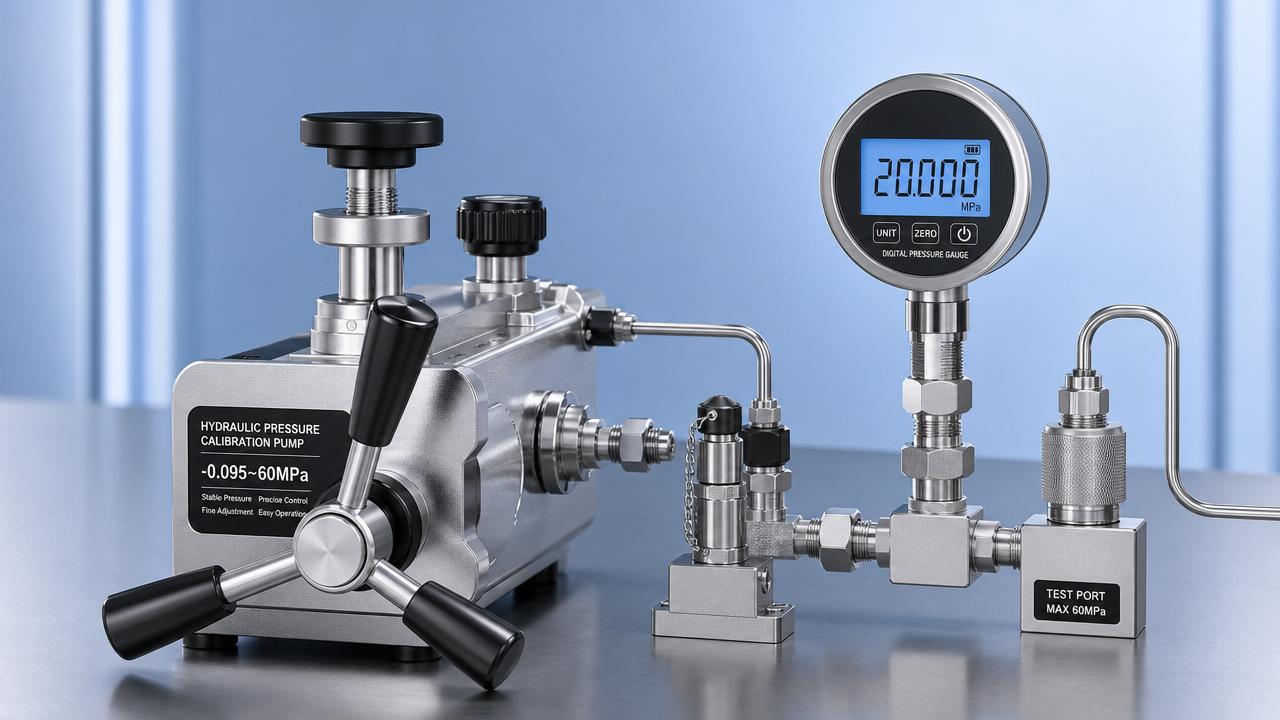
 How to Read Hydraulic Calibration Pump Specifications CorrectlyHydraulic calibration pump specifications explained clearly: learn how to assess pressure range, stability, fine control, and compatibility to choose the right pump with confidence.
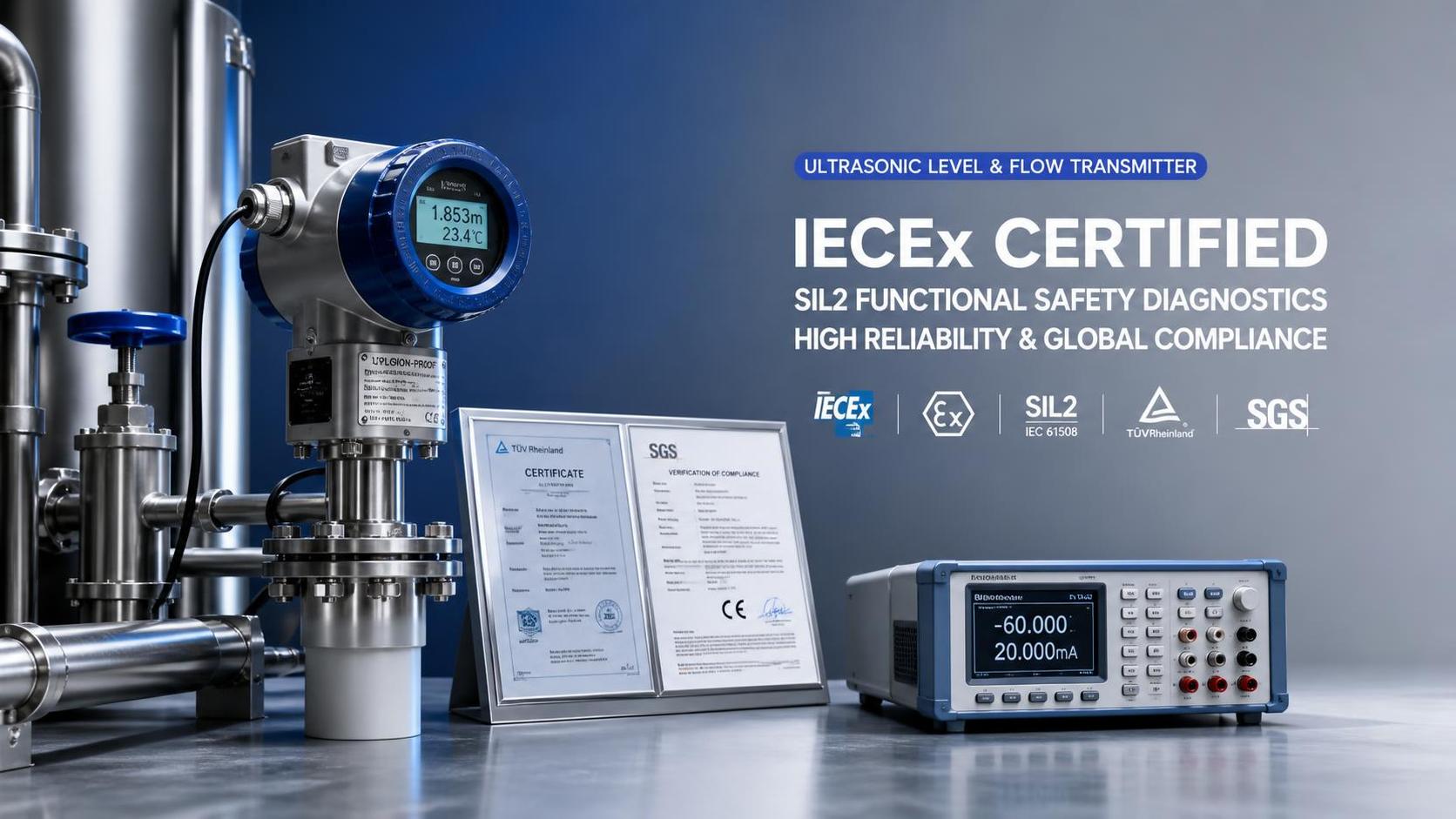
 New IECEx Rule Requires SIL2 Diagnostic Validation for Chinese Ultrasonic Transmitter ExportsIECEx rule update: SIL2 diagnostic validation is now required for Chinese ultrasonic transmitter exports. Learn how IEC 61508, 90% DC reports, and procurement risks affect bids and delivery.
 FDA Draft Guidance Raises Compliance Bar for Pharma Pressure and Flow InstrumentsFDA draft guidance tightens compliance for pharma pressure and flow instruments, raising USP<1058> qualification demands and market entry barriers for suppliers.
 China Tightens Export Controls on Instruments for New Energy Production LinesChina tightens export controls on instruments for new energy production lines, impacting high-purity gas flowmeters. Learn how 100% filing rules may affect compliance, delivery, and global sourcing.
 IECEx Rule Change Makes SIL2 Diagnostics Mandatory for Chinese Ultrasonic Transmitter ExportsIECEx now requires SIL2 diagnostics for Chinese ultrasonic transmitter exports, reshaping Ex d and Ex ia compliance. Learn what changes, who is affected, and how to stay ahead.
 China Tightens Export Controls on Flow Meters for New Energy Production LinesChina tightens export controls on flow meters and MFCs for new energy production lines. Learn how the 2026 filing rule may affect compliance, lead times, and global shipments.




Chat Online