


The U.S. Food and Drug Administration (FDA) issued revised import guidance for in vitro diagnostic (IVD) instruments on May 2, 2026 — affecting manufacturers, exporters, and regulatory service providers in the IVD equipment supply chain, particularly those based in China. This update introduces new traceability requirements for calibration records, directly impacting time-to-market and compliance costs for affected entities.
Event Overview
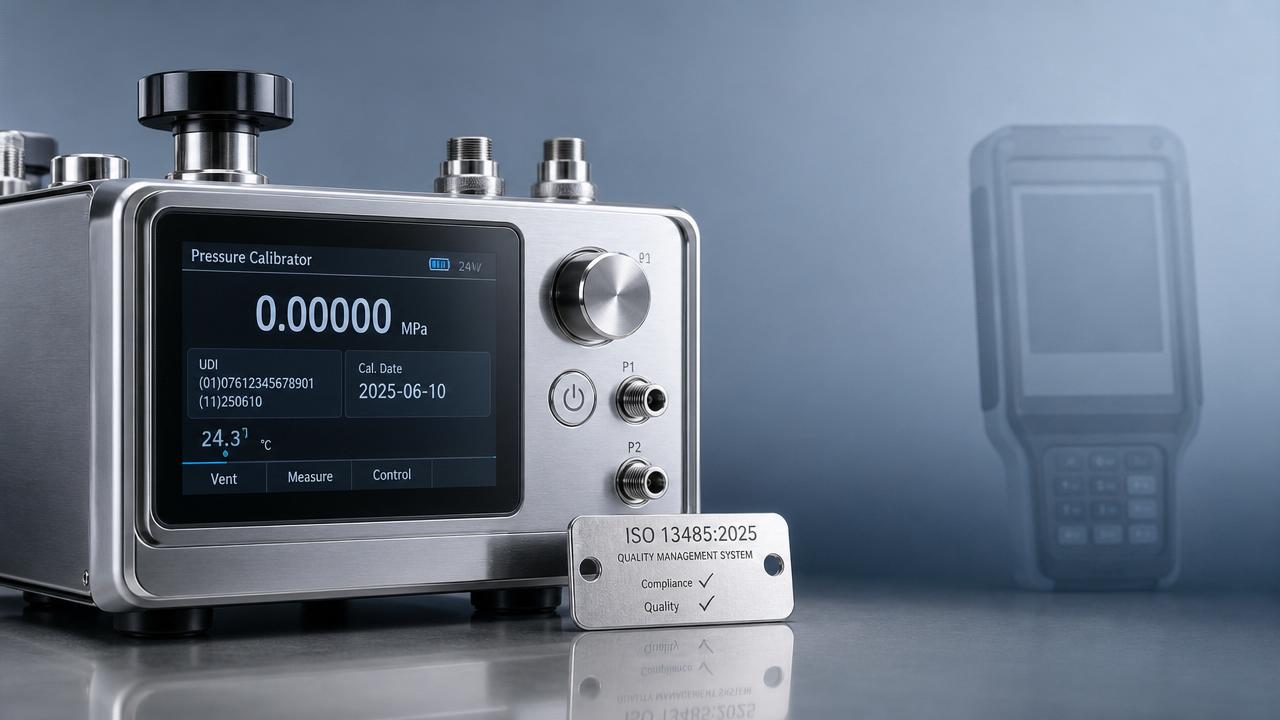
On May 2, 2026, the FDA published Revision 4 of its Guidance for Industry: Import Compliance for IVD Instruments (Ref. FDA-CDRH-2026-04). The revision explicitly requires that calibration certificates for imported IVD instruments—including clinical chemistry analyzers, point-of-care testing (POCT) devices, and mass spectrometry sample preparation modules—must originate from laboratories traceable to the National Institute of Standards and Technology (NIST). Further, calibration documentation must comprehensively cover all stages within the Chinese manufacturer’s operational cycle: initial factory verification, intermediate storage, and pre-shipment retesting.
Which Subsectors Are Affected
Direct Exporters (U.S.-bound IVD Equipment Manufacturers in China)
These companies are directly subject to the new documentation requirement. Because calibration must now be performed at NIST-traceable labs—and recorded across three distinct operational phases—their internal quality workflows must be revised. Impact includes extended production timelines, increased third-party lab engagement, and potential delays in customs clearance if documentation gaps are identified upon entry.
Contract Manufacturing & ODM Firms Serving Global Brands
Firms producing IVD hardware under private label or OEM arrangements face cascading compliance obligations. Brand owners may impose stricter audit requirements or shift calibration responsibilities upstream. This increases coordination overhead and may trigger renegotiation of quality clauses in manufacturing agreements.
Third-Party Calibration & Regulatory Support Providers
Service providers offering calibration, metrology support, or FDA submission assistance will see higher demand for NIST-traceable certifications. However, capacity constraints may arise if accredited labs in China lack sufficient throughput or formal NIST linkage recognition—potentially limiting scalability for smaller clients.
U.S. Importers & Distributors of IVD Equipment
Importers remain legally responsible for FDA compliance under 21 CFR Part 807. The updated guidance raises due diligence expectations: they must now verify not only certificate validity but also temporal coverage across the full manufacturing-to-shipment timeline. Failure to confirm end-to-end calibration continuity may result in FDA refusal of entry or intensified inspection scrutiny.
What Relevant Companies or Practitioners Should Focus On — and How to Respond
Monitor official FDA communications for implementation clarifications
The guidance is effective upon issuance, but FDA may issue follow-up FAQs or stakeholder webinars. Companies should subscribe to CDRH email alerts and track updates via the FDA’s IVD Guidance webpage to identify interpretation nuances—e.g., whether ‘intermediate storage’ applies only to long-term warehousing or includes routine staging before packaging.
Map calibration touchpoints across current production and logistics workflows
Manufacturers should conduct an internal gap assessment: identify where calibration currently occurs, which labs are used, and whether those labs hold documented NIST traceability (e.g., via A2LA or CNAS accreditation with explicit NIST linkage statements). Any unverified step must be remediated before next export shipment.
Distinguish between policy signal and enforceable requirement
This guidance reflects FDA’s enforcement priorities—not a new regulation. It does not amend the Federal Food, Drug, and Cosmetic Act or 21 CFR Part 807. However, noncompliance may still lead to detention under FDA’s discretionary authority. Companies should treat it as operationally binding while recognizing its administrative (not statutory) origin.
Prepare calibration documentation packages proactively—not reactively
Rather than waiting for customs review, exporters should assemble complete, version-controlled calibration dossiers per shipment: one certificate per stage (factory, storage, pre-shipment), each bearing lab accreditation details, NIST reference numbers, and instrument-specific measurement uncertainty statements. Digital archiving and timestamped logs improve audit readiness.
Editorial Perspective / Industry Observation
Observably, this update signals FDA’s increasing emphasis on metrological rigor in IVD device oversight—not just for analytical performance, but for the integrity of supporting infrastructure. Analysis shows the requirement targets systemic risk: inconsistent calibration across handoff points can introduce undetected bias into diagnostic results. While the guidance itself is procedural, its enforcement could accelerate consolidation among Chinese IVD manufacturers—smaller firms with limited metrology resources may find compliance disproportionately burdensome. From an industry perspective, this is less a sudden regulatory shock and more a calibrated escalation aligned with FDA’s broader focus on data reliability in diagnostics. Continuous monitoring remains essential, as future iterations may extend similar traceability expectations to software validation or reagent lot controls.
Conclusion
This guidance does not introduce new legal mandates—but it materially raises the evidentiary bar for demonstrating calibration integrity in U.S.-bound IVD instrument imports. Its significance lies not in novelty, but in specificity: for the first time, FDA has mandated end-to-end documentation coverage across a defined operational sequence. Current practice suggests treating it as an operational benchmark rather than a transitional hurdle—particularly given the absence of a phased rollout or grace period. It is better understood as a formalization of existing FDA field expectations, now codified for clarity and consistency.
Information Sources
Primary source: U.S. FDA Center for Devices and Radiological Health (CDRH), Guidance for Industry: Import Compliance for IVD Instruments, Revision 4 (Ref. FDA-CDRH-2026-04), issued May 2, 2026. Status: Published and in effect. Pending observation: FDA may issue supplementary Q&A documents or host stakeholder briefings in Q3 2026; no such materials have been released as of publication date.


 Qingdao Hosts First MDSR Seminar for ISO 13485:2025 & China GMP AlignmentISO 13485:2025 & China GMP alignment—Qingdao’s landmark MDSR seminar reveals actionable pathways for medical device manufacturers, UDI-EBR integration, and global QMS readiness.
 New Medical Device Distribution Regulation Effective May 2026New Medical Device Distribution Regulation (2026): GSP compliance, traceability & distributor readiness now critical for market access in China.
 Merck Raises Global Chromatography Reagent Prices Effective May 12Chromatography reagents price hike: Merck raises global HPLC solvent & CRM costs 8–12% effective May 12, 2026. Act now to secure inventory and assess alternatives.
 TÜV Rheinland Updates Alert: PMP-Based ECMO Monitoring Modules Require Additional Biocompatibility TestingPMP-based ECMO monitoring modules now require ISO 10993-5/-10 biocompatibility testing for CE-MDR compliance—act now to avoid certification delays.
 TÜV Rheinland Updates Alert: PMP-Based Artificial Lung Monitoring Modules Require Additional Biocompatibility TestingPMP-based artificial lung monitoring modules now require ISO 10993-5/-10 biocompatibility testing for EU IVDR CE marking—act now to avoid certification delays.
 Merck Announces Global Price Increase Effective May 12Merck global price increase (8–15%) on pH buffers, certified gases & chromatographic reagents—critical for instrument calibration, CNAS/ISO 17025 labs. Act before May 12!

Chat Online