


A team at Huazhong University of Science and Technology recently developed a neuromorphic short-wave infrared (SWIR) chip combining event and radiometric imaging for dynamic and static scenes. The reported advance could be relevant to infrared component suppliers, imaging equipment manufacturers and system integrators assessing imaging performance under high-speed, extreme conditions. The supplied information identifies a research achievement but does not identify any accompanying change to regulation, standards, certification or trade rules. From an industry perspective, its immediate relevance is therefore to technical evaluation and potential procurement specifications, with any formal requirements still requiring separate verification.
An InGaAs Focal Plane Paired with a Silicon Dual-Mode Readout
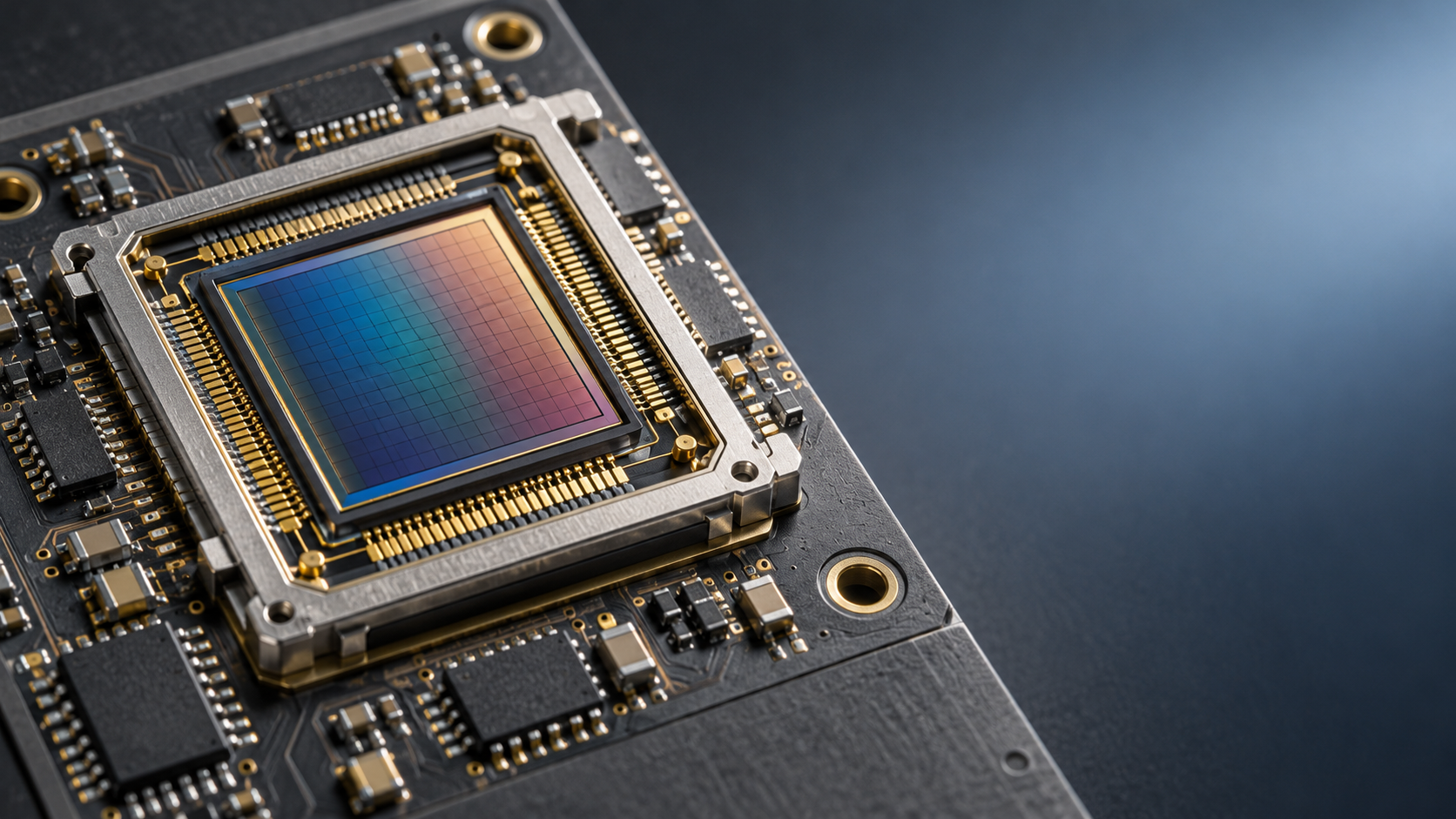
The team at the National Key Laboratory of Multispectral Information Intelligent Processing developed a neuromorphic SWIR event-radiometric dual-mode imaging chip. It combines an indium gallium arsenide (InGaAs) SWIR focal plane with a silicon-based dual-mode readout circuit independently developed by the team.
The reported objective is clearer imaging under high-speed, extreme conditions. The development is described as offering potential support for innovation in optoelectronic sensing and instrumentation.
Potential Implications for Component Selection and System Acceptance
Component suppliers could face more detailed evaluation requests
Analysis suggests that suppliers involved in focal planes and readout circuits could encounter requests to explain how the two components perform together if prospective buyers begin evaluating this architecture. Relevant procurement questions could include interface compatibility, operating conditions and the evidence supporting each imaging mode. These are possible evaluation needs; the announcement does not establish new supplier qualification rules.
Equipment integrators may need application-specific comparisons
For imaging equipment manufacturers and system integrators, the potential value lies in whether the combined modes improve results in an intended application. Analysis suggests that evaluation could extend beyond individual component specifications to the behavior of the assembled imaging system. Any resulting acceptance criteria would need to be defined and validated for the particular procurement, rather than inferred from the research announcement.
Testing and certification decisions need a separate basis
From a conformity-assessment perspective, a new imaging architecture could prompt questions about suitable test methods and supporting documentation. However, the supplied information identifies no new certification scheme, mandatory test procedure or revised standard. Testing providers and purchasers should therefore treat any proposed evaluation approach as a matter for technical review unless a relevant formal requirement is independently confirmed.
Technical Evidence to Review Before Procurement Commitments
Request evidence for both imaging modes
As a practical recommendation, prospective evaluators could request technical documentation explaining the event and radiometric modes, their operating conditions and the method used to assess image quality. The supplied summary contains no quantitative performance results, so purchasing decisions would benefit from evidence that can be compared against the intended application.
Translate the intended use into acceptance criteria
Analysis suggests that buyers considering high-speed, extreme operating conditions could define the scenes, environmental conditions and imaging outcomes relevant to their equipment before conducting trials. Any proposed tender or acceptance language should distinguish desired capabilities from verified performance. The announcement alone does not demonstrate compliance with a purchaser's specification.
Verify supply readiness and delivery documentation
For procurement planning, companies could seek confirmation of product availability, supplier qualifications, delivery schedules and the technical records accompanying any offered device. These are recommended checks, not reported shortcomings. The supplied information does not establish production status, commercial availability or delivery commitments.
Check applicable obligations for the actual transaction
If the technology is considered for a commercial supply arrangement, a prudent approach would be to assess the applicable certification, documentation and trade requirements against the actual product and transaction. No specific trade restriction, exemption or approval pathway can be inferred from the supplied announcement.
A Research Signal, with Formal Requirements Still Unspecified
Editorial analysis: this development is best understood as a technical research signal. The available information does not support describing it as a policy change, a new market-access requirement or an implemented industry rule. Its possible influence on procurement practices would depend on further technical evidence and on whether purchasers incorporate demonstrated capabilities into their specifications.
What deserves closer attention is any subsequent publication of performance documentation, application validation or formal references to standards and certification. If later tender documents or acceptance procedures address this architecture, their wording and scope would need to be reviewed directly before concluding that industry requirements have changed.
Evaluation Can Advance Ahead of Any Purchasing Decision
From an industry perspective, the chip offers a reason to examine how combined event and radiometric imaging might support demanding sensing applications. The proportionate response is to gather evidence, assess integration requirements and verify any applicable obligations before making procurement or delivery commitments. At this stage, the supplied information supports technical interest and further evaluation, while commercial readiness and any implications for formal rules remain unconfirmed.
Basis of Reporting and Points for Continued Verification
This article is based solely on the user-provided news title, the event timing described as recent, and the accompanying event summary. No specific official source link was supplied, and subsequent verification remains necessary.
Relevant materials for follow-up could include official research announcements, technical publications, standards documents and any applicable regulatory or certification notices. Continued review should focus on verified performance, commercial availability, any changes to tender specifications, certification interpretations, trade implementation and industry feedback. None of these subsequent developments is confirmed by the supplied information.



 How to Read Hydraulic Calibration Pump Specifications CorrectlyHydraulic calibration pump specifications explained clearly: learn how to assess pressure range, stability, fine control, and compatibility to choose the right pump with confidence.
 New FTIR Spectrometer Standard Takes Effect on November 1The new FTIR spectrometer standard, GB/T 21186-2026, takes effect November 1, 2026. Explore its potential impact on testing, specifications and procurement.
 Chinese Society of Instrumentation Publishes Proposed 2026 Science and Technology AwardsChinese Society of Instrumentation proposes its 2026 Science and Technology Awards. Explore the review timeline and what the list means for industry buyers and suppliers.
 HUST Team Develops Neuromorphic SWIR Chip for Dynamic and Static ImagingHUST’s neuromorphic SWIR chip combines event and radiometric imaging for dynamic and static scenes. Explore its potential for infrared sensing and key considerations for system integration.
 China’s Guoyi Quantum Releases Domestic 200 kV Field-Emission TEM with Mass-Production CapabilityExplore Guoyi Quantum’s TEM-F200, a 200 kV field-emission TEM with reported mass-production capability. See what its specifications mean for materials research and semiconductor procurement.
 Verisurf Software Joins DMSC to Advance QIF and Open Digital Metrology StandardsVerisurf Software joins DMSC to advance QIF and open digital metrology standards. Explore what this could mean for data interoperability and automated inspection.


Chat Online